Showing posts with label performance. Show all posts

Friday, 9 April 2010

Death Drive

Hello! Goodness me, I've been busy as a bee, moving cities back to Norwich, weathering minor psychic catastrophes and beavering away on the script for my FIRST EVER solo show. Yes. Like a grotesque bee-beaver hybrid, lying on its flank, its useless wings quivering, a rasp issuing from its misshapen, bucked-toothed maw... kill me... I was not meant to be... That's me.

So yes, rather than come up with some way of wittily paraphrasing it, here's the press spiel:

There’s nothing like seeing your dad have a go at an activity to make it seem embarrassing. It turns out suicide is no exception.

Sacked, dumped, and stuck living back with his parents, failed writer Tim Clare struggled to see the point in carrying on. Eventually, during a 4am drive, his newly spiritual dad staged a dramatic last-ditch bid to shock him out of his misery.

Thus Tim began a quest to lose his cynicism and get happy. But when you’re faced with jeering teens, obnoxious neighbours, all six Rocky movies and a psychic horse, is there anything in this sordid world worth getting happy about?

So far, I'm booked to do four previews of Death Drive at the Brighton Fringe from Saturday 1st May - Tuesday 4th at the Royal Albion Hotel, 35 Old Steine (4-5pm Sat-Sun, 9-10pm Mon-Tues). Tickets are £5 a pop and you can get them here. Then on Sunday May 30th I'll be doing another preview at the Pulse Fringe Festival in Ipswich, at the Sir John Mills Theatre, at 8:30pm. Tickets are £6 and you'll be able to buy them in advance here in a few days, when the full programme goes online. It's an exciting festival with lots of new shows to see on the cheap, so if you're in the area, COME TO MY SHOW AND LOVE ME UNCONDITIONALLY

I've got more previews coming up in July in Colchester and Norwich, and maybe one or two others - I'll post more nearer the time. In the meantime, if you do know anyone who lives in Brighton and might fancy a fun night out for a fiver, do let them know about my show, eh? I'm a bit nervous and a bit excited, all the clichés, really - also nauseous and aroused. How's that? It'll be a challenge to hold an audience's attention for that long - part of what I love about performance poetry is it challenges you to compress thoughts, jokes and stories down to their shortest possible form, so you're not wasting anyone's time. Death Drive is quite a dramatic story with lots of twists and turns, and it all really happened, so fingers crossed, folks won't find themselves dry retching with tedium 40 minutes in.

Right. Off to play video games. Happy days.

Sunday, 24 January 2010

Last Week Of Luke & Ross's Shows - GO! GO!

Apologies for the spotty updates so far this 2010 - I'm hella busy with lots of pseudo-exciting stuff that may or may not come to fruition, and some of that will involve my posting sporadically worthwhile things on this here blog for your perusal. I do enjoy having a meagre platform for my first drafts and half-formed opinions like terrible irradiated embryos hacked from their dead mothers' swollen bellies.

Anyway, I just wanted to say that last week I went to see the latest solo shows by my dear chums Luke Wright and Ross Sutherland, during their run at the Old Red Lion Theatre (nearest tube Angel), which continues until the end of this month. Luke's is called The Petty Concerns Of Luke Wright and Ross's is called The Three Stigmata Of Pac-Man.

Obviously I'm not a very credible advocate of their work, because, as I've made clear, they're good mates of mine. HOWEVER, if I'd thought the shows were crap I simply wouldn't have mentioned them. I actually reckon that they're brilliant. You should go and watch them and see two experienced young poets operating at the height of their powers. They've had several splendid reviews, and a bit in The Independent, and, you know, if you're in London you should do something different and interesting with one of your weeknights and take a friend along who's never seen performance poetry before. The shows are funny and witty and not so long you'll get bumache, and you'll have a new thing to have an opinion about and you'll feel all cultured and arty when you talk to friends for the next couple of weeks.

Anyway, look, you can make your own mind up by watching these clips from their shows. I hope you enjoy:


Tuesday, 15 December 2009

The Limits Of The Expert

So it's nice to see my old chum and fellow Aisle16er Luke Wright has been back blogging after a long period of sporadic comms. In my continuing efforts to bore the tits off of all my readers equally (my video game posts have a consistent knack for making at least 50% of eyes glaze over) I'm going to write a tiny bit in response to a point he raised around managers involved in live literature administration. Grab the popcorn.

Basically, in his blog post, Luke talks about the distinction between recruiting managers from experts in that particular field, versus recruiting managers from managerial positions in other fields, and how that applies to live literature (a term I fucking hate - eugh bleugh ptooie! (and I'm not much fond of the moribund 'spoken word' either)). In his own words: 'Now there’s more money about (though not for long with the recession looming) the powers that be have had two main options on how to grow the industry: a) use the existing artists and producers who know the scene and have creative vision; b) bring in proven arts managers from other industries to apply their knowledge of fund raising and management to live literature.'

Although he's conspicuously evenhanded and tentative in his overall appraisal - probably a wise move given that his ability to make a living partially depends on the good will of people working in this area - Luke seems to come down slightly on the side of using 'existing artists and producers', whilst acknowledging the value of having an experienced, talented manager with strong fundraising skills.

It's a tricky one. On the one hand, if you take on an active performance poet, there's a potential conflict of interest. Lucrative opportunities are few and far between in live poetry, and there's a real danger that, instead of spreading the word throughout the region and empowering as many poets as possible, they'll just take the best opportunities for themselves and for their performance buddies. From the outside, a poet booking their 'contacts' for gigs and workshops, and signing them up for support schemes, looks a hell of a lot like cronyism. For a poet, taking on an arts admin role is a great way to plug the holes in your finances while securing yourself a prime seat at the trough.

On the other hand, if you're a poet, it can sometimes be hard not to feel bewildered and frustrated when people who watch approximately a tenth of the live poetry you do, and who rarely, if ever, attend any events except the ones they organise, are the ones taking big decisions on the direction of the medium in the UK for the next five years, with very little apparent consultation. Working with different organisations across the country, rather than seeing a unified strategy and a genuine sense of cohesion and progression, it can feel like you're watching a hundred little showponies getting brushed and groomed then sent trotting out to market, all with owners hoping to earn kudos for having raised the brightest and the best. It can feel more about promoting an organisation and showing off how much clout it has, than about getting better live poetry to more people, and providing value to the taxpayers who are often bankrolling most of it.

Of course, these two extremes are both strawmen that don't paint a very accurate picture. We're a nation of armchair football managers and music critics, and I, like so many others, like to lounge on the sofa, yelling at my telly about how I could do a better job, despite the fact I can't kick straight or hold a note. All I'm trying to get at is that both options come with their potential problems, and neither one trumps the other. I don't think oodles of grassroots experience nor a robust background in managerial roles are game-changers.

Nobody working in the Arts - as far as I know - has ever been given a no-strings-attached metric fuckload of money with the instruction 'go and make live poetry better, however you personally choose to interpret "better"'. An Arts organisation's first priority is to secure funding to allow itself to continue to exist, otherwise it has no way of achieving any of its subsidiary aims, just as the priority of any government operating in a democracy is to remain in power, otherwise it can't affect change. While it's usually all in the service of exciting, interesting projects, there's no way you can make replying to emails, checking spreadsheets and drafting press releases as fun as standing on stage, getting whoops and laughter and applause from a crowd. Doing the boring stuff well takes skill, maturity and dedication.

Of course, with the benefit of hindsight, and without knowing the competing pressures and priorities facing people, it's easy for me to pick holes in people's decisions. I'm not sure that's very fair of me and it's not a habit I admire, but I suspect we're all a little guilty of different forms of this from time to time.

However, there was one phrase in Luke's post I'd like to pick up on - not in how it relates to any of his personal views, but in how it tends to get bandied around and vaunted across Arts organisations. Luke talks about this notion of getting people onboard who 'have creative vision'. Personally, I believe that sometimes the disproportionate value placed on so-called 'creative vision' and strong personalities rolling out big, bold projects and proposals, overrides other important qualities like, y'know, listening. You don't need to be a gigging performance poet yourself to work in an organisation that aims to improve and promote the medium, but you do need to be willing to engage in an honest, respectful and sustained dialogue with a wide spread of people who do, not just in this country but across the world. There is a wealth of knowledge out there, distributed amongst hundreds of enthusiastic pro-am experts, and it seems not just foolish, but willfully arrogant not to attempt to draw upon it. That doesn't just mean accepting criticism and sending out the standard survey asking 'How could we do this project better next time?' after you've pissed away 50 grand on some ill-conceived vanity-wank - it means asking a decent spread of relevant people before you've squandered the time and money, to see if what you're doing is actually what the people you're supposedly doing it for want.

I suppose what I'm saying is that, as a performance poet who has notched up over 100 gigs in the last twelve months, I'd like to think that those involved in organising events, initiatives and projects relating to live poetry would see people like me as an important free resource of information and opinions. And I'm not using 'people like me' as a euphemism for 'harrumph, why don't people beg me for the chance to listen to my divine wisdom?' (although I like feeling important as much as the next petty, insecure egotist) - you can only get a true picture by consulting a range of people from across lots of different nights. Indeed, probably even more useful than getting the poets' views would be directly engaging with audiences and listening to their feedback, and, even better, getting into dialogue with people who don't go to spoken events but maybe attend events in stand-up, music and theatre, to see if we can start to think about strategies for showcasing the best live poets to a wider appreciative audience. By the same token, a lot of people who perform live poetry, myself especially included, could do with asking advice from those with experience in larger organisations, then listening to and acting on the responses we get.

So basically, I reckon one of the most important qualities a high-level manager in Arts administration can have is an open mind and a willingness to listen. Whether they're an ex-poet, a promoter or someone with management experience in a related area, it doesn't really matter, as long they're not an arrogant asshole who thinks they know it all. (like me) Indeed, I suspect we could use some new blood from different disciplines, coming in to suggest ways to improve. At the moment, live poetry is an obscure cultural curiosity on a par with beekeeping. It deserves so much better.

I should also point out here that I have met plenty of people within Arts administration who clearly devote an awful lot of time to listening to others, and who are incredibly conscientious and hard working. (I'm sure there are people reading this now thinking what? I spend my whole life in fucking meetings! Listening is all I fucking do!) It must be really difficult trying to synthesise lots of different people's opinions on a subject, all of whom have competing agendas, and many of whom, I'm sure, must come across as shambling simpletons. Also, I realise that the whole 'big project launch, big creative vision' way of doing things is, in part, a result of how organisations have to go about securing funding. 'Listening' sounds a bit woolly, unless you launch it as a 'big listening project' or just pitch another dreadful networking event (which tend to be weirdly uninclusive, closed shops). And, of course, at some stage somebody's got to cut through all the bullshit and actually make the decisions. Only hippies throw everything out to a vote, and look where that got them - crusted in their own filth, huddling round shards of green calcite for warmth. (and before someone chimes in with 'well you're just betraying your ignorance there, Tim - green calcite is actually for reducing anxiety' THEY'RE USELESS CHUNKS OF ROCK YOU GORMLESS LUDDITES)

I'll close with a quote from Shunryu Suzuki, to lend a spurious air of Zennish wisdom to my latest incoherent, axe-grindy blather. Suzuki famously wrote about cultivating a quality he called 'beginner's mind', once stating (perhaps a little mischievously) that the essence of Zen was 'not always so'. As he put it: 'In the beginner's mind there are many possibilities, in the expert's mind there are few.'

Sunday, 13 December 2009

Purple Ronnie Stand-Up Poetry Club

This Thursday 17th December, I'll be performing with all seven members of Aisle16 at The Monto Water Rats Theatre, on Grays Inn Road. It's exceptionally rare that all of us are in the same place to do a gig, aside from the late night 'Aisle16 and Friends' sessions at Latitude festival.

A good portion of the show will be given over to our two- and three-man poems, which are always roistering fun. I know you'd expect me to say that - I'm hardly credible as a neutral advocate of Aisle16's live oeuvre - so, if you disbelieve me, check out Spoonfed's review of our appearance at Wave If You're Really There #5 with Wave Machines: 'fast-paced, cuttingly clever and ferociously funny performance poetry... performed with such vigour, to a crowd so completely engaged, that it is a joy to behold (and, yes, very clever too).' That's nice!

So yeah, doors are at 7:30pm, the nearest tube is Kings X - come down, and we'll do our best to give you a show to remember!

Wednesday, 21 October 2009

Local Boys Done Vid

So yeah, those of you who came to the Local Boys Done Good edition of HOMEWORK will remember we did a show all about our hometowns. Well, guess what? If you missed it or just forgot it or loved it so much that you want to be locked in a cell with it projected onto your clammy delighted face 24-7 then fortune has shined upon you, friend, because it's up on Youtube. BOOM:


The more eagle-eyed, beagle-nosed and smeagle-fingered amongst you may have noticed a distinct absence of Tim-ness in this video collection. Well, that's cos when it came to doing my bit I heinously overran, plinking and a-plonking on my uke and waffling, and ended up going to about 23 mins or something insano. I think we all agreed it didn't really work as a conclusion, well-intentioned though it was, so rather than cram it in there, I'm rewriting my section for when we continue to develop the show next year. It'll be all polished up with a brand spanking new ending, extra bits, slicker delivery, and a slightly more aged, paunchier cast. On the plus side, this means we haven't given everything away online, so if you come to see us, you'll find out how it all ends, what it all meant, and hear me playing the ukulele. We're performing it at Norwich Arts Centre on Monday 8th February, so pen that monster in your diaries, yo. Hope you enjoy these flicks. If you do, commenting on them and posting them somewheres else like your blog or your Facebook wall would be a super-helpful indulgence. Gotta spread the word. Peace out.

Monday, 3 August 2009

EVEN MORE What I Did On My Holidays

So this weekend I toddled north up to the Lake District for a little festival called Kendal Calling. I say toddled - I dozed in a van while Ventriloquist and the Tongue Fu band drove us the 6+ hours all the way up there on Saturday. I'd had to get up bright and early to get the train from Cambridge, so I was a tiny bit pooped. During my brief periods of consciousness, I read TV rent-a-skeptic Richard Wiseman's pop-psych book :59 Seconds, full of lots of little 'quick fix your life' tips and descriptions of interesting research. It's pretty good, except when he attempts humour. I try not to read too much pop-psych these days - as I wrote about in Astronauts, when I was younger I got quite addicted to pop-psych books. I used them as a form of escapism, imagining that I could supercharge my heart and mind and become immune to all the painful knocks and burns of life. I think consuming a diet of aspirational literature quickly makes you feel knackered. It's funny how many books on relationships talk about engagement styles and negotiation but seem to leave something as simple as love by the wayside. Self-improvement is all very well but I don't think it's defeatist to practise a little self-acceptance too. It's difficult, when you see a friend stung by disappointment or hurt by self-destructive behaviour, not to start dismantling their actions and identifying the things they did 'wrong', because you want to protect them and see them happy, but this kind of habitual micro-criticism can backfire when it's your turn in the barrel. You'll be lazy some days, you'll forget things, sometimes you'll feel insecure in a relationship, you'll lose your temper, and you'll act in whole host of other suboptimal ways. This will never end. It doesn't make you a bad person and no amount of beating yourself up about it will prevent you from doing it. Instead of feeling blue about your own perceived shortcomings, it's best to acknowledge them and draw on them as a source of compassion and understanding when dealing with others' shortcomings. We'll all live our entire lives doing less than the best possible. That can be a source of warmth and community and love.

And because I'm human I only sometimes put the above into practice. And I feel a bit sanctimonious for coming out with all that. Ah well. I forgive myself. A bit. Heh.

Talking of imperfection, at Kendal Calling I performed my most spectacular stage exit yet, hallucinating an extra section of stage after my set, catching my foot on the hazard tape and falling, faceplanting into the dirt. Fortunately the damp weather had turned the ground the consistency of Playdoh, so I merely left a big reverse imprint without hurting myself. I lifted myself onto all-fours, put my specs back on and looked up to see Howard Marks stood in front of me, looking down, asking if I was all right. 'Mr Nice' - not just clever branding, apparently!

I had a really lovely time travelling with the Tongue Fu crew, who seem like a thoroughly friendly bunch of people, and it was good to see Berkavitch and Kate Tempest with Sound of Rum at the festival. Kendal Calling seemed to be doing a lot to support local bands, which I can only doff my invisible hat to. You get to imagine what type it might be. I'm imagining a black felt tricorn with a single quail feather tucked into the brim. Your model may vary.

Wednesday, 29 July 2009

More What I Did On My Holidays

My word, I am pooped. This weekend just gone, I set off for four gigs over two days. My voice still hadn't (and still hasn't) recovered from Latitude, so I left little Tim Jr back in Cambridge and resolved to stick to spoken word.

I was in fairly high spirits after my gig on Thursday, supporting Byron Vincent on his Poetry Link tour, at Wax Lyrical in Colchester. It was my first time at the Wax Lyrical night, and Molly Naylor and Ross Sutherland were both on the bill as well, meaning essentially I got to perform with a bunch of much-valued chums. The audience were really lovely and I think I did one of the best twenty minute sets I've ever done. I felt very at ease and enjoyed just sort of blathering, telling anecdotes and making up my set on the fly. It also provided yet another reminder of the value of decent lead-ins - not only do they set up the poem nicely for the crowd, but I find now that the right sort of preamble actually helps to put me in the best mental state to perform the poem well. Anyway, basically it was great fun, and I really enjoyed getting to watch Ross, Molly and Byron perform their sets all on one night, to appreciative spectators. Oh, and the sound tech guy was a total champ - he stuck a lovely tickle of reverb on Tim Jr and made him sound all Hawaiian, full, and dreamy. Kudos to that guy.

On Friday it was off to Camp Bestival, down on the south coast, at Lulsworth Castle. There's something particularly cruel about Camp Bestival's location - from on site, you can see the ocean shimmering just a mile away. It felt like it was constantly teasing me - I mean, festivals are okay, but with the insanely hot weather Camp Bestival had, you can't help but wish you were down on a beach instead, cavorting on the sand or diving into cool blue waves.

Camp Bestival started out as a bit of a culture shock - we arrived to find ourselves kicking through drifts of jammy-visaged sprogs three or four deep. Squealing tykes battled with plastic swords, scampered about with balloons and crammed ice cream wafer sandwiches into their red, mewling gobs. The music on the main stages at Camp Bestival was pretty shite. I condescended to watch Florence and the Machine, against my better judgement, and wished I hadn't. I don't know what all the fuss is about - all I saw was some crapulent, equine-mawed toff caterwauling and dropping barrages of slurred f-bombs between her nondescript dirges, much to the consternation of the watching parents and children. Beatboxer Beardyman on Saturday was a similar waste of time - a smug, irritating cunt trying to spin a meagre party trick out into a career. I'm easily impressed by beatboxing, but you have to have some kind of interesting content or be exceptionally good at what you do - Beardyman has neither, and he compounds the problem with his constant toe-curling attempts at humour. It's like being stuck in a lift with Timmy Mallett.

But when the sun goes down, all the children suddenly seem to get removed by some sort of snow plough, and then Camp Bestival turns into a really excellent dance festival. Better yet, because it's such a family festival, the atmosphere in the late evening stays convivial - there aren't so many of the boss-eyed spannered townies you associate with banging choons. On Friday night we had a good ol' dance for many hours, ending up in the Silent Disco. Clare's Law: as the length of a Silent Disco increases, the probability of both DJs playing Cheese approaches 1. I bowed out gracefully as soused revellers bellowed Hey Jude up at the tent ceiling.

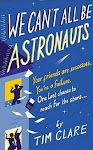
My readings on Saturday went okay. It's a bit tricky judging content and holding an audience when there are packs of roving kids swarming here there and everywhere, but I think I did okay. The hard thing is that a lot of parents tend to use book tents as creches, plonking themselves down on a cushion and leaving their kids to shriek and run about. There wasn't too much of that when I was on, though, and I'm usually shouty-shouty enough to make little children run away crying. I did a reading from We Can't All Be Astronauts in the early afternoon, then a poetry set with Scroobius Pip in the evening. I felt as if my rendition of Dear Man I Saw On The Platform At Colchester was a bit lacklustre - I think I might retire it for a while, just until I get the feeling back. I'm not an actor, so if I'm not feeling it then it just turns hammy, and I don't want to force that awful am-dram bollocks on some poor crowd.

By the time we were due to leave Camp Bestival, I'd become acclimatised to the huge numbers of kids, and found myself - embarrassingly - putting a hand to my chest and sighing with increasing frequency, as I saw and heard lots of very cute, very endearing things. Camp Bestival isn't my cup of tea - despite curator Rob Da Bank's claims of championing new bands, the music in the day is exclusively toothless crap - but the children there were obviously having an absolute whale of a time, and I was really happy for them.

Saturday evening we headed west, down to the Port Eliot Lit Fest. Aisle16 and Port Eliot have an association that goes back longer than I've been involved - at the last Port Eliot in 2007, we ended up doing about 20 plus hours of performance over two days; they might as well have renamed it Aisle16stock. I always enjoy Port Eliot because of its limited size - if you do a gig there, you instantly acquire a pseudo-celebrity that lasts for the whole weekend, and you can just wonder around chatting to people.

On the Sunday, me, Ross Sutherland and Joe Dunthorne did a performance of our show Found In Translation, about our attempts to infiltrate enigmatic French experimental literature group, the Oulipo. It went really well, as we suspected it might, because audiences at Port Eliot are always lovely. None of the mothers complained when I did my groin-thrusts and fecal splattering, which was gratifying. The weather on Sunday was crappy in the extreme - it was raining when we got up and it continued, unabated, all day and all evening, not letting up once. Port Eliot isn't really designed to cope with that sort of weather, and the tent we were performing in was leaking badly, the DI boxes for Ross's laptop sitting in an ominous marsh and bits of paper plastered to the stage with water.

Later on, I did a reading in the Round Room of the house. As the name suggests, it's a huge circular room with an elaborate and quite disturbing frieze painted across the wall and a large domed ceiling with a big chandelier hanging from the centre. I was directed to stand right beneath the chandelier, and as soon as I did, I could hear my voice being amplified and projected across the room. I believe it's called a Whispering Gallery - the acoustics are such that, if you stand in the centre of the room, your voice is projected by the architecture and you can hear everyone in the room perfectly. Lots of people turned up and I really enjoyed reading from Astronauts with my newfound big, booming voice. I did my first ever Q & A at the end, which was fun, and allowed me to babble enthusiastically about a bunch of things I like. Thanks Port Eliot!

Aside from some issues with our car breaking down, we had a great weekend. I think all this living outdoors has worn me down a bit though - I'm feeling ever so slightly under the weather, and I can feel my glands swollen up in my throat like big ol' gooseberries, so I'm committing to lots of water and quietness for the rest of the week, in the hopes that I can recover my performing mojo in time for Saturday, when I'm off to the Kendal Calling festival for yet more spoken word shennanigans and living under canvas. Hooray!

Tuesday, 21 July 2009

What I Did On My Holidays

So, after a day of sleeping and staggering groggily about the flat with Supernoodles dangling from my slack gob, I've officially recovered from Latitude festival 2009. My voice is still pretty buggered, so no arias for a week or so, but aside from that I'm compos mentis so woot.

Despite intermittently shitty weather, this year turned out to be a bit of a corker. I was performing every day, doing sets in the Poetry Arena and also reading from We Can't All Be Astronauts in the Literary Tent. The reading from my book was a particularly nice surprise - they told me to tell the audience that I'd be signing copies afterwards, and I cringed at a vision of me sitting glum and alone behind a pile of my books. Instead, we sold out of copies! I felt incredibly flattered and a tiny bit fraudulent, but, you know, I think in these instances it's best to drop the self-effacement and just enjoy it, which I did. Thanks if you bought a copy. You made me feel really chuffed.

In the Poetry Arena the audiences seemed bigger than we've had in previous years, and on Thursday and Sunday they were particularly enthusiastic. I didn't catch everyone who performed, but I felt Nathan Filer, John Osborne, Kate Tempest, Dockers MC and MC Angel had particularly good innings. Kate Tempest with her band Sound of Rum managed to get a crowd who had started out listless and subdued up on their feet and dancing by the end of their set, which was incredible to watch. John Osborne did the best performances I've ever seen him do - I particularly enjoyed the point where audience members started spontaneously yelling out names of bands that only use the vowel e. One guy shouted out ELO, to which John responded: 'That's a rubbish attempt. There are three letters in that name. One of them's e, and one of them's l. Do you see where you fell down?'

The tent on Sunday just got warmer and warmer as the evening went on, until it was rammed and the crowd were really up for it, whooping and cheering and belly laughing. My highlight of Aisle16 and Friends was watching MC Angel start a rap battle with Keith Allen. Keith Allen was better at freestyling than you might have guessed, and it was great, drunken, knockabout fun that had the audience laughing and questioning their sanity in equal measures. Aisle16's late night sessions in the Poetry Arena always teeter on anarchy, and the upside of that is that amazing bits of performance can arise spontaneously and give everyone present one of those festival 'moments' that we're all fiending after. Watching Ross Sutherland carry the mic into the middle of the audience to lead the tent in a rousing chorus of Total Eclipse Of The Heart was another bumper, albeit silly, moment.

Thank you to everyone who came to watch us, or gave poetry a try over the weekend. It's really salutory to do it and basically not be crap. It reminds me of why we do it in the first place - we just want to give people something fresh and new that can be funny and exciting and emotional all at once. That sounds gushy and pretentious until you're in the middle of a show that's going really well, then you realise, oh, it's true.

In another news, yesterday I stumbled across the Decemberists for the first time. Someone mentioned them in the same sentence as Jonathan Coulton, and I was like, aha. I love what I've heard so far. After my nap yesterday I got up and had a little dance around the living room with my wireless headphones on. Here are just two, Valerie Plame and The Legionnaire's Lament. Funtimes.


Monday, 13 July 2009

Ghostbusters... Yes, We're Back

Apologies for the lack of updates recently. I know you must have been tearing at your hair and gnashing your teeth with sheer boredom, and for your fortnight of torment, I beg your forgiveness. A combination of tech problems, writerly busy-ness and lovely weather have left me with mere slivers of free time, and every time I've looked at the blog and thought 'Shall I?' I've backed down like a wheelchaired grandmother wimping out of a river jump. I think part of the problem has been that I've got lots of ideas for involved, substantial posts, which will take ages and which I haven't been able to face starting - then compared to their rich majesty, a little Youtube vid or 'so, this is how my week has been' update feels as a crude Crayola scrawl against the artistic fruits of history's grandmasters.

In terms of writing, I've been mucking with stuff from my next book, getting it ready for some part of it to be looked at by another human being. Sitting down and writing prose is something of an odious experience for me, occasionally punctuated by satisfying - albeit brief - flurries of productivity. I like a lot of the parts of being a writer, except, for the most part, the actual writing. Hmm.

I've also been working on getting my poetry sets ready for Latitude festival at the end of this week. I reckon one in every five performance poems that I sit down and write ends up making it into my final set. And I don't often write performance poems. This means if I want some new pieces, I have to commit to a pretty intense work schedule so I've got more chance of turning up one that works. It's a little frustrating when you finish a poem, think 'wowee this'll be a banker', then deliver it at your next gig to crickets. But, you know, I'd rather work hard than be rubbish. I've got a poem in the works at the moment which I hope, hope, hope will wind up becoming a solid part of my set, and I'm trying to get it finished for Latitude so it can have its debut there.

Um, I completed Mario Vs Donkey Kong and Mario Vs Donkey Kong 2: The March Of The Minis, the former on the GBA, the latter on the DS. A mon avis, Mario Vs Donkey Kong is brilliant - a fun-packed dose of classic platforming action that sees you, as Mario, pursuing Donkey Kong after he steals a sackful of clockwork Mario toys from the factory. The level design is superb, the gameplay tough but fair, and the difficulty level ranges from easy to fiendish - a rare and welcome concession to hardcore platformer fans who want a challenge they can really sink their teeth into.

Mario Vs Donkey Kong 2 is pants. The fun, intuitive platforming action of its predecessor has gone - in its place is a joyless Gyromite clone (you remember Gyromite, right? No? Exactly) mixed with the most tedious elements of Krusty's Super Funhouse. Instead of getting to dash, backflip and 'yahooo!' as Mario, you must use the DS stylus to shunt little chittering Mini-Marios round small, dull levels. They move slowly, the stylus system is iffy, and the boss battles with DK are samey and bland. It's like a rubbish version of Lemmings, and the failure is all the more painful when you remember how classy the previous title in the series was. It's a rare swing-and-miss for the Mario franchise, and a sobering reminder that Nintendo's much-lauded innovation has risen from a history of pig-in-a-poke goofs, from Gyromite's ROB to the it's-so-bad Powerglove to the unwieldy Superscope to the nausea-inducing Virtualboy.

So, coming up I'm performing at Latitude festival in Suffolk on Thursday (9:10pm in the Literary Tent), Friday (6:00pm in the Poetry Arena), Saturday (11:30pm in the Poetry Arena) and Sunday (6:00pm in the Poetry Arena). I'll also be part of Aisle16 and Friends every night in the Poetry Arena, 11:00pm Thursday and Sunday, 1:00am Friday and Saturday. I'm helping to compere the Poetry Arena too, so basically, busy weekend pour moi. The weekend after I'm at Camp Bestival on the Saturday, reading from We Can't All Be Astronauts in the day, then doing a poetry set in the evening. On the Sunday, we'll be at Port Eliot Literary Festival, where I'll be performing with Joe Dunthorne and Ross Sutherland, doing our show about our attempts to infiltrate the enigmatic French experimental literature group the Oulipo - Found In Translation. Later that day I'll be giving a reading from We Can't All Be Astronauts. Then, weather-permitting, we are going to get plastered. The following weekend I'll be at the Kendall Calling festival, doing some performance poetry, then after that... oh, you can just check out my schedule. Be really nice to see you if you're about at any of those festivals. Come and say hi. Teach me a really elaborate handshake or something.

There. I think that's all for now. I've managed to write about poetry and video games in the same post, thus alienating both halves of my audience at once. If you don't feel excluded by one, you probably hate both. Well, that's what this blog exists for. Taking the rival camps of people who like poetry and people who like video games, and bringing them close enough that they can glare at one another, stoking their mutual emnity and mistrust. Now, if you'll excuse me, I've just remembered that there's a new episode of This American Life ready for me to listen to. See you at the festival!

Friday, 19 June 2009

Aisle16 at Glastonbury Festival

It's appropriate that Glastonbury is organised by a farmer, because the ancient and fundamental principle of the yearly harvest also applies to the festival - if the weather's shit, it'll be shit. I hope that the weather isn't shit at Glastonbury 2009, because firstly, have you seen the line up? WHAT. It's actually mental. Blur, Crosby, Stills & Nash, The Yeah Yeah Yeahs, Art Brut, Nick Cave, Roots Manuva, our chums Wave Machines, our chum John Smith opening the Acoustic Stage on Friday, ROLF HARRIS. I repeat - WHAT. You should read through the line-up, because I guarantee there will be someone who I haven't mentioned who will make you exclaim: 'Tim - how could you leave out x? x are amazing!' where x is the name of an artist or band you admire.

I know your AwesomeScanner currently reads: critical density reached, HOWEVER get ready for it to overheat then short out in a blast of sparks, because I'm going to be performing too, as part of performance poetry collective Aisle16. We're doing half an hour on Friday, Saturday and Sunday in the Cabaret Tent (that massive yellow and blue one in the Circus Field) from 11:40am to 12.10pm. We're also doing a slightly longer set in the Poetry & Words Tent on Saturday afternoon, 5:15pm-5:55pm. That's over two hours of Aisle16 - longer than most of the headliners get. I know, I know. We're incredibly chill.

Come and see us one of those times! It's poetry but the twist is it's not shit. If you're not familiar with Aisle16 allow me to break down the Glastonbury roster into a quintet of crude archetypes: Joe is the sardonic scholar. John Osborne is the kindly uncle. Chris is Michael Douglas in Falling Down. Ross is Charles Bukowski, if instead of being drunk he was just a bit tired. And I'm the sex-pest who takes onlookers' embarrassed laughter as encouragement.

So yes. Aisle16 at Glastonbury - 11:40am every day in the Cabaret Tent, and 5:15pm on Saturday in the Poetry & Words Tent. Set a reminder on your mobile. You'll only forget otherwise - you know what you're like. I'll also be making a number of solo appearances - catch me wandering dead-eyed across the festival site at 7:30 every morning, clutching a bundle of soiled rags to my chest and howling something about needing medicine for my baby.

In other news, while browsing the Ebury Twitter feed I found a link to this review of We Can't All Be Astronauts on a blog called The Slammer. It's a really positive review and I feel chuffed: 'A less safe pair of hands would make certain passages sound whiny and irritating, but Clare’s passion for the subject matter lifts these moments into a real-life triumph of the underdog tale. His self-deprecating humour is also a major virtue - particularly when it comes to briefly being "Jeffrey Archer’s bitch" on national TV.' Ha - that first sentence becomes unintentionally damning when you remember that the 'subject matter' is me.

Lots of people who've read Astronauts have got in touch to let me know what they thought of it. I try to make a point of replying to everyone, but thanks anyway to all the folks who've taken the time to write to me. I'm surprised at how many people have said that certain sections resonated with them - it's obviously struck a chord with a few frustrated artists out there, and it's been nice to hear that it helped some readers feel slightly less alone in their futile struggle for recognition. Other people just wrote to let me know that they'd laughed at what a twat I am. That's nice too! I can be a bit of a twat - I'm glad that at least I'm a twat who uses his twattery for the forces of good. Too many twats squander their talent. Stupid twats.

Sunday, 7 June 2009

Poetry's First Pop Group


Someone suggested I watch this video from back in 1998, of 'poetry's first pop group', Atomic Lip. In the aftermath, I find myself uncharacteristically lost for words. Wow. Just wow. Actually spectacular. Anyone starting out in performance poetry could learn a huge amount from this video. Just study the choreography, their various delivery techniques, and the content, then do the exact inverse.

Wednesday, 27 May 2009

Homework - NEW SEASON!

Ahh. Finally, the new season of Homework is about to kick off. Homework is Aisle16's London scratch night, a kind of loosely themed literary cabaret on the last Wednesday of every month. Each night has a main show, with support slots from the residents, and often a guest slot.

Last year, despite drifting across three venues, we managed to have a fantastic run, premiering new material and shows every single frickin' night. For a gig that consists largely of poetry, it manages to be pretty raucous fun. Back in October we debuted the full version of Infinite Lives, our show about video games and the grinding vapidity of real life, which is developing into something I'm really proud of. I think it contains the best material I've ever written, and it's on a subject I really care about. Me, Joe and Ross also debuted the full version of what would eventually become Found In Translation, our show about how we tried to infiltrate infamous French experimental literature group, the Oulipo. We're due to perform Found In Translation at the Port Eliot Literary Festival, on Sunday 26th July. Again, the show's final version is something I'm really chuffed with and proud to be a part of. My other highlights from last season include: taking part in the four person performance of Ross's Obituary poem, which cuts up four obituaries from around the same time then splices them together as if they refered to one person; hearing Kate Nash do a set at the end of Joe's Submarine reading; watching Ross, Chris, Joel and Luke perform Services To Poetry on a tiny stage in a room packed to bursting point, and remembering that they're my favourite poets; and getting to play Where Jenny Goes on my uke with glockenspiel accompaniment.

So anyway, the new season goes on until the end of October, on the last Wednesday of every month. It's upstairs at the Bethnal Green Working Men's Club, although knowing our history with venues, I wouldn't be flabbergasted if at some stage we have to make new arrangements and up sticks to somewhere else. But that's all part of the crazy make-do-and-mend ethos that makes Homework so special, so slapdash. The night's certainly one of my favourite to do, because the audience are always great. We experiment, we write lots of new material, and because of that, there's that exciting feeling that what you're watching will never happen again. It's just a really cool mix of new stuff and super-bankable classics that is loads of fun to perform and seems, from the crowd's responses, to be, err, nearly as fun to watch. Heh.

So, the new season kicks off with John Osborne's Radio Head - current Radio 4 Book of the Week. As well as John's reading there'll be a full set from Tim Key of BBC4's Cowards and Charlie Brooker's Newswipe.


I reckon Tim Key is awesomecakes.

As if that wasn't enough (well, actually it obviously isn't - you can't have a cabaret night with only two acts) me, Ross Sutherland and Chris Hicks will all be doing support slots, performing new material and generally being convivial little imps. I've actually written brand new poems, which I'll be trying out for the first time at Homework. Squeeeeeeeee!

So look, if you're reading this, you should come. Here are the details. The mental thing is, it's only £3 on the door. If you can't get there, we film each night and it sounds like an actual film crew should be turning up to the opening night too, so there'll be eager lenses a-go-go. Fingers crossed it will be giddy joy and everyone will have a great time. We've been super-jammy with our regular audience at Homework. They're lovely and the main reason we keep doing it.

Oh, and last but definitely not least, we're extremely grateful to the Arts Council, who are helping to fund this second season. They've been really, really supportive, seem to get what we're doing, and have trusted us to work hard and develop it. Hats off to them, really. Thanks to them, we're now able to put on a whole half-year of exciting, innovative, affordable live literature in East London. Hooray! It's not just good for us - it's good for all the somewhat nutty heroes who put in so much work to create a vibrant performance poetry scene. There's some fantastic stuff out there if you know where to look. Ahem. But may I suggest starting at Homework?

Thursday, 21 May 2009

The Performance Poet Interviews - #11: Luke Wright

So yes, here we are again. Another day, another performance poet interview. Goodness. That sounds a bit world-weary. I don't really feel that bleak. I haven't been updating with my usual high-fibre regularity for a couple of reasons, primarily because I've been busy writing actual proper articles that may wind up appearing in actual semi-esteemed organs which some people pay money for. The release date for We Can't All Be Astronauts is just a couple of weeks away now, so I suppose I'll be semi busy-busy.

Also, I've been procrastinating somewhat, because now I've definitely got enough material about open mics to begin putting pen to paper and recording what I've got up to so far. But I think it's probably wise for me to do some planning first, otherwise it's like walking up to a massive cake as big as a house, and wondering where to take the first bite from. I've been perusing my notes, and then I guess I'll just have to take the plunge, and see where it takes me. It always feels a bit nerve-wracking, because I'm not sure whether what interests me will be engaging for other people. The first time we performed Infinite Lives, literally until I got the first couple of laughs from the audience, I still wasn't sure whether all my rattling on about the ways you lose your girlfriend in video games was just something I found personally amusing, or whether other people would go, 'oh yeah - that is pretty cool'. Who knows? I think I just have to press on with it, until I've grown myself a hedge that I can start hacking into. Astronauts developed in a shambling, trial-and-error fashion, and there's something to be said for chasing what's interesting and allowing that to shape the project, rather than forcing a shape onto it before you know what's going to happen - although it's a terribly inefficient way of working.

All of which is just by way of apology. Sorry. I should have been posting more. I missed you. I so want you to be happy. So, as a kind of peace offering, here's an interview with professional word-sayer and quite tall raconteur, Luke Wright:

How did you get into performance poetry?

I went on a lyric writing course by Martin Newell and he talked about John Cooper Clarke and Attila The Stockbroker. A few months later I went to go and see Martin and John perform at Colchester Arts Centre. It was probably one of the most important nights of my life. I loved it. I was most struck by a young guy called Ross Sutherland who did the opening slot. Ross was talking about things I was taking about in my songs, but here he was able to fully explore his ideas and not just allude to them in scant 4 line verses. Performance poetry seemed like the perfect form for me to work in: there was room to maneuver, you could be funny AND serious and there's was plenty of the old instant gratification (I grew up living next door to a sweet shop). Within a month I had made Ross me friends with me and we were doing gigs together - this informal arrangement became Aisle16 a couple of years after that.


How would you describe your work?

Difficult to do without wanking on... but... I'm really interested in form; I set myself rhyme and metre related constraints. I also like telling stories. Much of my work is humorous (or attempts to me) because I figure why NOT make something funny, generally my poems also try to make a serious point. Content wise I write about myself, Britain, modernity and all the nonsense those things conjure up.

Do you think there's a difference between 'page' and 'performance' poetry? If so, what?


At a very basic level yes. There are some poems that really only work well in performance. They are mini pieces of theatre really, you can read them on the page, but it is often confusing and rarely rewarding. Similarly there are pieces that rely on being seen on the page and would provide no entertainment value read aloud. And there is of course a huge grey area in the middle. I agree with what Polarbear said - 'good is good.' I'm less interested in poetry as purely an experiment in language, I like to feel poetry, to be left with a story or a character or an emotion, rather than an appreciation of how clever the poet is being. With that in mind there are many poems that I love on the page but which also work really well live. Generally speaking all my favourite poems 'work' both on page and stage.

I'm currently editing my first pamphlet - it's a daunting process and it's teaching me a lot about the distinctions of 'page' and 'stage' poetry. For example, short poems, really short poems, never work well on stage, unless perhaps delivered like one liners, but then really they're just one liners. To a less extent longer poems take more out of the reader on the page and rely on being really well ordered to work well. Most poems in an average collection are less than a page long, but if you were to take an average performance poet's set and look at it on the page most of the poems would be over a page. Much of this is down to the applause at the end of a poem. It's weird applauding after only 30 seconds or so - the poet might have earned that applause as a writer but not as performer because they've barely got started.

What I've found whilst putting together my book is that even the poems where I've nailed the syllable count and rhyme scheme, so that they 'work' on the page, lose something because they take longer to get where they're going that perhaps they would if I'd written them with the page in mind. I've taken care to get them 'right' on the page, but over laboured the point perhaps because I know that in performance I can build up momentum (and laughs) by looking at the same point from different angles.

Good writing is good writing. If you're going to write in iambs, couplets or have four feet in a line then you need to stick to it and get it right whether you're writing for page or stage, but even that good writing is sometimes not enough to make sure the piece is equally effective in both mediums. Personally I'm aiming to get the technique watertight, and the content as close to what I really want to say - if one piece works better on the page then so be it, if another on the stage then that's the way it was meant to be. Hopefully I'll have enough of a range that my work will be available in both formats.

Why should someone come to a performance poetry gig?

A good performance poetry gig is mesmerizing. I know that word is over used but it truly it. It's so clever, funny and riveting you'll want more and more and more. It's the kind of thing people really get hooked on.

What do you think your best poem is, and why?

I'm not one of these poets who constantly revisits old work, I have too short an attention span, but I've been doing a lot of editing and ordering of late. In terms of a real banker during a gig I'd have to say The Company of Men, but I think it's flawed. I'm really pleased with the aesthetic feel I created with The Rise and Fall of Dudley Livingstone and I also think it makes quite a clever (for me) point about morality and our attitudes towards it. I also like Colonel Crampon Goes Off, though I'm feeling edgy about the new edit I've done on it for the book.


If you could nick one other person's poem and claim it as your own, which poem would it be, and why?


Oh Tim, I'm going to sound like such a sycophant but one of them has to be your Heart Of Class. Again, I agree with what Polarbear said about how a poem is often so intrinsically linked to the poet that as much as you love it you couldn't feel you could nick it, but there are pieces such as that which are, I think I could get away with and that's one of them. It's a wonderful romping satire and I have thought many times about how I would perform it and make it my own. Does that give you the creeps?

As much I wish I'd written that poem, or indeed Future Dating by Joe Dunthorne, those are poems I'd like to have so I could perform them too. At the other end of the spectrum, poems that I'd like to put in my book, poems that I wish I'd written - The Old Fools by Larkin; Prayer by Carol Ann Duffy; the list could go on...

What typifies bad performance poetry to you?

Self-righteous, emotionally manipulative rants delivered like they were missives from God, that either don't rhyme, or rhyme / all the time, / where each line / is delivered like stops... time / and the final line / is whispered / like / it's / sublime.

yeah.

What do you think of the state of the UK performance poetry scene at the moment? Is it okay to talk about a 'scene', or is that a bit unhelpful?

There is a scene in so much as a lot of the poets who are doing gigs round the UK know each other and keep in contact with one another. Within that scene there are different cliques and groups and other people who don't really like to be associated with other poets in that way. In music, a lot of what makes a 'scene' is the bullshit written about it by music journalists. We don't have much journalism written about performance poetry and when we do they always try and lump the youngest and most eye catching of us up and try and sell it to the public as a 'scene.' This inevitably gets people's backs up as the journalist represents us in a certain way and that's not really going to fit in with our view of ourselves, apart from perhaps the flavour of the month who's been held up as the saviour of poetry. I've had experience from both sides of this: I've been praised far beyond my worth in the press; and been completely ignored whilst other people who I don't rate are held up as the best thing since iambic pentameter. What I've learned is that it's silly to be annoyed by it, what's important is to keep your head down and go on making work that you're proud of. That said I think a 'scene' is a good thing - it's makes all this a little less lonely and it's a sign that things are going well, that there's loads of good poetry gigs going on out there - as a fan of live poetry I welcome that.


Tell us about a particularly memorable reaction you've had to your work.

At the Strawberry Fair in Cambridge last year I managed to provoke a fight that had to broken up by two policemen. All I said was a poet's work is never done. On the plus side John Betjeman's daughter once hugged me and said that he dad would have loved Services To Poetry, which was pretty special.

Over your work with Aisle16 and into your solo shows, you've developed a format where the stuff you say around the poems ends up being just as important as the 'pieces' themselves. Have you got any advice for poets with regard to thinking about a poem's 'lead in'?


I wouldn't say they are 'as important' to me. I enjoy the stand-up part of what I do more on a performance level than on a writing one. I don't really sit down and write my links any more. I usually have an idea, usually a story, which may become a blog, and then I'll try it out on stage. Because a lot of it is trial and error it relies less heavily on the writing and for that reason I'll always see it as secondary to the poetry.

In terms of advice I wouldn't perhaps use that technique from the off. All of the Aisle16 stuff, and Poet Laureate was very tightly scripted and learned. It was only in Poet & Man and A Poet's Work Is Never Done I started to go 'off-piste' a bit with it. This year I'm reigning it back in again. I'm going to write a script for the stand-up stuff for the new show but the material will be fairly loose so I won't learn it word for word, more use the script as a guide.

Can you tell us a bit about how work's going on your new show?

The new show is called The Petty Concerns of Luke Wright. My wife and I are having a baby this summer and it's made me realise just how much time I spend thinking about myself and all the drivel that surrounds being a writer/performer. The show is about my quest to stop ego-surfing and get to the bottom of what really matters in life. This quest is set against a back drop of grotty Travelodges and the peculiar underworld of the London open mic circuit as I cast my thoughts back over the last ten years of my career (it's been that long!) and find out how the seemingly innocuous desire to be adored by millions turned into a horrible ego trip.

Wednesday, 6 May 2009

Hammer and Tongue London Slam

Last night I was guest poet at the London final of the Hammer and Tongue Slam. Anyone who knows me knows my official position on slams is I'm not fond of 'em. This may be because I rarely do well - I'm a bit of a waffler, and I like having time to jaw with the audience, plus I've hardly got any poems under the crucial 3 minute mark. On the flipside, as an audience member, I enjoy quality poets being given enough stage time to knock out a decent set, and slams nibble everything down to slivers.

When I've got a little bit more time on my hands (ie after this week), I'm planning two fairly substantial posts on performance poetry - one on 'how to do slams', and the other on 'all the shit that isn't poetry that needs to go right for you to have a good poetry gig', about venues, promoters, audiences, all that crap. I realise that, coming from someone who has just professed not to be good at slamming, or to particularly like slams, a blog entry dishing out advice on the subject might be seen to lack a certain 'rhetorical authority'. Trust me. I've been dishing out opinions for years on shit I know fuck all about. I will make my BS sound convincing. You will link to it and say 'ooh, look at this, it is so authoritative and fragrant with merit' not guessing for a moment that you have been FOOLED. Heh.

At the H&T slam, everyone performing had previously won a heat, so - for a slam - the standard was impressive. Taking place in the back room of the Green Note Café in Camden, it was rammed. It meant the crowd was warm but restless - there were a lot of numb legs and sweaty faces and though they were pleased to have a distraction from their physical discomfort, as soon as nothing interesting was happening on the stage they became chatty and grumpy. Which is fair enough. As with a lot of slams I've seen, there was a hell of a lot of faffing between poets as judges held up tattered scorecards and attempted to add them up. When one of your feet doesn't have any blood in it and the air conditioning's switched off, you don't tend to feel very forgiving towards ropey organisation skills!

In the first round, (apologies if I get the names wrong - I've double-checked but you know how it is) Charlie Wright and Josh Niecho, one a rather lanky, spiky, hirsute character, the latter a suited, bespectacled chap, both took the unusual step of reading off the page. I say 'unusual' - I mean 'crap'. There's no excuse for reading off the page in a slam, unless it's basically a prop, and you know the poem well enough that you could finish it even if one of your nefarious rivals made it go on fire. Reading off the page negatively impacted on both their performances. Both of them had to keep glancing down at the page to get their next lines, so they'd switch between really giving it some, then breaking eye contact to check the page, then going back to the poem.

I thought Charlie Wright had some fairly dense rhyme patterns that were quite impressive, but it felt like the tail was wagging the dog - I think he'd fallen in love with the sounds of words and the result was a rather long poem that didn't really go anywhere but had lots of complicated three-syllable internal rhymes. Complex rhymes really suffer from diminishing returns unless you're advancing some kind of thesis or story along with them. Also, if you're going to do them justice, you need to know your shit back-to-front, so you can deliver it confidently, crisply, with your breathing sorted out and with feeling behind the words (by which I don't necessarily mean rage or gushing sentimentality - but if you want wry insouciance or bland indifference, it should look deliberate). Most of the poem was delivered as a supposedly 'ironic' rant, but he was too busy fumbling for the next line to actually put some balls into it. He did have one nice phrase though, some Bruce Banner reference like 'you might not like me when I'm not angry', which was a nice, sweet touch and got a laugh out of the audience, who I think had been struggling to follow him and were relived to hear something they understood.

I felt for Josh a bit. He did a poem about how he survives on not very much sleep. I think it was an abab rhyme pattern, strict metre, but although it was technically robust, it was essentially a very dull anecdote that didn't go anywhere, all gussied up and sent to the dance as a poem. There were no payoffs, no reveals that made sticking with it worthwhile, which was a shame because he's obviously got the vocabulary and the skill to put together a really good piece. Also, he'd made an effort over his appearance, looking rather dapper, which counts for more than you'd think, so thumbs up for that.

The chap who went on first, who I think they announced as Wayne Antonio, forgot his poem halfway through, which was unfortunate, but he hung in there and, after a couple of failed restarts, remembered the next line and soldiered on. It's worth noting that botching a line or even briefly forgetting your whole poem isn't necessarily fatal in a slam - indeed, if you deal with it gracefully, and show a bit of a sense of humour, it can even play in your favour. It reminds the audience that what you're doing is hard, that you're only human, and, when you rally and power back into the poem, the audience will often cheer you on, feeling as if they've just watched you wrestle a personal demon to the mat. Unfortunately, he delivered the whole poem rather quietly, in a halting way that suggested he didn't feel particularly confident about his material. If that was the case, I have to concur with his judgement - he did a piece that was basically a heap of off-the-peg clichés about how everyone should be free, not particularly well-rhymed, and, you know, not very well performed either. Saaah-ree. Keep at it!

The first round saw three out of the eight competitors eliminated, and yes, it was these three gents who said goodbye. The lesson: learn your material. In this particular slam, all that was required to get to the second round was the ability to recite a three minute poem from memory. Make sure you can walk before you try short-range teleportation, yeah?

The biggest surprise of the first round - for me, anyway - was watching André Mangeot bag the highest score. If I'm honest, I'd raised an eyebrow when I saw that he was in the slam final - I've done a couple of gigs with André before, in Norwich, and although I know he's got some great poems and is a very likable, confident reader of his work, I always thought of him as a page poet, and me as a performance poet.

But he chose his poems really well, and he learned them. When he first got on stage and began to explain the circumstances behind writing the poem he was about to perform, I could see the audience's attention beginning to sag. People turned away, began whispering to each other. I think he was perhaps the sixth poet on, and what with two of the hosts having done a poem, *and* someone getting up to be a 'sacrificial' poet, to help calibrate the judges, the cattle-truck conditions were leaving the audience keen for the first round to end, so they could pull their knickers out of their arse-cracks, stretch their legs, and have a wee and a smoke.

But when he said 'so this is my life story, in 52 seconds', they snapped to attention. Really, all the rest was filler, and, for future reference, in a slam situation, that sentence is all he really needs. Maybe a self-deprecating line about liking to think he's done quite a bit, and how disappointing it was to discover he could fit it all in one poem.

And it's a great slam poem. Confident, but not arrogant, easy for any audience to understand, but not patronising, it has some funny bits, some interesting bits, and it's really short. No wasted time! André thoroughly deserved to bag the best score that round, and I learned an important lesson in not pigeonholing fellow poets too quickly.

Richard Tyrone Jones had a great poem that was essentially a shaggy dog story constructed from silly rhymes relating to 'celery'. He knew his material well, delivered it confidently, and it was a good choice for the first round of a slam, because it was short, funny, easy to understand, and didn't tackle any controversial topics that might split the judges. Also, he was pretty down on his timing, so he gave himself a bit of space at the front of his performance just to chat a bit and drop a couple of one-liners to warm the audience up and show he was comfortable. You've got to be careful to keep your preambles short in slams, because audiences are generally less patient with waffle - it's your poem they're judging, so unless your chat is directly relevant it feels like you're keeping them waiting.

In the second round, five poets battled it out to see who'd be in the last three. I had a bit of an internal conflict before writing the words 'battled it out' there. Calling standing on stage and saying a poem 'battling' is ludicrous, really. But anyway.

Again, André chose very well and did a funny-absurd piece about getting stuck in the catflap while housesitting and having his arsecheeks painted blue. This time, his intro was short and sweet - he said something like 'Has anyone here ever had to break into their own house?' which got some nice recognition laughs, and then he went on: 'It's a bit worse when you're supposed to be housesitting for someone else, and you've lost the keys.' Then the poem. Nice, to the point, whilst whetting the audience's appetite.

Another poet in the second round was Catherine Brogan, who I met in Belfast in April, at an open mic. Her mum had handed me a tissue because she heard me sniffling. I think Catherine's got some good first-person stuff, but - if I may cack-handedly appropriate a footballing metaphor - I don't think she's got much depth in her squad. In a slam, choice is your friend, but at the moment all her stuff is a bit one-note - the same metreless tumbling rhymes, the same first-person earnest confessional mode voice. You don't necessarily have to demonstrate range over a three-round slam, but it's useful being able to switch between something funny, to something more lyrical or serious, and back again. Knob-gags and personal disclosures are similar in that, if used more than once, they start to lose their power. Also, in the second round, having finished her poem and realising she had some time left, Catherine stuck in a second short poem. The audience are never going to thank you for stretching out your slot to fill the entire time available, and she weakened the impact of her first piece by sticking another, less developed poem in after it, making it hard for the judges to remember how they'd felt.

I wasn't surprised that Catherine went out but I must admit that I'd expected André to reach the final. Such are the crapshoot vagaries of slamming.

In the final three were MC Angel, Charlie Dupre, and Richard Tyrone Jones.

Charlie Dupre billed himself as a middle-class MC. I'm not sure if that label is intended as ironic apologetic liberal handwringing, but I kind of feel that if you're going to do hip-hop flavoured stuff, you should just get on with it and let your writing and performance do the talking. There's no need to start digging your toe into the carpet.

In his piece in the first round, he demonstrated great flow and some awesome breath control. His content was a bit slight but he had some classy bits of verbal showboating that did more than enough to paper over the fact he wasn't really saying anything. He mentioned several times that he does theatre, and I get the impression that all the vocal warm-ups and delivery techniques he's learned from that have served him well. I don't think there was a poet in the room who couldn't learn something from him.

On the other hand, if I'm honest, I found the 'MC voice' he put on a bit distracting - I think it was meant to sound street, but in practice, rounding Ts down to Ds and making some of your vowels a bit breathy comes off more like Frank Spencer. He delivered a lot of lines as if he had a beat behind him, which sounds a bit forced when there's nothing but dead air. Part of the beauty of being a poet rather than an MC is you've got control over your pauses, and you can tweak the flow and respond to the audience.

As it turned out, in the first round he'd led with his best poem, a solid piece which I reckon would see him confidently through the first round of most slams in the UK. No small achievement. But his second and third poems were weaker, baggier, and delivered in exactly the same voice. Like Catherine, he still doesn't have much of a range of voices to choose from. His final piece, a poetic rendering of Webster's godawful revenge clusterfuck 'The Duchess Of Malfi', felt like an exercise in technique. There were some well-constructed lines in there, but, y'know, an xaxa rhyme scheme and a strict chronological breakdown of a play were never going to be happy bedfellows. It felt like the kind of joylessly workmanlike piece a 'creative practitioner' might take into schools to convince kids that Webster is fun and relevant, because look - somebody's written a rap about it! But anyway, bad choice for the last round - you need something with either a humorous or emotional payoff, and this, while cleverly constructed, had neither.

Richard Tyrone Jones did a so-so poem about having a verruca, which the crowd seemed largely indifferent to, then finished on a series of limericks. He claimed they were 'increasingly filthy limericks' but, for Richard, they were relatively tasteful. It was a nice decision, though, as it gave him lots of quick punchlines, and, by then, the audience were quite knackered and thankful for some short, straightforward poetry. However, his material was suffering from diminishing returns by this stage. Every poem he did in the slam was a high energy absurdist piece yelled at the audience in a mock highbrow voice. At some stage the judges are going to start seeing you - rightly or wrongly - as a one-trick pony and your scores will suffer accordingly. It's certainly not a strategy likely to earn you the killer blow in the last round.

MC Angel came on last. Angel is a good mate of mine, and I reckon she's awesome, so I had been rooting for her all the way through. In lots of ways she's well equipped to slam - she's got a strong roster of short poems, some funny, some serious, with plenty of lyrically impressive bits, she keeps her language simple so no crowd are going to be left scratching their heads (or worse - and more likely - bored), her flow and delivery are expert, and she always looks totally at home on the stage.

She was on last, which is always a good place to be in a slam. If you get to go on last in a final, then basically the judges' voting choice is simple - it's a referendum on whether they think you should win or not. It's a clean, binary decision, much more tangible than the vague numbers they've been having to assign to their aesthetic judgements all evening, and they make it fresh in the afterglow of your roistering performance. The whole crowd are amped up, because the entire contest rests on how you do. So usually, unless you stack it majorly or drop some weird-ass conceptual piece or racist screed, you'll win.

MC Angel had started with a gag poem about casual sex with exes in the first round, so in the second and third she went for her more heartfelt pieces. Sometimes that's a move that can boomerang - if the judges think you're being cheap or manipulative, there'll often be a scoring backlash, even if the crowd seemed behind you. But Angel has got a sincerity that comes across to audiences. One of the things I admire about her is her zero tolerance policy on bullshit. Honesty and genuine self-awareness carry a lot of clout on stage, because they're rare, and tough to fake.

So yeah. She won. Obviously I am hugely biased, but so what. I got really excited and banged my fists on the floor. Slams can be a bit random, but I reckon MC Angel deserved to win, and I was made up for her.

I take my hat off to all the participants though. Watching the slam, it was easy to forget what a challenge it is to stand up in front of a packed room full of strangers, and come out with something interesting and original enough that they'll not want to do anything but listen to you. Everyone who took part managed that task, and looked pretty calm while doing so. No mean feat.

So yes. In any case. Those are my humble (unsolicited) opinions. For what it's worth.

Thursday, 30 April 2009

The Performance Poet Interviews - #10: Elvis McGonagall

Oh my goodness. What a busy bee I am this week. And yet apparently making as much impact on my workload as an actual bee. They're not even heavy enough to operate a keyboard. So, look. Why not read this week's performance poet interview, with the very witty, very tartan Elvis McGonagall?

How did you get into performance poetry?

I fell into it, in the deep end, by accident, whilst drunk - entered a slam at the Cheltenham Literature Festival in 2003. Thus Frankenstein's monster was born.

How would you describe your work?

Chop, chop, merry, merry, busy, busy, bang, bang.

The happy sound of the four-letter word that is work. Sadly, a sound that is all too sporadic round these parts. The "performance" part is essentially shouting at strangers in a dark room, usually in the evening, whilst wearing a loud and increasingly tight tartan jacket. As far as the "poetry" bit is concerned if the content had to be labelled I guess it would be "political satire and gratuitous celebrity bashing derived from a deep well of bile and anger. In verse".


Do you think there's a difference between 'page' and 'performance' poetry? If so, what?

Yes.

One is better written down.

Mine isn't.

Which is probably why I've always felt a wee bit ambivalent describing myself as a "poet". Also, I don't have the fedora, the fur-coat or the cuban heels. "Wordsmith" is perhaps a more accurate description. Or "versemonger". But for want of anything else "stand-up poet" will do.

And poetry existed way before William Caxton so that's alright.

Why should someone come to a performance poetry gig?

Good question.

So that the likes of you and I are not left abandoned on a stage in a tiny empty room above a pub as tumbleweed drifts past forcing us to confront the futility of existence. And, on a good day, you might see all manner of exciting, entertaining, thought-provoking performers delivering wonderful words in defiance of the brutalisation of our glorious language by stubby-fingered neanderthal "txt" messages.

On the other hand on a bad day it might be absolute shite. But in any event it'll probably cost less than a fiver. And it would still be better than sitting on the sofa watching Piers Morgan interview Ulrika-ka for an hour. An hour. What the flying fuck is going on?

What do you think your best poem is, and why?

All my stuff is really written for my missus so I asked her and she said "This Land's Not Your Land" because "it makes her cry and want to sleep with me". That's more than good enough for me (although I do hope it's not the only piece that might assist in conjugal bliss as it's been retired from performance since Obama's election).

If you could nick one other person's poem and claim it as your own, which poem would it be, and why?

Ah - there are many and various candidates. Enough to fill a small anthology. Something very short would be ideal to nick - the equivalent of shoplifting items that easily fit up your jumper - perhaps Byron Vincent's Elton John haiku. Although that would be pointless because I can only ever remember the last five syllables despite having heard it on numerous occasions - too busy laughing to remember the other twelve. Or perhaps something that is radically different from anything I might do, such as Henry Bowers' "All Out Of Dogfood". But that would be equally pointless as I'd never be able to pass off as my own work that of a Swedish hip-hop Tom Waits-influenced bearded rapper. There are many, many others. Too many to list here.

What typifies bad performance poetry to you?

Self-indulgent bollocks that sends an audience to sleep. As the late, great Adrian Mitchell said "most people ignore most poetry because most poetry ignores most people". The litmus test is my mate Matthew's spectacles - if he's in the audience and he takes his specs off then it's really, really bad.

What do you think of the state of the UK performance poetry scene at the moment? Is it okay to talk about a 'scene', or is that a bit unhelpful?

For some reason the word "scene" throws up an image of Peter Sellars in a beret and black polo neck reciting bad beat poetry in a dingy, smoke filled cavern somewhere in Swinging London. Not sure why.

Anyway, on occasion the scene seems to be in rude health with a whole raft of fantastic performers out there and a potentially huge audience. But then again it sometimes feels like Hercules' 13th labour trying to do this for a living - particularly when I'm staring at the cows at the bottom of the garden.

And the cows stare back.

The cows usually win the staring contest.

Tell us about a particularly memorable reaction you've had to your work.


Here's a random selection:

I supported John Cooper Clarke a wee while back which was a thrill and he said "fucking fabulous" after my set - but I think he was being a gentleman.

A self-confessed lifelong Tory with a political viewpoint quite possibly more extreme than Genghis Khan heaped praise upon a piece I do called "You Can Call Me Dave" (which is none too complimentary about David Cameron's rhetoric). Nice to know that Dave unites left and right.

After my first appearance on Radio 4's "Saturday Live" Rachel Cooke, writing in the New Statesman, described me as "...someone you've never heard of whose every stanza sounds like it was written by Les Dawson on the back of a fag packet". Beautiful.

Wednesday, 15 April 2009

The Performance Poet Interviews - #8: Salena Godden

After a week off due to me fannying about the UK feeling all whimsical and introspective, flipping off beggars then getting poorly, pray doff your hats for the triumphant return of The Performance Poet Interviews. At least it's not me having opinions for once, thank whatever interventionist deity presides over blogging (probably some sort of chimpmunk with snarls of sticky, bifurcating ganglia where its eyes should be, called P£t£r5000). Click the 'interviews' tag to see the bitter, often strangely phallic fruits of previous weeks. Today, however, we hear from Salena Godden. Her memoir, Springfield Road, is due out very soon from HarperCollins.


How did you get into performance poetry?


Like most poets I never woke up one day and chose to do this...did it choose me? I have no idea... but... It seems people start calling one a 'poet' and introducing you to their friends as a 'poet' and you roll with it and stop correcting them after a while.

There are two answers to how I got started with the performance:

(1) When i was at school I used to write and sometimes sell poems for fags and favours at school. These were often for girls to give to their boyfriends when they'd been chucked. But put it this way, I did a roaring trade at Valentines, "Steve Steve, my heart on my sleeve..." these awful poems were often read aloud around the back of the 'bike sheds'... or down the woods where we jacked off lessons and got stoned...

(2) In 1991 I left Hastings and moved to London - I got a job with Acid Jazz records - I was the A&R girl, skinny thing with wild curly hair and without apology charging about Soho like I owned it. They started the Acid Jazz Magazine and I penned the column titled 'unsung heroes'.

My first ever interview was with the legendary Jock Scot (brilliant Scottish punk poet dude who is best mates with Shane Mcgowan, Nectarine No.9 etcetera). We started hanging out in Filthy McNasty's where we were served beers by the young barman poet Peter Doherty still cutting his teeth with a band he'd started called The Libertines.

Jock first got me up on stage at West London's Paradise Bar when I drunkenly admitted I wrote stuff. I always thought I was a songwriter and it was Jock Scot that reckoned the words could stand up on their own. This was the door opening - the door they always talk about.

My early gigs then were there and also places like Filthy's in the company of Jock Scot, Tim Wells, Shane McGowan, Phil Dirtbox, Will Self, Murray Lachlan Young... and a young Peter and his band... among countless others... Good times!

How would you describe your work?

As honest as I cannot ever be to your face and as truthful as all things I wish I had said in retrospect.

Do you think there's a difference between 'page' and 'performance' poetry? If so, what?


A good poem is usually both.

Why should someone come to a performance poetry gig?

I suppose people are not used to listening. We tend to hear whilst preparing what we want to say next. A poetry gig is like listening without having to quip and reply - a poetry gig is being told it's maybe not what you thought after all - but you're not alone.

What do you think your best poem is, and why?

Always the last one I wrote, the fresh new ones just printed or published always excite me, in the most childish indulgent way, as much as they always did and i hope they always do. Gig wise though - I reckon 'Imagine If You Had To Lick It' is still the big crowd pleaser - 'Can't Be Bothered' and 'Wee Wee Hole' close seconds. Why? I guess those 3 poems are the ones that get quoted back to me most often.

Personally i love my 'Emily' poem best. Reading this at Emily Williams funeral was the most difficult thing... to control myself not to cry. That girl was sunlight, one day, aged 26 she literally dropped down dead with a rare blood condition. One day I want to grow up and be the person she believed I was/am.

Emily

I met you on the tube train and asked you
if you wanted to pole dance with me
you said you did and so you did
we swung from the bars
on the Piccadilly line
and then we took you home
and drank cocktails until dawn
I liked your face
brown sugared with freckles
eyes full of mischief and life
genuine
one hundred per cent fun
you were quick and so smart too
you had the boys eating out of the palms of your hands
your hands were small and soft to hold
and your nails short and dirty
laughing with a mouth full of teeth
you’d wipe the sleep from the corner of your eye
and say yes but of course, everything, the world,
of course why not?
with you - nothing was too far or too bold
your head was full of brilliant ideas
to get us into trouble
if they ever caught us, caught you
Now, I remember the sun rising in Islington
the pavement shone with gold
and I balled my eyes out in Angel
tears before bedtime
and some broken boy heartache
it was 7am and you suggested
we go to the postman’s pub
you got us another pair of pints
lit two fags and quietly
told me it was going be alright
you had me eating out of the palm of your hands too
and made me see the light and the funny side.

So I was going to say
I thought that I’d see you this summer
smoke all your cigarettes
laugh about boys
watch the sun rise
and bombard you with poetry
and I was going to say
a hundred things
you lovely, lovely girl
but words are not enough
instead
I will plainly say
I will always miss you.

If you could nick one other person's poem and claim it as your own, which poem would it be, and why?


Elizabeth Smart's 'By Grand Central Station I Sat Down and Wept'. I know it's more a book/memoir than a poem... but to me it is the most beautifully executed poetic book, a journey into falling in love and losing it, the insanity of falling in love, the loss of control, power and rationale. My favourite line: 'But he never passes anywhere near me without every drop of my blood springing to attention...'

I was inspired by this and did 'nick' the line and wrote the poem 'By The Flower Stall in Kings Cross I Sat Down And Wept'.

A poem about losing one of the great loves of my life to heroin.

By The Flower Stall In Kings Cross I Sat Down And Wept (after Elizabeth Smart)


Meet me at two thirty
by the flower stall
in Kings Cross,
I will take you to Edinburgh
where the last page
is framed.

We were drunk
with jasmine and
orange blossom
in Valencia,
where the swallows
flew into the window glass.

Where are you?
Which hospital ward
do you lay in
refusing to see me?
I didn’t mean
that we’d never speak
ever again.

You have cancer
I’m told its serious
they say its for the best
they keep your whereabouts
a secret,
they tell me that I should
just leave it.

Being taught a lesson
but I already couldn’t
unlearn you.

I forget the crimes
where we went wrong,
the messes we made,
I find it impossible
to measure darkness,
just absence of light.

You started it,
you, leaning over the bar
get your passport, you said
I’m taking you for dinner.
I asked and what will you drink?
Cider and you, you smiled,
and you in Spain.

We made sad love,
the roof leaking rain
into buckets around the bed,
in our bubble
it would be alright,
but then I woke up crying.

Now a gold June sunrise
forbids me to sleep,
swallows swoop by
but they don’t fly
into my window pane,
smack
into reflections.

I pound and punish
these keys
in some vain attempt
to reach you,
but its a letter
I’ll never post.

By the flower stall
in Kings Cross
I sat down and wept.
Then I went to Edinburgh
where the last page
is framed,

this book I read
remembering you,
love,
for there was a time
when you could not pass
anywhere near me
without every drop of my blood
springing to attention.

A slammed door
the last word
and goodbye.
We were stubborn,
I’m sorry
and afraid
to face you
sick and in pain
to see you
how I left you
but worse.

If I could I’d read
you these lost last lines
until the rocks melt
and the sea runs dry
my rose,
my bloody

bloodied rose.

What typifies bad performance poetry to you?

I really dislike tokenism poety and I'm not that into stiff and forced rhyming poetry. I'm mixed race, Jamaican Irish and also a female - but I never felt a need to bang on about it... Urgh! Even worse in rhyme! Being true to myself, doing what I do and standing up on stage says it all... know what I mean?

Mae West coined it better when she said something like... I am all for feminism, but it is something to be whispered into the ears of men, quietly, slowly, and just one at a time.

What do you think of the state of the UK performance poetry scene at the moment? Is it okay to talk about a 'scene', or is that a bit unhelpful?


I was never that sure of the 'scene' - it's very fragmented isn't it? Slam poets vs page poets vs performance poets vs rappers vs tantric sex poets vs schoolyard poets etc etc... There are people I have worked with for the last 15 years that are stronger than ever - getting published, getting nominations, winning prizes, doing good, writing and fighting the good fight.

If there is one thing I have learned it's that there are some folk that are in it for the monkey, some for the vanity and shiny lights and some for the longevity and the long haul, others for the cathartic free therapy and there's always the flash in the pan poets you just never hear about ever again... and the poets still doing the same poem from 1992 too.

Tim Wells really helped me get going in the beginning, he and i go back to the mid-90's as mates and collegues. Recently we got some old anthologies and magazines out from 10-odd years ago and it was interesting to see who is still rocking it and who's just clean disappeared. I don't know much about the 'scene' - I think it gets splintered and pedantic. Politics are so boring.

To me it's all about the good fight - and there's some great fighters and writers out there, both young guns and kick-ass old schoolers too. Here's a quote from the Bukowski poem 'Roll The Dice' I have framed on my living room wall:

Go all the way
It could mean not eating for 3 or 4 days
it could mean freezing on a park bench
it could mean jail
it could mean derision
mockery
isolation
isolation is the gift
all the others are a test of your endurance
of how much you want to do it
and you'll do it
despite rejection and the worst odds
and it will be better than anything you can imagine
do it do it do it.....

....and you will ride life straight to perfect laughter
its the only good fight there is...

Tell us about a particularly memorable reaction you've had to your work.

There was a time once - I came off stage and I couldn't stop fizzing, electrified, I could hardly breathe. Weirdest of all is I cannot remember the actual gig but I can clearly recall the backstage dressing room, the heat, white lights, hearing roaring cheers on the tannoy to do an encore, but lying on the floor of the dressing-room literally vibrating for five minutes. Where was I? Fuck knows. Tokyo? Amsterdam? Dunno... I was scared shitless it had gone so well. I was somewhere far away from home.

Best heckle I ever had was being lead by two lady cops and frog-marched to a police station in a village in Austria. The locals had been putting drinks on stage throughout my set and at one point I didn't see a shot and I slipped over in a sticky pool of pear schnapps on-stage. They were going to arrest me for 'being drunk on stage' but I thankfully got away with it. Phew! It was a Prisoner Cell Block H moment though, the lady cops were very strict with me.

Funny groupie moment: I once went to a boy's flat after a reading in NYC - maybe New Yoricans - in his flat he had posters up everywhere of Coldcut... He played the Coldcut tracks I did on 'Let Us play' & 'Let us replay'. He kissed me whilst looking at my video of 'Noah's Toilet' on the DVD and was saying 'That's you (kiss)...and (kisses TV screen)...that's you (kiss)'.

I think he was joking, having a laugh - I didn't stay long enough to find out.