Hey, hey, hey, if you tune into to Radio 4 this Thursday, 19th November, at 11:30am, you'll be able to hear a show about the Oulipo, where they chat to me and my fellow Aisle16ersRoss Sutherland and Joe Dunthorne about our Oulipo-inspired poems and our show about our attempt to infiltrate the Oulipo, Found In Translation.
For those of you who don't know, the Oulipo are a French experimental literature movement who played with imposing arbitrary constraints on language (like writing an entire novel without using the letter 'e', for example) as a way of breaking out of old habits and encouraging creativity. On discovering their work and techniques, we felt as if we were learning a whole new language. And, like anyone learning a new language, the first thing we wanted to do was be as rude as possible. 'Slap a gran's damp and tangy flaps!' we hollered, straining with mirth at our uncommon verve and ingenuity.
The show is apparently Radio 4's 'Podcast of the Week', so you should be able to download it afterwards, and it'll be on Listen Again for a week as well.
So yeah, those of you who came to the Local Boys Done Good edition of HOMEWORK will remember we did a show all about our hometowns. Well, guess what? If you missed it or just forgot it or loved it so much that you want to be locked in a cell with it projected onto your clammy delighted face 24-7 then fortune has shined upon you, friend, because it's up on Youtube. BOOM:
The more eagle-eyed, beagle-nosed and smeagle-fingered amongst you may have noticed a distinct absence of Tim-ness in this video collection. Well, that's cos when it came to doing my bit I heinously overran, plinking and a-plonking on my uke and waffling, and ended up going to about 23 mins or something insano. I think we all agreed it didn't really work as a conclusion, well-intentioned though it was, so rather than cram it in there, I'm rewriting my section for when we continue to develop the show next year. It'll be all polished up with a brand spanking new ending, extra bits, slicker delivery, and a slightly more aged, paunchier cast. On the plus side, this means we haven't given everything away online, so if you come to see us, you'll find out how it all ends, what it all meant, and hear me playing the ukulele. We're performing it at Norwich Arts Centre on Monday 8th February, so pen that monster in your diaries, yo. Hope you enjoy these flicks. If you do, commenting on them and posting them somewheres else like your blog or your Facebook wall would be a super-helpful indulgence. Gotta spread the word. Peace out.
So yeah, had a faboo weekend over in Liverpool at the Bluecoat, doing some challenging and fun gigs and getting to soak up some culture. I really enjoyed doing the Revolutions In Form gig on the Sunday, which featured live doodles, a poem passed Chinese Whispers style through the whole audience, performance art, music and film. I realise I'm not a very credible advocate for a gig I was part of, and I don't usually like bigging up gigs I liked anyway, because it makes me sound like an awful fawning luvvie, but I thought it was a really interesting show. 'Performance art' especially gets a bad rap as a blanket term, but at its best it just means someone doing something cool and fascinating live.
Um, so next Wednesday, the 28th of October, you should come to the final Homework of the season. Aisle16 will be performing The 9½ Commandments Of Aisle16. Okay, here's the pitch:
'When the British Council approached stand-up poetry collective Aisle16 wanting to commission a brand new live literature show for a "live, appreciative audience", they jumped at the chance. After doing a poetry tour of Britain’s motorway service stations and becoming the world’s first poetry boyband, as well as their regular appearances at festivals such as Glastonbury and Latitude, they were used to taking verse to new audiences. But there was a catch.
The show would be at the 2nd Annual Children’s Book Festival in Athens – and the "live, appreciative audience" would be composed entirely of Greek 7-year-olds, who hardly spoke any English at all. Never ones to shy away from a challenge – or money – Aisle16 set about trying to write a new poetry show that could be understood by people who barely speak the language.
The result is The 9½ Commandments Of Aisle16 – a stand-up poetry show featuring fat bullies, God’s rejected fish prototypes, and a portrait of the yeti as a young man."
So that'll be Chris Hicks, Luke Wright (interviewed here), Ross Sutherland (interviewed here), and Joel Stickley (interviewed here). There'll also be supporting performances of new material from me, Joe Dunthorne and John Osborne. Which means it's going to be that hella rare equinox where all seven members of Aisle16 are in the same place, at the same time, performing at the same gig. I know. You're correct to water your underpants in entrancement and terror. It will doubtless be a dead good finale to a super-successful season of Homework. Come, imbibe heartily with us as we say adios to our darling literary cabaret night for another year. And gawd bless the Arts Council for supporting our efforts. We've done our best to make it memorable, and give our audiences something more interesting than just blokes chuntering on in a vaguely artsy way.
Oh, and hey - you ought to check out the new online ventures from two of our members. Joel Stickley has started a blog called How To Write Badly Well. Partly based on his experience as a creative writing tutor, each short lesson builds up into a step-by-step guide on how to excel in composing dreadful prose. He claims he's going to update every Friday. Even though this seems a modest schedule, from experience I expect it will prove to be a SORDID LIE. Still, you should read it because it is well-wrought and funny. As someone who does a bit of the old creative writing tutoring from time to time, I enjoyed a few recognition laughs, along with a few twinges at stylistic gaffes I'd committed myself.
Also, Ross Sutherland has a new website up, here. Lots of poems, vids, links, gig dates, etc. I reckon 'The End Of Our Marriage' is particularly good.
In other news, after a weekend of appalling eating habits in Liverpool, including two takeaway pizzas and two meals at McDonalds culminating in a McGangbang (a double cheeseburger with a chicken mayo shoved in-between them... I KNOW) I am in the midst of a week of detox. No alcohol, no nicotine, no caffeine, no meat, no dairy, no sweets, no crisps. Steering away from unrefined carbs and stuff that's high on the glycemic index as much as possible. Losing Diet Coke feels like the cruellest blow thus far, which I suppose only goes to prove how much of an addle-pated addict I am. Yesterday I spent the whole day feeling like absolute crap, with a pounding headache. Today, I feel a bit better, albeit enfeebled. It's only until Saturday morning, anyhow, then I get to go right back to stuffing hot hogsflesh into my slavering unclean craw.
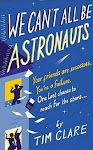
So yes, hooray, tomorrow, Wednesday 30th September, I'll be reading from my first book, We Can't All Be Astronauts, at the Bethnal Green Working Men's Club. But wait! Not only will my esteemed Aisle16 brothers in arms Luke Wright, Joe Dunthorne and John Osborne be providing support with new work, but we have a very special guest in the form of journalist and broadcaster Jon Ronson!
Basically, we think he's brilliant. You might suspect me of being sycophantic just to big him up for the gig, but one, you're much too clever to fall for obsequious propaganda, so I simply wouldn't bother, and two, I've posted very prominently before now - on this very blog - what a massive fan I am of This American Life, a show which he has contributed some of the best stories to. Check out Them, Habeas Schmabeas, Pro Se, and It's Never Over. In fact, while we're talking about superb radio, why not check out an episode of Jon Ronson On? May I humbly suggest The Wrong Kind Of Madness and The Worst Internet Date as two good places to start?
So yes. Come. The Timeout listing is here. Doors at 7:30pm, and we usually get started some time after 8:00pm. We'll all have books to sell and sign too, if you fancy one. I suspect it's going to be funtimes.
My word, I am pooped. This weekend just gone, I set off for four gigs over two days. My voice still hadn't (and still hasn't) recovered from Latitude, so I left little Tim Jr back in Cambridge and resolved to stick to spoken word.
I was in fairly high spirits after my gig on Thursday, supporting Byron Vincent on his Poetry Link tour, at Wax Lyrical in Colchester. It was my first time at the Wax Lyrical night, and Molly Naylor and Ross Sutherland were both on the bill as well, meaning essentially I got to perform with a bunch of much-valued chums. The audience were really lovely and I think I did one of the best twenty minute sets I've ever done. I felt very at ease and enjoyed just sort of blathering, telling anecdotes and making up my set on the fly. It also provided yet another reminder of the value of decent lead-ins - not only do they set up the poem nicely for the crowd, but I find now that the right sort of preamble actually helps to put me in the best mental state to perform the poem well. Anyway, basically it was great fun, and I really enjoyed getting to watch Ross, Molly and Byron perform their sets all on one night, to appreciative spectators. Oh, and the sound tech guy was a total champ - he stuck a lovely tickle of reverb on Tim Jr and made him sound all Hawaiian, full, and dreamy. Kudos to that guy.
On Friday it was off to Camp Bestival, down on the south coast, at Lulsworth Castle. There's something particularly cruel about Camp Bestival's location - from on site, you can see the ocean shimmering just a mile away. It felt like it was constantly teasing me - I mean, festivals are okay, but with the insanely hot weather Camp Bestival had, you can't help but wish you were down on a beach instead, cavorting on the sand or diving into cool blue waves.
Camp Bestival started out as a bit of a culture shock - we arrived to find ourselves kicking through drifts of jammy-visaged sprogs three or four deep. Squealing tykes battled with plastic swords, scampered about with balloons and crammed ice cream wafer sandwiches into their red, mewling gobs. The music on the main stages at Camp Bestival was pretty shite. I condescended to watch Florence and the Machine, against my better judgement, and wished I hadn't. I don't know what all the fuss is about - all I saw was some crapulent, equine-mawed toff caterwauling and dropping barrages of slurred f-bombs between her nondescript dirges, much to the consternation of the watching parents and children. Beatboxer Beardyman on Saturday was a similar waste of time - a smug, irritating cunt trying to spin a meagre party trick out into a career. I'm easily impressed by beatboxing, but you have to have some kind of interesting content or be exceptionally good at what you do - Beardyman has neither, and he compounds the problem with his constant toe-curling attempts at humour. It's like being stuck in a lift with Timmy Mallett.
But when the sun goes down, all the children suddenly seem to get removed by some sort of snow plough, and then Camp Bestival turns into a really excellent dance festival. Better yet, because it's such a family festival, the atmosphere in the late evening stays convivial - there aren't so many of the boss-eyed spannered townies you associate with banging choons. On Friday night we had a good ol' dance for many hours, ending up in the Silent Disco. Clare's Law: as the length of a Silent Disco increases, the probability of both DJs playing Cheese approaches 1. I bowed out gracefully as soused revellers bellowed Hey Jude up at the tent ceiling.
My readings on Saturday went okay. It's a bit tricky judging content and holding an audience when there are packs of roving kids swarming here there and everywhere, but I think I did okay. The hard thing is that a lot of parents tend to use book tents as creches, plonking themselves down on a cushion and leaving their kids to shriek and run about. There wasn't too much of that when I was on, though, and I'm usually shouty-shouty enough to make little children run away crying. I did a reading from We Can't All Be Astronauts in the early afternoon, then a poetry set with Scroobius Pip in the evening. I felt as if my rendition of Dear Man I Saw On The Platform At Colchester was a bit lacklustre - I think I might retire it for a while, just until I get the feeling back. I'm not an actor, so if I'm not feeling it then it just turns hammy, and I don't want to force that awful am-dram bollocks on some poor crowd.
By the time we were due to leave Camp Bestival, I'd become acclimatised to the huge numbers of kids, and found myself - embarrassingly - putting a hand to my chest and sighing with increasing frequency, as I saw and heard lots of very cute, very endearing things. Camp Bestival isn't my cup of tea - despite curator Rob Da Bank's claims of championing new bands, the music in the day is exclusively toothless crap - but the children there were obviously having an absolute whale of a time, and I was really happy for them.
Saturday evening we headed west, down to the Port Eliot Lit Fest. Aisle16 and Port Eliot have an association that goes back longer than I've been involved - at the last Port Eliot in 2007, we ended up doing about 20 plus hours of performance over two days; they might as well have renamed it Aisle16stock. I always enjoy Port Eliot because of its limited size - if you do a gig there, you instantly acquire a pseudo-celebrity that lasts for the whole weekend, and you can just wonder around chatting to people.
On the Sunday, me, Ross Sutherland and Joe Dunthorne did a performance of our show Found In Translation, about our attempts to infiltrate enigmatic French experimental literature group, the Oulipo. It went really well, as we suspected it might, because audiences at Port Eliot are always lovely. None of the mothers complained when I did my groin-thrusts and fecal splattering, which was gratifying. The weather on Sunday was crappy in the extreme - it was raining when we got up and it continued, unabated, all day and all evening, not letting up once. Port Eliot isn't really designed to cope with that sort of weather, and the tent we were performing in was leaking badly, the DI boxes for Ross's laptop sitting in an ominous marsh and bits of paper plastered to the stage with water.
Later on, I did a reading in the Round Room of the house. As the name suggests, it's a huge circular room with an elaborate and quite disturbing frieze painted across the wall and a large domed ceiling with a big chandelier hanging from the centre. I was directed to stand right beneath the chandelier, and as soon as I did, I could hear my voice being amplified and projected across the room. I believe it's called a Whispering Gallery - the acoustics are such that, if you stand in the centre of the room, your voice is projected by the architecture and you can hear everyone in the room perfectly. Lots of people turned up and I really enjoyed reading from Astronauts with my newfound big, booming voice. I did my first ever Q & A at the end, which was fun, and allowed me to babble enthusiastically about a bunch of things I like. Thanks Port Eliot!
Aside from some issues with our car breaking down, we had a great weekend. I think all this living outdoors has worn me down a bit though - I'm feeling ever so slightly under the weather, and I can feel my glands swollen up in my throat like big ol' gooseberries, so I'm committing to lots of water and quietness for the rest of the week, in the hopes that I can recover my performing mojo in time for Saturday, when I'm off to the Kendal Calling festival for yet more spoken word shennanigans and living under canvas. Hooray!
So, a while back, the ever-awesome Metafilter put me onto this exchange, between gaming legend Tim Schafer - who worked on Monkey Island, Day of the Tentacle and Grim Fandago, amongst others - and joystiq.com. In it, Tim and his interviewers turn a simple email exchange into an adlibbed mini text adventure.
It's a lovely, rich format for collaborative storytelling. Joe Dunthorne tried his hand at something similar, adopting the old Choose Your Own Adventure 'forking paths' style with his middle-class adventure 'You Are Happy', which you can play on his website. He's performed it a few times as part of our show about video games and hiding from reality, Infinite Lives, getting audience members to choose what to do next. I've particularly enjoyed watching the supporting schtick develop - one thing a text adventure can't do is demand that the player provide an explanation for their choice of path.
All of which is a preamble to this. Hey. You should go read MS Paint Adventures. After an entire year of inputs, the latest adventure, Problem Sleuth, is finally complete. When I read the last few frames, I felt kind of choked up and elated all at once.
Basically, it's an interactive webcomic, presented in the style of the Sierra-style text adventure/point n' click hybrids, like King's Quest or Leisure Suit Larry. Readers post suggested commands on a blog - e.g. 'Examine phone', 'Open safe', 'Get key', etc - then writer and artist Andrew Hussie picks one to draw next and develop the story.
The eponymous Problem Sleuth starts off locked in his office, and the first order of business is working out how to escape. Like any great storyteller, Mr Hussie's awesome at subverting expectation. Here, someone suggests punching through the office door's glass window:
Only to discover that it's not glass, but a piece of paper with his initials written backwards on it:
Watching the dynamic between Andrew and his audience develop is fascinating. As their attempts to solve the puzzle grow more and more creative, so his tactics for frustrating their attempts become increasingly elaborate. The result is a wonderful - if tortuous - piece of collaborative improv, full of cool narrative flourishes that draw from a plethora of disparate cultural sources to make something weird and technicolour and awesome. I don't want to spoil it for you, but suffice to say that soon there are multiple player characters, a host of mighty allies and a nasty-ass monster horde to be defeated. You probably won't have the stamina to read it all in a single sitting (it is a year's worth of posts, after all), but you can Save and Load your progress from the buttons just beneath the pictures. Click each command to advance to the next frame.
As you may have picked up from my previous post, I just finished a mini-tour with Ross Sutherland and Joe Dunthorne called Found In Translation, about language games and our attempts to infiltrate experimental French literature group the Oulipo.
In the show, we pass it all off as frivolous japes, but in reality, experimenting with language is fraught with peril. Ross and Joe found me (thank God) the morning after my attempt to write a poem where the only vowel used was 'A'. Apparently I had suffered a massive acid reflux and regurgitated all the unused letters. I post the shocking photographs of the scene they discovered in the hope that, if you know someone who is showing signs of discovering the empowering joy of playing with language, you can show them some of the repugnant consequences and dissuade them before they fall into a life of poetry. If that fails, I am happy to forward scans of my bank statements for the last twelve months, which I'm sure will be enough to send even the most ardent of aspiring wordsmiths galloping off to start a degree in Accountancy. [WARNING: GRAPHIC IMAGES FOLLOW]
As some of you may or may not care, I just finished a mini-tour of our show Found In Translation, the story of my, Ross Sutherland, and Joe Dunthorne's attempts to infiltrate the infamous French experimental literature group, the Oulipo, a group so radical and misunderstood that many people still don't believe us when we say they exist.
The Oulipo believed in placing restrictions on language to unlock one's true creativity. The central form we employed in our quest to gain entry was the univocalism - a word, phrase or piece of text that only contains one kind of vowel, e.g.:
A: Adam has a fat arm. E: She shredded the letters every weekend. I: Nikki's kissing this minging nitwit. O: My voodoo doll only works on God. U: Buddy tugs unlucky chumps' ruddy spuds.
Surely, we thought, if we each write a poem using this form, they'd accept us as one of their own.
You've guessed the end - we failed to join their ranks. But sod it, we picked up low-level psychosis on the way. Writing in just one vowel sends your mind's noise-to-signal ratio screwy. You start seeing patterns everywhere. Messages spring from every street sign. It becomes clear how an intelligent, creative person under a lot of stress might all too easily begin to think the universe was talking to him through shop hoardings and coffee machines.
Here's a selection of my poorly-snapped favesies:
This is my second favourite found univocalism, seeing as it's both a univocalism and a palindrome (a word that's the same spelled backwards or forwards):
But for sheer linguistic brio, you knew we were going to have to outsource to India:
If you spot any yourself when you're out and/or about, send them to me and I'll put them up on the blog. Gw'on!
BBC4 are starting a new season called Why Reading Matters. Reading and literacy are Good Things, I think we all agree. But it was a line in the Radio Times, previewing the season's launch programme, where 'Children's Poet Laureate' Michael Rosen 'does for literacy what Jamie Oliver did for school meals', that thumped one of my hot buttons.
The second paragraph begins: 'Seeing the children turn their attentions from computer games to We're Going On A Bear Hunt is uplifting stuff...'
Aw... c'mon now. Why did you have to bring games into this? What did they ever do to you?
First off, I ought to make it clear that I'm a big fan of Michael Rosen. Specifically, I grew up listening to a tape of his book Hairy Tales and Nursery Crimes, and I loved it. Hairy Tales and Nursery Crimes is just about the most puerile exercise in storytelling imaginable. The premise underlying the book is that he retells classic fairytales, substituting some of the words for ones that sound similar - thus the Giant's cry of 'Fee Fi Fo Fum, I smell the blood of an Englishman' from Jack and the Beanstalk gets changed to 'Fee Fi Fo Fum, I smell the blood of an English bum'. As you can imagine, at seven, this is hilarious. In fact, it still makes me laugh today.
Part of the reason I loved it was the pointlessness of it all. I mean that in the best sense. So often, children's books are expected to be worthy and elucidating, or beautiful, or intelligent. Even Roald Dahl, so often held up as hilariously subversive, was usually trying to convey broader moral ideas. But in HTaNC, there was none of that. The point, if anything, was love of language. What would have been the Giant's castle is a 'car sale'. There's no logic behind it, except the two things are almost homonyms, and, well, it's quite funny.
Anyone who's had the misfortune to get stuck in a long conversation with me will know I still enjoy this arbitrary word-switching today. As a kid, it was nothing short of liberating to be told - albeit implicitly - that it was okay to love language for language's sake. It taught me the power of words, showing me how simple tweaks of a vowel sound could radically alter your fictional landscape.
For me, that was true subversiveness. I'd spent countless hours sat cross-legged in assembly, singing words to hymns written in red marker on a OHT projected onto a screen in front of us. Nobody ever explained what the songs were supposed to be about, or why we were singing them, or demonstrated why we ought to believe in God, and even then, something about the bland conformity of it all bothered me. Actually, that makes me out to be more of a rebel than I was; I don't think I had a problem with conformity - I would've dearly liked to have fitted in - just blandness. Thus I began to amuse myself by substituting words in the hymns. I'm sure lots of people did this when they were younger. Some substitutions were, I think, fairly canonical, practised in schools right across the country - 'I am the Lord of the Dance said he' getting changed to 'I am the Lord of the damp settee', for example - where as others were entirely my own invention, and, like Michael Rosen's handiwork, totally pointless - except for the fact that they amused me, and allowed me to wrest back a few crumbs of self-expression.
All of which, I expect, would be duly lauded by the UK's self-appointed doyens of literacy as more proof - as if proof were needed - of the efficacy and magical transmogrifying powers of reading, and yet another reason why they should be paid lots of money to announce to people, in a variety of ways, that reading is a Good Thing.
But the fact is, video games had as much of an impact on the pupal Tim Clare as reading, if not more.
For a start, the two are far from mutually exclusive. Most games require basic literacy skills to enjoy, and many are so text- or dialogue-heavy as to be impenetrable to someone without a significant fondness for reading. The limited graphical capacities of the ZX Spectrum meant that most of the games I grew up with relied on a combination of text and imagination to construct their fictional universes, but unlike books, the reader played an active role in exploring the world and pushing the story forward.
As technology has progressed, so too has the sophistication and grandeur of the worlds games evoke. Even a decade ago, we saw titles like Planescape: Torment, a rich, funny, elegaic parable about a man who cannot die, and who cannot remember who he is.
It came out a full year before Momento, but the similarities are uncanny, despite the former's being set in a Fantasy universe where continents are shaped by the morality of their inhabitants. The central protagonist has no memory of his past, but has covered himself with various tattoos which give him clues - even the disembodied skull, Morte, who joins him as a sidekick, sounds oddly akin to the manipulative Teddy from Momento, and proves to be similarly untrustworthy. The game has multiple endings, over a hundred minor characters, and, it's estimated, in excess of 800,000 words of text and dialogue.
But even games like Super Mario - which has only two pieces of dialogue: 'Thank you, Mario, but your princess is in another castle,' and, I believe I'm right in saying, 'Thank you Mario. Your quest is over. We present you with a new quest,' - fired my imagination in ways nothing else could. I was dazzled by the bright colours, the impossible worlds, the excitement and creativity and otherness of it, and best of all, they were all worlds in which I had control.
When we wrote the full version of Infinite Lives, our show about art, video games, and growing up, Joe Dunthorne told a story that really resonated with me, about coming downstairs on Boxing Day, having spent two days holed up in his bedroom battling aliens on Turrican 2, and trying to convey his excitement to his family. Of course, he got a well-meaning but indifferent 'That's nice dear,' and he felt so deflated, he had a little cry.
I remember some relatives coming over from Canada when I was no more than 8 or 9, and my parents bringing them into my room, where I was playing a demo of a game whose name escapes me, but it was a pretty obscure vertically-scrolling shoot-em-up where you piloted some kind of biplane, everything was blue monochrome and almost half the screen was taken up by the score bar, which had a picture of some kind of dog wearing flying goggles at the top of it. That doesn't really help you much, except to give you an idea of how vivid and real these games were to me - much more, at least, than these 'Canadian relatives', whose names, faces, and exact familial link to me have all burned away like so much morning fog.
'Look at this,' I said. 'I'm playing a game.'
The chap gave me an awkward smile and said: 'That's nice. But we'd really like to hear you play on your fiddle.'
I hated playing the violin. I only took it up because I'd asked my Dad if I could take guitar lessons, but there weren't any places left, so my Dad told me to do violin, because 'it's almost exactly the same as a guitar'. I ended up wasting four years doing lessons on an instrument I never practised, whose music I never listened to, and when I told my music teacher Mr White I wanted to give up, I felt so wretched and guilty that I sobbed.
'This game is really cool,' I said.
'Could we hear you play your fiddle?' said the relative.
I was so deflated. We're constantly told that video games make kids sullen and uncommunicative. But, until now, at least, most adults are utterly ignorant of what a game can be, and how it can feel to immerse yourself in these rich, diverse fictional worlds. They don't have any shared vocabulary or common experience with which to chat to their children about video games.
I am now the obligatory weird guy on the train who gets talking to strangers' kids. It's because I'm usually playing my DS, and every so often, a child will sidle up to me, trying not to look like he's bothered, but surreptitiously looking to see what I'm playing. Then, he or she will try to start a conversation, either with an attempt to impress me by how many Pokémon they've caught (this is an impossible task - I have 423 Pokémon and counting, including Mewtwo; my Pokédex belongs in the British freaking Library) or with a question about whether I've played such-and-such a game.
Just taking the time to engage these kids in normal conversation about the games they like reveals a complex level of imaginative and intellectual engagement. They'll chat enthusiastically about the characters they've met, the adventures they've had, their triumphs, their failures - they're far from dimwitted automatons. They've just learned that adults don't care about these things, and they don't enjoy revealing their enthusiasm only to have cold water poured on it.
What if a child came downstairs brandishing a paperback, exclaiming: 'Oh Dad, I just read this amazing book!' and the father rolled his eyes and said: 'That's nice. Hey, would you put that down? We want to see your penalty kicks.' I mean, there's nothing wrong with expressing yourself through sport, either, but isn't it right that we encourage our children's passions? (unless they're fond of crack, or something)
Video games are a fantastic opportunity. Rather than trying to prise joypads from children's enraptured grasp, we need to shed all this pig-ignorant stuffed-shirt prescriptivism and adapt our education system to reflect genuine interests and needs. With not even 5 hours a week, but just 5 hours a term for every child, spent on encouraging ways in which they can critically and creatively engage with interactive media, we could lever disproportionately grand benefits to hundreds of thousands of children's intellectual and artistic development. Poets with books to flog may huff and puff about children reacting with indifference, but it seems to me that if you want to establish a dialogue with people, it's only polite to find out what they'd like to talk about.
Kids are going to play video games whether ill-informed pundits like it or not. Gaming has been with us for almost three decades now. We need to recognise this as the opportunity it is. Gaming is no more shameful than reading. When will educators grow up?
My first book, We Can't All Be Astronauts, is out now from Ebury Press. Buy it here.
About the Author
Tim Clare is a writer, stand-up poet and musician. His autobiographical book about having one last shot at your dreams, We Can’t All Be Astronauts, won Best Biography/Memoir at the East Anglian Book Awards 2009. It is out now from Ebury Press. He has written for the Guardian, the Times and the Independent, and has appeared on BBC2, Radio 1, 2, 4 and 6. In 2005 he presented the Channel 4 series ‘How To Get A Book Deal’. He is a regular performer at many festivals including Glastonbury, Leeds and Reading, and Latitude. To get We Can’t All Be Astronauts click here. To check out his latest gig schedule, click here. To get in touch, drop him a line at: joshureplied[at]yahoo[dot]co[dot]uk

 Hey, hey, hey, if you tune into to Radio 4 this Thursday, 19th November, at 11:30am, you'll be able to hear a show about the Oulipo, where they chat to me and my fellow Aisle16ers Ross Sutherland and Joe Dunthorne about our Oulipo-inspired poems and our show about our attempt to infiltrate the Oulipo, Found In Translation.




 Posts
Posts

