
Apologies for the spotty updates so far this 2010 - I'm hella busy with lots of pseudo-exciting stuff that may or may not come to fruition, and some of that will involve my posting sporadically worthwhile things on this here blog for your perusal. I do enjoy having a meagre platform for my first drafts and half-formed opinions like terrible irradiated embryos hacked from their dead mothers' swollen bellies.
Anyway, I just wanted to say that last week I went to see the latest solo shows by my dear chums Luke Wright and Ross Sutherland, during their run at the Old Red Lion Theatre (nearest tube Angel), which continues until the end of this month. Luke's is called The Petty Concerns Of Luke Wright and Ross's is called The Three Stigmata Of Pac-Man.
Obviously I'm not a very credible advocate of their work, because, as I've made clear, they're good mates of mine. HOWEVER, if I'd thought the shows were crap I simply wouldn't have mentioned them. I actually reckon that they're brilliant. You should go and watch them and see two experienced young poets operating at the height of their powers. They've had several splendid reviews, and a bit in The Independent, and, you know, if you're in London you should do something different and interesting with one of your weeknights and take a friend along who's never seen performance poetry before. The shows are funny and witty and not so long you'll get bumache, and you'll have a new thing to have an opinion about and you'll feel all cultured and arty when you talk to friends for the next couple of weeks.
Anyway, look, you can make your own mind up by watching these clips from their shows. I hope you enjoy:
Showing posts with label Ross Sutherland. Show all posts
Showing posts with label Ross Sutherland. Show all posts
Sunday, 24 January 2010

Monday, 16 November 2009
Found In Translation on Radio 4!
 Hey, hey, hey, if you tune into to Radio 4 this Thursday, 19th November, at 11:30am, you'll be able to hear a show about the Oulipo, where they chat to me and my fellow Aisle16ers Ross Sutherland and Joe Dunthorne about our Oulipo-inspired poems and our show about our attempt to infiltrate the Oulipo, Found In Translation.
For those of you who don't know, the Oulipo are a French experimental literature movement who played with imposing arbitrary constraints on language (like writing an entire novel without using the letter 'e', for example) as a way of breaking out of old habits and encouraging creativity. On discovering their work and techniques, we felt as if we were learning a whole new language. And, like anyone learning a new language, the first thing we wanted to do was be as rude as possible. 'Slap a gran's damp and tangy flaps!' we hollered, straining with mirth at our uncommon verve and ingenuity.
The show is apparently Radio 4's 'Podcast of the Week', so you should be able to download it afterwards, and it'll be on Listen Again for a week as well.
Wednesday, 21 October 2009
Local Boys Done Vid
 So yeah, those of you who came to the Local Boys Done Good edition of HOMEWORK will remember we did a show all about our hometowns. Well, guess what? If you missed it or just forgot it or loved it so much that you want to be locked in a cell with it projected onto your clammy delighted face 24-7 then fortune has shined upon you, friend, because it's up on Youtube. BOOM:
The more eagle-eyed, beagle-nosed and smeagle-fingered amongst you may have noticed a distinct absence of Tim-ness in this video collection. Well, that's cos when it came to doing my bit I heinously overran, plinking and a-plonking on my uke and waffling, and ended up going to about 23 mins or something insano. I think we all agreed it didn't really work as a conclusion, well-intentioned though it was, so rather than cram it in there, I'm rewriting my section for when we continue to develop the show next year. It'll be all polished up with a brand spanking new ending, extra bits, slicker delivery, and a slightly more aged, paunchier cast. On the plus side, this means we haven't given everything away online, so if you come to see us, you'll find out how it all ends, what it all meant, and hear me playing the ukulele. We're performing it at Norwich Arts Centre on Monday 8th February, so pen that monster in your diaries, yo. Hope you enjoy these flicks. If you do, commenting on them and posting them somewheres else like your blog or your Facebook wall would be a super-helpful indulgence. Gotta spread the word. Peace out.
Homework Is Due
So yeah, had a faboo weekend over in Liverpool at the Bluecoat, doing some challenging and fun gigs and getting to soak up some culture. I really enjoyed doing the Revolutions In Form gig on the Sunday, which featured live doodles, a poem passed Chinese Whispers style through the whole audience, performance art, music and film. I realise I'm not a very credible advocate for a gig I was part of, and I don't usually like bigging up gigs I liked anyway, because it makes me sound like an awful fawning luvvie, but I thought it was a really interesting show. 'Performance art' especially gets a bad rap as a blanket term, but at its best it just means someone doing something cool and fascinating live.
Um, so next Wednesday, the 28th of October, you should come to the final Homework of the season. Aisle16 will be performing The 9½ Commandments Of Aisle16. Okay, here's the pitch:
'When the British Council approached stand-up poetry collective Aisle16 wanting to commission a brand new live literature show for a "live, appreciative audience", they jumped at the chance. After doing a poetry tour of Britain’s motorway service stations and becoming the world’s first poetry boyband, as well as their regular appearances at festivals such as Glastonbury and Latitude, they were used to taking verse to new audiences. But there was a catch.
The show would be at the 2nd Annual Children’s Book Festival in Athens – and the "live, appreciative audience" would be composed entirely of Greek 7-year-olds, who hardly spoke any English at all. Never ones to shy away from a challenge – or money – Aisle16 set about trying to write a new poetry show that could be understood by people who barely speak the language.
The result is The 9½ Commandments Of Aisle16 – a stand-up poetry show featuring fat bullies, God’s rejected fish prototypes, and a portrait of the yeti as a young man."
So that'll be Chris Hicks, Luke Wright (interviewed here), Ross Sutherland (interviewed here), and Joel Stickley (interviewed here). There'll also be supporting performances of new material from me, Joe Dunthorne and John Osborne. Which means it's going to be that hella rare equinox where all seven members of Aisle16 are in the same place, at the same time, performing at the same gig. I know. You're correct to water your underpants in entrancement and terror. It will doubtless be a dead good finale to a super-successful season of Homework. Come, imbibe heartily with us as we say adios to our darling literary cabaret night for another year. And gawd bless the Arts Council for supporting our efforts. We've done our best to make it memorable, and give our audiences something more interesting than just blokes chuntering on in a vaguely artsy way.
Oh, and hey - you ought to check out the new online ventures from two of our members. Joel Stickley has started a blog called How To Write Badly Well. Partly based on his experience as a creative writing tutor, each short lesson builds up into a step-by-step guide on how to excel in composing dreadful prose. He claims he's going to update every Friday. Even though this seems a modest schedule, from experience I expect it will prove to be a SORDID LIE. Still, you should read it because it is well-wrought and funny. As someone who does a bit of the old creative writing tutoring from time to time, I enjoyed a few recognition laughs, along with a few twinges at stylistic gaffes I'd committed myself.
Also, Ross Sutherland has a new website up, here. Lots of poems, vids, links, gig dates, etc. I reckon 'The End Of Our Marriage' is particularly good.
 In other news, after a weekend of appalling eating habits in Liverpool, including two takeaway pizzas and two meals at McDonalds culminating in a McGangbang (a double cheeseburger with a chicken mayo shoved in-between them... I KNOW) I am in the midst of a week of detox. No alcohol, no nicotine, no caffeine, no meat, no dairy, no sweets, no crisps. Steering away from unrefined carbs and stuff that's high on the glycemic index as much as possible. Losing Diet Coke feels like the cruellest blow thus far, which I suppose only goes to prove how much of an addle-pated addict I am. Yesterday I spent the whole day feeling like absolute crap, with a pounding headache. Today, I feel a bit better, albeit enfeebled. It's only until Saturday morning, anyhow, then I get to go right back to stuffing hot hogsflesh into my slavering unclean craw.
Saturday, 17 October 2009
Mercy Me
So, I'm in the midst of a rather pleasant weekend in Liverpool, doing a bunch of gigs at the Bluecoat. On Friday evening, I got to host an evening with Vic Reeves, where we introduced a sold-out crowd to his new book, Vic Reeves' Vast Book Of World Knowledge. As you can probably imagine, I was absolutely essential to keeping the otherwise meek and audience-shy Senor Reeves buoyed up and confident over the course of the show. A well-deserved pat on the back and an egg sarnie for me.
If you're around Liverpool and its environs, Saturday 17th sees me and Ross Sutherland (who I interviewed here) doing our show Infinite Lives, about retreating from the shitty, complicated miasma of real life into the clearly defined score tables and unlimited retries of video games. Also we do poems and some music. It's free, in the Bluecoat bar, so come, get soused, and appreciate us with your massive praise-beaming faces. On Sunday the 18th, me, Ross and Nathan Jones (who I interviewed here) plus a whole host of other musicians and artists are doing a gig at the Bluecoat called Revolutions In Form. There'll be a slew of non-wanky experiments in being interesting and entertaining with spoken word and its many mutant cousins - I can't speak for the other artists, but for my part, I'll be doing a brand new performance poem and a brand new uke piece. Hopefully I won't rot the ears off my audience through sheer incompetence. It starts at 8pm. If you're in Liverpool, come, or I'll silently resent you.
Finally, Issue 9 of Mercy's online magazine Flatline has just come out. Click here to read it. On page 6 you can read a new poem from me - I hate to be a gushy pranny but I love the illustration, done by a chap called Kenn Goodall. I'm proper chuffed with it. I think it's wonderful, and I'm usually a fussy twat. Go have a look, and let me know what you think.
Wednesday, 29 July 2009
More What I Did On My Holidays
My word, I am pooped. This weekend just gone, I set off for four gigs over two days. My voice still hadn't (and still hasn't) recovered from Latitude, so I left little Tim Jr back in Cambridge and resolved to stick to spoken word.
I was in fairly high spirits after my gig on Thursday, supporting Byron Vincent on his Poetry Link tour, at Wax Lyrical in Colchester. It was my first time at the Wax Lyrical night, and Molly Naylor and Ross Sutherland were both on the bill as well, meaning essentially I got to perform with a bunch of much-valued chums. The audience were really lovely and I think I did one of the best twenty minute sets I've ever done. I felt very at ease and enjoyed just sort of blathering, telling anecdotes and making up my set on the fly. It also provided yet another reminder of the value of decent lead-ins - not only do they set up the poem nicely for the crowd, but I find now that the right sort of preamble actually helps to put me in the best mental state to perform the poem well. Anyway, basically it was great fun, and I really enjoyed getting to watch Ross, Molly and Byron perform their sets all on one night, to appreciative spectators. Oh, and the sound tech guy was a total champ - he stuck a lovely tickle of reverb on Tim Jr and made him sound all Hawaiian, full, and dreamy. Kudos to that guy.
On Friday it was off to Camp Bestival, down on the south coast, at Lulsworth Castle. There's something particularly cruel about Camp Bestival's location - from on site, you can see the ocean shimmering just a mile away. It felt like it was constantly teasing me - I mean, festivals are okay, but with the insanely hot weather Camp Bestival had, you can't help but wish you were down on a beach instead, cavorting on the sand or diving into cool blue waves.
Camp Bestival started out as a bit of a culture shock - we arrived to find ourselves kicking through drifts of jammy-visaged sprogs three or four deep. Squealing tykes battled with plastic swords, scampered about with balloons and crammed ice cream wafer sandwiches into their red, mewling gobs. The music on the main stages at Camp Bestival was pretty shite. I condescended to watch Florence and the Machine, against my better judgement, and wished I hadn't. I don't know what all the fuss is about - all I saw was some crapulent, equine-mawed toff caterwauling and dropping barrages of slurred f-bombs between her nondescript dirges, much to the consternation of the watching parents and children. Beatboxer Beardyman on Saturday was a similar waste of time - a smug, irritating cunt trying to spin a meagre party trick out into a career. I'm easily impressed by beatboxing, but you have to have some kind of interesting content or be exceptionally good at what you do - Beardyman has neither, and he compounds the problem with his constant toe-curling attempts at humour. It's like being stuck in a lift with Timmy Mallett.
But when the sun goes down, all the children suddenly seem to get removed by some sort of snow plough, and then Camp Bestival turns into a really excellent dance festival. Better yet, because it's such a family festival, the atmosphere in the late evening stays convivial - there aren't so many of the boss-eyed spannered townies you associate with banging choons. On Friday night we had a good ol' dance for many hours, ending up in the Silent Disco. Clare's Law: as the length of a Silent Disco increases, the probability of both DJs playing Cheese approaches 1. I bowed out gracefully as soused revellers bellowed Hey Jude up at the tent ceiling.
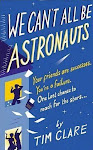
My readings on Saturday went okay. It's a bit tricky judging content and holding an audience when there are packs of roving kids swarming here there and everywhere, but I think I did okay. The hard thing is that a lot of parents tend to use book tents as creches, plonking themselves down on a cushion and leaving their kids to shriek and run about. There wasn't too much of that when I was on, though, and I'm usually shouty-shouty enough to make little children run away crying. I did a reading from We Can't All Be Astronauts in the early afternoon, then a poetry set with Scroobius Pip in the evening. I felt as if my rendition of Dear Man I Saw On The Platform At Colchester was a bit lacklustre - I think I might retire it for a while, just until I get the feeling back. I'm not an actor, so if I'm not feeling it then it just turns hammy, and I don't want to force that awful am-dram bollocks on some poor crowd.
By the time we were due to leave Camp Bestival, I'd become acclimatised to the huge numbers of kids, and found myself - embarrassingly - putting a hand to my chest and sighing with increasing frequency, as I saw and heard lots of very cute, very endearing things. Camp Bestival isn't my cup of tea - despite curator Rob Da Bank's claims of championing new bands, the music in the day is exclusively toothless crap - but the children there were obviously having an absolute whale of a time, and I was really happy for them.
Saturday evening we headed west, down to the Port Eliot Lit Fest. Aisle16 and Port Eliot have an association that goes back longer than I've been involved - at the last Port Eliot in 2007, we ended up doing about 20 plus hours of performance over two days; they might as well have renamed it Aisle16stock. I always enjoy Port Eliot because of its limited size - if you do a gig there, you instantly acquire a pseudo-celebrity that lasts for the whole weekend, and you can just wonder around chatting to people.
On the Sunday, me, Ross Sutherland and Joe Dunthorne did a performance of our show Found In Translation, about our attempts to infiltrate enigmatic French experimental literature group, the Oulipo. It went really well, as we suspected it might, because audiences at Port Eliot are always lovely. None of the mothers complained when I did my groin-thrusts and fecal splattering, which was gratifying. The weather on Sunday was crappy in the extreme - it was raining when we got up and it continued, unabated, all day and all evening, not letting up once. Port Eliot isn't really designed to cope with that sort of weather, and the tent we were performing in was leaking badly, the DI boxes for Ross's laptop sitting in an ominous marsh and bits of paper plastered to the stage with water.
Later on, I did a reading in the Round Room of the house. As the name suggests, it's a huge circular room with an elaborate and quite disturbing frieze painted across the wall and a large domed ceiling with a big chandelier hanging from the centre. I was directed to stand right beneath the chandelier, and as soon as I did, I could hear my voice being amplified and projected across the room. I believe it's called a Whispering Gallery - the acoustics are such that, if you stand in the centre of the room, your voice is projected by the architecture and you can hear everyone in the room perfectly. Lots of people turned up and I really enjoyed reading from Astronauts with my newfound big, booming voice. I did my first ever Q & A at the end, which was fun, and allowed me to babble enthusiastically about a bunch of things I like. Thanks Port Eliot!
Aside from some issues with our car breaking down, we had a great weekend. I think all this living outdoors has worn me down a bit though - I'm feeling ever so slightly under the weather, and I can feel my glands swollen up in my throat like big ol' gooseberries, so I'm committing to lots of water and quietness for the rest of the week, in the hopes that I can recover my performing mojo in time for Saturday, when I'm off to the Kendal Calling festival for yet more spoken word shennanigans and living under canvas. Hooray!
Tuesday, 21 July 2009
What I Did On My Holidays
So, after a day of sleeping and staggering groggily about the flat with Supernoodles dangling from my slack gob, I've officially recovered from Latitude festival 2009. My voice is still pretty buggered, so no arias for a week or so, but aside from that I'm compos mentis so woot.
Despite intermittently shitty weather, this year turned out to be a bit of a corker. I was performing every day, doing sets in the Poetry Arena and also reading from We Can't All Be Astronauts in the Literary Tent. The reading from my book was a particularly nice surprise - they told me to tell the audience that I'd be signing copies afterwards, and I cringed at a vision of me sitting glum and alone behind a pile of my books. Instead, we sold out of copies! I felt incredibly flattered and a tiny bit fraudulent, but, you know, I think in these instances it's best to drop the self-effacement and just enjoy it, which I did. Thanks if you bought a copy. You made me feel really chuffed.
In the Poetry Arena the audiences seemed bigger than we've had in previous years, and on Thursday and Sunday they were particularly enthusiastic. I didn't catch everyone who performed, but I felt Nathan Filer, John Osborne, Kate Tempest, Dockers MC and MC Angel had particularly good innings. Kate Tempest with her band Sound of Rum managed to get a crowd who had started out listless and subdued up on their feet and dancing by the end of their set, which was incredible to watch. John Osborne did the best performances I've ever seen him do - I particularly enjoyed the point where audience members started spontaneously yelling out names of bands that only use the vowel e. One guy shouted out ELO, to which John responded: 'That's a rubbish attempt. There are three letters in that name. One of them's e, and one of them's l. Do you see where you fell down?'
The tent on Sunday just got warmer and warmer as the evening went on, until it was rammed and the crowd were really up for it, whooping and cheering and belly laughing. My highlight of Aisle16 and Friends was watching MC Angel start a rap battle with Keith Allen. Keith Allen was better at freestyling than you might have guessed, and it was great, drunken, knockabout fun that had the audience laughing and questioning their sanity in equal measures. Aisle16's late night sessions in the Poetry Arena always teeter on anarchy, and the upside of that is that amazing bits of performance can arise spontaneously and give everyone present one of those festival 'moments' that we're all fiending after. Watching Ross Sutherland carry the mic into the middle of the audience to lead the tent in a rousing chorus of Total Eclipse Of The Heart was another bumper, albeit silly, moment.
Thank you to everyone who came to watch us, or gave poetry a try over the weekend. It's really salutory to do it and basically not be crap. It reminds me of why we do it in the first place - we just want to give people something fresh and new that can be funny and exciting and emotional all at once. That sounds gushy and pretentious until you're in the middle of a show that's going really well, then you realise, oh, it's true.
In another news, yesterday I stumbled across the Decemberists for the first time. Someone mentioned them in the same sentence as Jonathan Coulton, and I was like, aha. I love what I've heard so far. After my nap yesterday I got up and had a little dance around the living room with my wireless headphones on. Here are just two, Valerie Plame and The Legionnaire's Lament. Funtimes.
Friday, 1 May 2009
Okay, Move Inside For The Next Ride - Let's Go!
So I went to the fair last night. By day, I'd watched dozens of caravans jaw open, folding out into huge anglepoised monstronsities and structures like giant mechanical crabs barnacled with coloured bulbs. Kids on BMXs rode between dusty parked vans. Petrol generators began putt-putt-putting. Hotdog stalls rolled up the silver slat of their mouths as onions hit the hotplate, hissing and squeaking. Then the music.
 It's hard to tell, but this is a picture of a man digging around inside the iPod grabber crane machine. I assume he was the owner.
Me and Ross plodded amongst the rides and games, tugging on beers and feeling well teenagery. I admired the airbrushed artwork adorning the various rides, consisting almost entirely of unlicensed movie character mash-ups. I was a bit disappointed at the low turnout of apocrypha - usually there's some kind of rollercoaster called 'Knightrider' with a picture of Frodo piloting a tank - but it was nice to see the children's 'Funhouse' depicting Winnie the Pooh and friends apparently recoiling in confusion and horror as a gang of non-canon anthropomorphised animals rushed towards them (there was a bear with librarian's spectacles and a green bowler hat, also some kind of cloth-trousered warthog). The air was filled with strangled screams, the hiss of pneumatics, and a sickly meshwork of competing choons.
'Thanks to carnivals, Rave will never die,' said Ross. Each ride had a dark little rectangular booth, from which the ride operator would launch short bursts of faux-DJ patter with clipped, very nasal aggression.
'Okay, move inside for the next ride, let's go!' This phrase seemed to be standardised, delivered at exactly the same pace with exactly the same tone by every ride operator we encountered.
Two teenage girls, maybe 13 or 14, came up to us.
'Excuse me.' The shorter of the two was carrying a little red bike on her head. It was about the size of hi-fi speaker. With the bike on her head and a handbag dangling in front of her knees, she resembled a kitsch, rather unambitious totem pole. 'Do you want to buy this? Only a quid.' We chose to pass up her offer, although she fought long and hard to change our minds. Her main selling thrust was that she was only asking a quid. Ironically, that was my central reason for turning her down. The knock-down price made me suspicious that the bike might be cursed. I don't doubt accepting it would have sparked a chain of parlous, zany events ending with a knife fight in a submarine over a cache of lost doubloons, but I didn't want to carry it round all evening.
'Okay, move inside for the next ride, let's go!'
Eventually we came upon a shooting gallery. There were rifles and crossbows. I went for a crossbow - I'd never used one before but I reckon crossbow skills will be more handy in the forthcoming apocalypse, since crossbow bolts are reuseable and therefore more economical. The gruff stall owner with grey hair and a sweat dappled navy blue t-shirt showed me how to load a bolt. On the other side of a - frankly pathetic - simulated jungle vista, was a paper target. I glanced across at the rules, and discovered I had to get a bolt inside the red star to win.
I leaned forward, bracing my elbow against the countertop, lined my eye up with the sight, aimed at the centre of the red star, then tilted the crossbow up a bit, to account for drop-off. My fingertip balanced on the rusty trigger. I squeezed.
Bullseye. First shot. For my prize, I chose a little lion. He's called Mister Braintree, after the lion Barny Juno liberates from Karloff Velocet's circus in Steve Aylett's Accomplice quartet. So.

Wednesday, 1 April 2009
The Performance Poet Interviews - #7: Ross Sutherland
It's that time of week again. While I lie, sleepless, in my sickbed, clutching at the thick air and phasing in and out of languid fever dreams, you get to enjoy the erudite opining of Ross Sutherland.

How did you get into performance poetry?
I’ve written poetry since I was five. My gran and I used to write together. She would use rhymes to help me remember shopping lists, stuff like that. When I moved to England, we kept in touch through poetry. That was the sole medium of our relationship.
When I was about thirteen, I inherited a copy of John Cooper Clarke’s collection, 'Ten Years in an Open-Necked Shirt'. Two years later I went to see him at the Music Box in Edinburgh. Hearing those poems live was so dramatically different to the audiobook version I’d been running through in my head. Everything was transformed by his personality: his delivery, his accent, his banter with the crowd... it made that book seem so much more vital. It gave it a pulse.
The live poetry club quickly became the sounding board for everything new that I wrote. As my confidence onstage grew, so did the confidence of my writing voice. I was being constantly exposed to new ideas and techniques that I felt I could incorporate into my own work.
I know you can do these things without getting up on stage. But what’s special about poetry clubs is that they reach beyond poetic tradition. People gravitate into poetry for lots of different reasons: rappers sick of getting drowned out by their beatmen, comics who want a break from counting laughs, actors developing monologues, and so on. It’s inclusive for artists and audiences alike.
As a result of this mongrel upbringing, you can take these poets out of their clubs, put them into a theatre space, a short film, a comedy club, in-between bands at a music festival, and they adapt and thrive. Like cockroaches. Very entertaining cockroaches.
Do you think there's a difference between 'page' and 'performance' poetry? If so, what?
So there’s this impenetrable hermit-poet who typesets all his writing so it looks like he’s yanked it out of a printer jam. He submits anonymous articles to poetry journals, and openly asserts that any live performance of a poem (including performances of Shakespeare) is watering down its impact to a point where you might as well not call it poetry at all.
Then there’s this drama student who wasn’t breastfed as a kid, who has decided to write bad rhyming standup, despite the fact that the only poets they know are Wilfred Owen and Q-Tip.
These caricatures are definitely out there, but they’re the indulgent extremes of the fringe. The poetry scene likes to bring these guys up from time to time in order to sling mud at one another. In fact, I think most of us are somewhere in the middle of page and performance, trying to balance content and delivery equally.
A poet giving a straight reading from their book is still aware of the importance of giving the best possible oration. They’re still performing. At the same time, the poets who choose to incorporate comedic or dramatic techniques into their sets are still drawing heavily from the poetic tradition. Dividing poetry into page and performance seems unhelpful... it’s hard to imagine one existing without the other, and all the best poets are both.
So how would you describe your work?
Err. There’s not much useful lexicon in common circulation. It’s hard to identify concrete trends or scenes, or identify all the influences that go into a poet’s work, so we find it hard to describe what separates us from each other.
MAN 1: Would you like to come with me to watch the poet Ross Sutherland?
MAN 2: Dunno, what’s he like?
MAN 1: He’s a Comic Romantic. Roots in Projective Brutalism, filtered through Puzzler Magazine. Occasionally you wonder if he might be a parody of a poet and the joke is on us. Sounds like Shel Silverstein with a cold. Interested?
MAN 2: No.
Why should someone come to a performance poetry gig?
Because they’ve watched some stuff online and they like the sound of it. Best way to do that is to check out the websites of the big poetry clubs. Nights such as Book Slam, OneTaste and Homework in London. Hammer and Tongue in Brighton, Big Word in Edinburgh. Surf around and see if anyone takes your fancy. For starters, I recommend David Jay, Excentral Tempest, Niall O’Sullivan, Nathan Filer, Byron Vincent, Francesca Beard, Polar Bear and my own collective Aisle16.
Whatever you do, don’t just pop along to your local poetry open mic. The grassroots scene can be amazing, but it can also feel like gatecrashing a therapy session. Do your research before you commit.
What do you think your best poem is, and why?
Whatever I’ve written most recently. My repertoire is basically a conveyor belt. Favourites drop onto the front, get tired and increasingly hackneyed, then eventually drop off the back into embarrassment and regret.
If you could nick one other person's poem and claim it as your own, which poem would it be, and why?
There’s be no point. I’d steal it, rinse it out every night on stage for six months, then start hating it and drop it from my set. People would be all like, “Ross, why don’t you do Prufrock anymore?” and I’d be like, “ah, that’s so cheesy.”
What typifies bad performance poetry to you?
Tom Cruise’s poem in Cocktail. It covers every major don’t in poetry in less than sixty seconds:
Also - people who use the stage as a soapbox for liberal causes that no one in the room could ever possibly disagree with. Racism is bad. Clubbing seals is bad. Totalitarian regimes are bad. Just once, I’d love a Nazi to stand up in the middle of one of those poems and shout “Nnnnoooo!”
Tell us about a particularly memorable reaction you've had to your work.
I once compared a wrestling match in St Helens, reading poems in-between bouts. It was amazing. The wrestlers were very pleasant to me backstage. About halfway through the event, I read out a love poem called “Let’s Wrestle”. One of the heels, a wrestler called Heresy, jumped into the ring with me. He tore the hat off my head and bellowed, “I told you, I hate that hat!” Then he stuffed the poem into my mouth, beat me up and threw me out the ring. At that point, one of the goodie wrestlers had to run in and save me. We didn’t get to practice beforehand, so I’m not sure how realistic it looked. The kids went apeshit for it though.
Afterwards, Heresy congratulated me on my performance. “I’d glad you kept the poem in your mouth,” he said. “Usually, when I defeat a wrestler, I tear a page out of the bible and make them eat it, but they always spit it out straight away.” That’s what the poetry scene has taught me: stagecraft. Stagecraft and humility.
Wednesday, 18 March 2009
The Performance Poet Interviews - #5: Nathan Jones

How did you get into performance poetry?
There were some important men in my life early on. Mainly Ginsberg, then Gershwin lyrics, then the terrible Thomases (Dylan and R.S)… and Eliot! Where am I going with this?
Through certain half deserted streets, probably. So anyway reading Eliot really gave me a kick up the arse – the time when we were taught Prufrock by Matt Jordan in John Moores University, and he was giving up fags and marching up and down the room going DO I DARE! And DO I DARE! That was a big turning point, when I started to find a voice that wasn't 'beat'.
Anyway, I was writing poems about the drinking booze in the neon city and suchlike all the way through university. But they didn't give us much idea about what you actually do with poems once you've written them, aside from the fact that you send them to poetry periodicals. I didn't really see why you would want to do that. So after university I started writing kind of Odes for Mercy magazine, which seemed to be the only real outlet that wasn't just for other poets, and I had a pseudonym so I felt I didn't have to be all lofty or serious. My first Odes were for The Grapes, a pub that wound up being called the Sick Lizard for a while, which I lived in sitting at the bar and eventually we drank all the liquor, paying for it by standing behind the bar and pouring it for ourselves, and I remember that every afternoon we would have to go to the off-licence and buy more cans of beer – ostensibly to sell, but seeing as there was no heating or running water in there you couldn't blame anyone for not coming in and eventually we drank the cans of beer and went to sleep on the seats there. It was like being the barman out of Quantum Leap, in a way. Then the pub went out of business for some reason and I had to go up the road. They were dreadful times, and the poem reflected that with a certain amount of pathos I think. And it wasn't about Me, so you could call that a bit of a watershed. That should be in those top tips you were going through. Don't write about yourself all the time. It's boring.
So eventually I got round to producing stuff quite regularly, most of it about myself, and I bought a tweed suit that in retrospect made me look like Compo out of Last Of The Summer Wine, and I started reading my poems out then. Selfish, not funny poems with no shouting or music. Roll up in one hand, whiskey in the other.
Then I started working in a café at FACT and Ross Sutherland came in. Your friend and mine. I was going bald, although now I have a fine head/face of hair. Then we started Fiction @ FACT, poetry events with tunes and drinking and that. I definitely had in mind the sort of 'happening' vibe that you associate with the first readings of Ginsberg's Howl poem, which I still think was the last poem to actually change the world. And anyway I would perform there every month and see Ross perform his stuff which was much better than mine and every month I would try to top him by doing a pastiche of a different 'school' of writing… surrealism and imagism and that… Once a keyboard player fell off the back of the stage. That was great. And Nick wore a colander. And Ross would carry on being better than everyone just being himself and getting all the girls. And then I developed a faux-welsh accent, which worked kind of like the pseudonym, I guess. Then I was a performance poet for a while, because I had a poem called 'Too Hot For Love', which people could remember afterwards. Catchphrases are good. Refrains, so people know what you're on about even if they have started thinking about their mole for a minute. And a silly accent.
Although I've always thought that my links aren't really good enough for me to call myself a performance poet.
So yes, I blame it on Ross Sutherland. Great poet, great performer, bad gait. Awful gait. And all the Fiction poets really, Nick Holloway, Dave Bamford, Olly Grunner, and now you and Joe and the two Lukes [Kennard and Wright], who push you and make you feel part of something. Nick ran a performance night too, called Someone Is Watching, which in a way was a spooky premonition of our current nights Wave If You're Really There, perhaps we are religious poets! Anyway, yes, Nick's nights were every Sunday so that was a regular thing you had to write for too. That was a good way to learn, and 'be'.
How would you describe your work?
Sometimes it is lengthy and discursive, sort of bouncy and friendly, like someone who is having an excellent conversation with a good friend not letting them get a word in edgeways and really trying to get to the bottom of a subject I suppose. Although that is just my lastest poem.
Visceral realism, I do. Or what I would call visceral anyway, with some real raw feeling thrown in for good measure. 'Shit, I'm angry.' Or 'He was angry and sad. What is sadness anyway...' A poem by me might start. And it would probably end 'Washing chips up in a tree'.
Nina wrote that actually, skitting one of Ross's automatic poems. It's good isn't it? She writes songs too: www.myspace.com/ninajonesmusic. My poems are actually usually remarkably similar to whoever I'm reading at the time, but with more Me in them, and a bit of Nina.
Do you think there's a difference between 'page' and 'performance' poetry? If so, what?
I suppose performance poetry is funny. That's almost a guarantee, that if it isn't funny at all then it is a flop. Like all rules, this is a pretty rubbish one. Forget it. And you can take your idea of the fact that they have to be three minutes long, or even under five and shove it up your arse too. David Jay is the best performance poet I've ever seen, and he isn't really funny and he goes on for yonks. So there you go! Or do you?
I don't know. I suppose we all like to think that people will enjoy our poems written down, but actually we know that no-one would really actually ever read them. What are they going to do? Buy a book of poems and then read it?
I doubt it, Tim. At least not with the intensity and in the numbers you can achieve with performance. If you want people to know your poetry, you have to go out and read it to them, and then I think that out of this comes all the stylistic and quirky and dynamic things that are basically to do with audience development. You learn to work with crowds so that they will like you/your poems more and maybe more people will come and listen harder next time. And maybe one day someone will say 'I liked this bit' instead of asking you how you remembered the whole thing. No-one ever knows what to say to you after you have just been on stage, especially if you are still learning.
I am saying 'you' 'you' all the time here, but I mean 'me', 'I'. It has been fucking painful, sitting there and watching Ross take all the girls to his bedroom one by one.

But then I have a feeling that people like David Jay, and to a certain extent you, have performance as a medium in itself. That probably makes for a more satisfying experience. And where do people who are good and don't perform fit into my theory? Like, erm, Seamus Heaney.
What about this: the difference is the generosity of performed poetry – when it's good, it seems like such a generous thing to do for people, but when it's poo the poet just looks selfish. It's a generous risk to take, in itself. But sometimes you wish you hadn't bothered, and at those times everyone else wishes you hadn't too. Whereas page poetry is just quite good or brilliant, or it doesn't even exist.
As long as I am still allowed to think of myself as a direct artistic descendent of T.S. Eliot, I don't care.
Why should someone come to a performance poetry gig?
It's only a fiver, and we have music on too.
What do you think your best poem is, and why?
The Bell. It is nice and long and gathers in intensity. And it rhymes, so it has this quality that makes it seem like it existed before I wrote it. I have a link here to when I performed it in Tate with a load of artists, and Wave Machines…
http://liverpoolstories.blogspot.com/2008/12/mercyliverpool-tate.html
I also love this one because it is the first one I wrote specifically for a performance with Wave Machines.
If you could nick one other person's poem and claim it as your own, which poem would it be, and why?
Kenneth Koch, 'The Art Of Love'. He is so confident and human at this point in his career, and there is none of the pretension of poetry holding him back, although poetry is the perfect way to describe what he's doing. And it's nice and long so you can settle into it. And it's funny and clever and tall and everything that you want in a man.
What typifies bad performance poetry to you?
'Middle Class Girls'.
No! I'm joking. I love that one.
Basically, it's bad if it's not funny, and with nothing to replace that humour. I'm not usually funny, but when I'm not being funny you can be sure that I'll do a big shouty shouty bit with the stary eyes pretty soon. Even then it can be really bad. You can't get away with just doing a shouty shouty when there are only about four people watching you – although I have tried. My girlfriend nearly stopped loving me that night.
Like I said, you can tell bad performance poetry when there is no generosity in it. That's not something that you can add in to a performance, like you can add it into hosting, where you just have to remember to give people things – it just comes from the work and performance being good. As an audience member you think, Thanks very much for that. There are lots of variables though.
Actually. Maybe that is it. Me and Ross used to talk about 'giving' people stuff as a performer. Bad performance poetry just doesn't give you anything. Open Mic nights are generally a bad idea to go to, unless you want to try new material.
And I HATE it when people swap words about in a sentence just so the rhyme lands on the end of the line. It's not 'To the shop I was walking' you div! And nothing good ever came from rhyming with walking anyway, what are you going to say, 'And to my fingers I was talking'?
What do you think of the state of the UK performance poetry scene at the moment? Is it okay to talk about a 'scene', or is that a bit unhelpful?
I don't know. Ask Ross. Ask Roddy Lumsden. He will know, but he might not tell you. He is the best poet, I think, and he seems to act like a bit of a dad to everyone else, even though he's not old enough to be your dad.
Tell us about a particularly memorable reaction you've had to your work.
A little girl came up after a recent performance and asked for my autograph. I nearly cried. It was this performance:
http://shootoutproject.blogspot.com/2008/06/013-lived-to-learn-language-nathan.html
Must have been the braces.
Actually, I think that was the only time I have not gone off and gotten completely leathered after being on stage, because it was in the afternoon. So it is the most memorable reaction by default more than anything else. Maybe there have been some really great anecdotal reactions I've had, but I can't remember any of them. I can do this, because I really perform quite rarely. You guys would probably turn all yellow if you got drunk after every single gig.
I'm not sure if you would count this as a "reaction to my work", but it might be a good opportunity to state some cold hard facts:
Ross once had everyone at a packed stage at Latitude call me a cunt, because I had fallen asleep in a ditch instead of taking to the stage after Patti Smith. Patti Smith was supporting ME. In a way. Anyway, that actually was potentially the biggest moment of my whole writerly career, and I spooned it. I was asleep in a ditch. Okay? Apologies to everyone involved in that particular booboo, except Salena Godden.
Thursday, 5 March 2009
Language Is Not A Game
As you may have picked up from my previous post, I just finished a mini-tour with Ross Sutherland and Joe Dunthorne called Found In Translation, about language games and our attempts to infiltrate experimental French literature group the Oulipo.
In the show, we pass it all off as frivolous japes, but in reality, experimenting with language is fraught with peril. Ross and Joe found me (thank God) the morning after my attempt to write a poem where the only vowel used was 'A'. Apparently I had suffered a massive acid reflux and regurgitated all the unused letters. I post the shocking photographs of the scene they discovered in the hope that, if you know someone who is showing signs of discovering the empowering joy of playing with language, you can show them some of the repugnant consequences and dissuade them before they fall into a life of poetry. If that fails, I am happy to forward scans of my bank statements for the last twelve months, which I'm sure will be enough to send even the most ardent of aspiring wordsmiths galloping off to start a degree in Accountancy.
[WARNING: GRAPHIC IMAGES FOLLOW]


Wednesday, 4 March 2009
The Performance Poet Interviews - #3: Nathan Filer
Last week, I talked to Polarbear, the week before it was Dockers MC. Today, it's the turn of Nathan Filer.
GOTH vs EMO from nathan filer on Vimeo.
How did you get into performance poetry?
Ten years ago I was living in Greece and working as an hotel entertainer. I was utterly useless. One holidaymaker helpfully described me as the most pathetic bingo caller he'd ever seen (and this was a man who had his own dabbers, so I'm guessing he'd seen a few).
Part of my job involved putting on a cabaret. Again, I was useless. But somewhere along the way I started to write and perform poems about ineffectual mosquito repellents, lost luggage and other such pressing topical issues. They went down a treat. I quit the job, and kept up the poetry.
How would you describe your work?
Comedic. I tend to tell stories with a fictional me at the centre of them. I like creating convoluted narratives with tangential asides, all leading to a punch-line type reveal. Oh, and I rhyme. For me, writing shifting and well executed rhyme schemes is a big part of the process.
Do you think there's a difference between 'page' and 'performance' poetry? If so, what?
Definitely. There are certainly poets (Ross Sutherland, Luke Wright, Rosy Carrick to name a few) who are able to blur those edges. But I am not one of them. Page poetry should look nice; mine looks like I've vomited bitter chunks of verbosity into my notebook, and let it congeal.
Why should someone come to a performance poetry gig?
They shouldn't. It's far better to get into sport. But one good thing about going to see performance poetry for the first time is that it will probably be less shit than you were expecting.
What do you think your best poem is, and why?
I'm really enjoying performing my newer material. It has more of a stand-up feel to it, with the focus on the overall narrative arc of the set, rather than individual poems.
But if I had to pick a single poem that I am most proud of it would probably be Oedipus. In 2005 I made it into a short film, which won tons of awards all around the world. It isn't my best piece of writing, but it definitely opened the most doors. Here is a link.
If you could nick one other person's poem and claim it as your own, which poem would it be, and why?
Ha. Who says I don't? Beowulf has done okay. Perhaps I'd claim that. Actually that would be a good choice because we don't know who wrote it. Perhaps it was me? It was long time ago, so I might have just forgotten.
Or maybe I should steal one of yours Timothy. I've always been rather envious of Middle Class Girls. Tell me, does your bruschetta taste better with feta or brie?
What typifies bad performance poetry to you?
It's fun to be asked all these questions. It makes me feel important. I'm going to close my eyes and imagine that you're Parky (... and I'm Rod Hull). Anyway, I'm not going to answer that one because I'm no expert and I'll just end up offending someone.
What do you think of the state of the UK performance poetry scene at the moment? Is it okay to talk about a 'scene', or is that a bit unhelpful?
I think it's okay to call it a scene. Unless you think that makes it sound exclusive, perhaps? But performance poetry is too accessible to be exclusive. All you have to do is write a poem and go to an open mic night. Hey presto, you are the scene!
Anyway, when I'm getting lots of gigs I consider the scene to be healthy. When I'm not I start mumbling discontentedly about glass ceilings and an imbalance of supply and demand. Basically I'm far too shrink wrapped in my own little world to be able to offer an objective appraisal. I'll go with... (flips mental coin)... it's all gone to shit. God help us.
Tell us about a particularly memorable reaction you've had to your work.
After gigs the same thing usually happens. Sweet people come up to me wishing to express their gratitude and say some nice words. Then we get chatting, and after about ten minutes they realise that the actual me is nowhere near as quick-witted, charming or sympathetic as the stage me. On departing, we all feel a bit dead inside.
But I have a better story. A couple of years ago I was on holiday in Berlin. I was heading back to my hostel on the U-Bahn at about 2am and a young German guy on the seats opposite looked at me and asked if I'd be making any more poetry films soon. It turns out he'd seen Oedipus there at a festival a few months before. It wasn't even fifteen minutes. But fuck me, did I feel famous!
In your sets it's often ambiguous where the preamble ends and the poem begins; you've also got sections where you drop out of the poem midway to extemporise, or where you reincorporate a refrain from an earlier piece - techniques that are fairly commonplace in stand-up but almost unheard of in performance poetry. They'll doubtless spread like buckshot through the work of everybody else on the scene, but for now, do you think of your work as experimental? Or is the scene at large just not very innovative?
On the contrary it is precisely because the scene is so innovative that I do it. There are so many unique and compelling voices lifting from the cacophony (Dockers MC, Scroobius Pip vs Dan Le Sac, Aisle16 et al) that it is no longer enough to just be funny or just be able to write a half decent rhyme. So I suppose what you've described is my attempt at a 'signature'.
And I have another motivation, to wit: I am a total audience whore!! It can't just be me who has suffered that horrendous sinking feeling of being stuck in a monumentally long poem, and the crowd just aren't feeling it, and there is nothing to do but stoically cough the thing out 'til completion, and swallow your shame. But if your audience don't know when the poetry has started, then how can they possibly know when to stop listening? Ba dum chhh.
Tuesday, 3 March 2009
'Found' Univocalisms
As some of you may or may not care, I just finished a mini-tour of our show Found In Translation, the story of my, Ross Sutherland, and Joe Dunthorne's attempts to infiltrate the infamous French experimental literature group, the Oulipo, a group so radical and misunderstood that many people still don't believe us when we say they exist.
The Oulipo believed in placing restrictions on language to unlock one's true creativity. The central form we employed in our quest to gain entry was the univocalism - a word, phrase or piece of text that only contains one kind of vowel, e.g.:
A: Adam has a fat arm.
E: She shredded the letters every weekend.
I: Nikki's kissing this minging nitwit.
O: My voodoo doll only works on God.
U: Buddy tugs unlucky chumps' ruddy spuds.
Surely, we thought, if we each write a poem using this form, they'd accept us as one of their own.
You've guessed the end - we failed to join their ranks. But sod it, we picked up low-level psychosis on the way. Writing in just one vowel sends your mind's noise-to-signal ratio screwy. You start seeing patterns everywhere. Messages spring from every street sign. It becomes clear how an intelligent, creative person under a lot of stress might all too easily begin to think the universe was talking to him through shop hoardings and coffee machines.
Here's a selection of my poorly-snapped favesies:


This is my second favourite found univocalism, seeing as it's both a univocalism and a palindrome (a word that's the same spelled backwards or forwards):

But for sheer linguistic brio, you knew we were going to have to outsource to India:

If you spot any yourself when you're out and/or about, send them to me and I'll put them up on the blog. Gw'on!
Subscribe to:
Posts (Atom)


 Posts

