
Showing posts with label Writing. Show all posts
Showing posts with label Writing. Show all posts
Thursday, 12 November 2009
You, The Master Of Unlocking
(via the ever-giving Metafilter)
I love video games, and, as some of you may know, I've written dialogue for games too, as well as helping cast and direct voice actors. So, you know, I get a little piqued when game companies release titles with crappy dialogue. What's the point of pouring all that time and energy into making a game fun and visually arresting, then doing a really shitty, scrappy job on the script?
Not all of these are examples of bad acting - some are abysmally scripted, and some are the result of poor directing. I think even Laurence Olivier would struggle to deliver 'you, the master of unlocking' convincingly. Also, video game actors tend to record all their dialogue separately, reading off big Excel spreadsheets with every instance of speech in a big list, without context. They need a director on hand to give them their feed lines and explain what's going on in the game when they're saying it, to take account of the multiple possible ways they might choose to inflect a line, and the different meanings each choice might convey. I'm not calling for weeks of pseudy, brow-scrunching dramaturgy or video game character method actors, just basic competence please.
I played Fable 2 last week, putting aside some insane choices with regard to game mechanics that make it considerably worse than the original (you can't die, making every battle virtually without consequence, plus they've taken away the Will gauge from Fable, meaning it becomes just another form of projectile attack, and you just spaz on the cast button instead of using strategy) the voice acting is as crappy as ever. Well, that is to say, Zoe Wanamaker and Stephen Fry's characters are actually done really well - but they're noticably better than every other bit of speech in the game, which veers between hammy at best, and, at worst, completely incompetent. In the original, I was absolutely gobsmacked at how bad the voice acting was for Maze, the Guild wizard - totally flat, like a voiceover for an aeroplane safety video, or someone selling biscuits. Most of the rest of the incidental voice acting for villagers and guards was merely irritating and hammy. Grr. Why build a game around narrative and trying to engross people in a story, then do such a shitty job of writing and recording dialogue? YOU SILLY SAUSAGES!! I've pretty much lost faith in the Fable franchise now, which is a shame, because - despite its feeble length and duff script - I found lots to enjoy in the first one, including a really satisfying battle mechanic that made switching between long-range sniping, magical zapping and melee combat easy and fun, and plenty of choice in how to approach battles. The 'Boast' system was great too. Fable 2 somehow manages to take the increased capabilities of the Xbox 360 and the lessons of the original, and come up with something much worse. Boo.
Anyway, I'm ranting now. I'll go and play Portal or something to calm myself down.

Tuesday, 12 May 2009
John Osborne's Radio Head
 I've just finished reading my friend John Osborne's first book, Radio Head. It's the story of how he decided to listen to a different radio station every day, in a last ditch attempt to inject some variety into his boring data entry temp job. He ends up guiding you through an entertaining, uplifting state of the nation piece that rates as the best book I've read so far this year.
I realise I'm biased, so by all means discount my praise, but I really enjoyed it from start to finish. John has a real talent for zeroing in on funny, tender details. Over the course of the book, he builds up a really positive, patriotic picture of a diverse and modern Britain. Radio Head's subtitle could easily be: How To Love Your Country Without Being A Cunt. But then I think he might be embarrassed to show his mum.
I don't want to start listening all the brilliant anecdotes and suprising incidents, because part of the pleasure is discovering them with John as he embarks on his modest odyssey. But watching how the different stations influence his mood and change his day is really satisfying and creates a forward momentum that somehow makes it both gently entertaining and a real page-turner - Fever Pitch for radio buffs.
So yes. I strongly recommend, basically. Each time I read it, it made me feel happier and more optimistic. I should really interview John for the performance poets section. I'll get on to that. In the meantime - check out Radio Head! There's a reason why it's been picked for Radio 4's Book of the Week!
Thursday, 30 April 2009
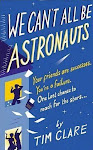
We Can't All Be Astronauts - Extract and Competition
 Oooooh! Guess what space cadets?
Ugh. Okay, that made me a little bit sick in my mouth. Note to self: don't use chipper wankerisms like 'space cadets' ever, ever again.
So, in any case, hello undifferentiated morass. With just over a month to go, there's a short sneak preview from We Can't All Be Astronauts up online, using Ebury's pretty funky Flash reader gizmo. Have a peep here. You could even go ahead and preorder here.
It's up there to help promote a contest we're running in conjunction with the Bookseller. It's a writing competition with a twist - we're looking for entries from people who work in bookstores. I reckon there must be a whole host of diligent, well-read bookshop staff who are also keen writers in their spare time, and this is a great chance to recognise their talent. It's also a great chance for me to feel like some smug, philanthropic industrialist 'giving back to the community', even though my book's not even out yet. So seriously, if you work in a bookshop or you know a writer who does, get them to go here. You'll be flattering my fragile - but very real - ego, and putting them on to a nice opportunity to get some well-deserved recognition.
Wednesday, 15 April 2009
The Performance Poet Interviews - #8: Salena Godden
After a week off due to me fannying about the UK feeling all whimsical and introspective, flipping off beggars then getting poorly, pray doff your hats for the triumphant return of The Performance Poet Interviews. At least it's not me having opinions for once, thank whatever interventionist deity presides over blogging (probably some sort of chimpmunk with snarls of sticky, bifurcating ganglia where its eyes should be, called P£t£r5000). Click the 'interviews' tag to see the bitter, often strangely phallic fruits of previous weeks. Today, however, we hear from Salena Godden. Her memoir, Springfield Road, is due out very soon from HarperCollins.
How did you get into performance poetry?
Like most poets I never woke up one day and chose to do this...did it choose me? I have no idea... but... It seems people start calling one a 'poet' and introducing you to their friends as a 'poet' and you roll with it and stop correcting them after a while.
There are two answers to how I got started with the performance:
(1) When i was at school I used to write and sometimes sell poems for fags and favours at school. These were often for girls to give to their boyfriends when they'd been chucked. But put it this way, I did a roaring trade at Valentines, "Steve Steve, my heart on my sleeve..." these awful poems were often read aloud around the back of the 'bike sheds'... or down the woods where we jacked off lessons and got stoned...
(2) In 1991 I left Hastings and moved to London - I got a job with Acid Jazz records - I was the A&R girl, skinny thing with wild curly hair and without apology charging about Soho like I owned it. They started the Acid Jazz Magazine and I penned the column titled 'unsung heroes'.
My first ever interview was with the legendary Jock Scot (brilliant Scottish punk poet dude who is best mates with Shane Mcgowan, Nectarine No.9 etcetera). We started hanging out in Filthy McNasty's where we were served beers by the young barman poet Peter Doherty still cutting his teeth with a band he'd started called The Libertines.
Jock first got me up on stage at West London's Paradise Bar when I drunkenly admitted I wrote stuff. I always thought I was a songwriter and it was Jock Scot that reckoned the words could stand up on their own. This was the door opening - the door they always talk about.
My early gigs then were there and also places like Filthy's in the company of Jock Scot, Tim Wells, Shane McGowan, Phil Dirtbox, Will Self, Murray Lachlan Young... and a young Peter and his band... among countless others... Good times!
 How would you describe your work?
As honest as I cannot ever be to your face and as truthful as all things I wish I had said in retrospect.
Do you think there's a difference between 'page' and 'performance' poetry? If so, what?
A good poem is usually both.
Why should someone come to a performance poetry gig?
I suppose people are not used to listening. We tend to hear whilst preparing what we want to say next. A poetry gig is like listening without having to quip and reply - a poetry gig is being told it's maybe not what you thought after all - but you're not alone.
What do you think your best poem is, and why?
Always the last one I wrote, the fresh new ones just printed or published always excite me, in the most childish indulgent way, as much as they always did and i hope they always do. Gig wise though - I reckon 'Imagine If You Had To Lick It' is still the big crowd pleaser - 'Can't Be Bothered' and 'Wee Wee Hole' close seconds. Why? I guess those 3 poems are the ones that get quoted back to me most often.
Personally i love my 'Emily' poem best. Reading this at Emily Williams funeral was the most difficult thing... to control myself not to cry. That girl was sunlight, one day, aged 26 she literally dropped down dead with a rare blood condition. One day I want to grow up and be the person she believed I was/am.
Emily
I met you on the tube train and asked you
if you wanted to pole dance with me
you said you did and so you did
we swung from the bars
on the Piccadilly line
and then we took you home
and drank cocktails until dawn
I liked your face
brown sugared with freckles
eyes full of mischief and life
genuine
one hundred per cent fun
you were quick and so smart too
you had the boys eating out of the palms of your hands
your hands were small and soft to hold
and your nails short and dirty
laughing with a mouth full of teeth
you’d wipe the sleep from the corner of your eye
and say yes but of course, everything, the world,
of course why not?
with you - nothing was too far or too bold
your head was full of brilliant ideas
to get us into trouble
if they ever caught us, caught you
Now, I remember the sun rising in Islington
the pavement shone with gold
and I balled my eyes out in Angel
tears before bedtime
and some broken boy heartache
it was 7am and you suggested
we go to the postman’s pub
you got us another pair of pints
lit two fags and quietly
told me it was going be alright
you had me eating out of the palm of your hands too
and made me see the light and the funny side.
So I was going to say
I thought that I’d see you this summer
smoke all your cigarettes
laugh about boys
watch the sun rise
and bombard you with poetry
and I was going to say
a hundred things
you lovely, lovely girl
but words are not enough
instead
I will plainly say
I will always miss you.
If you could nick one other person's poem and claim it as your own, which poem would it be, and why?
Elizabeth Smart's 'By Grand Central Station I Sat Down and Wept'. I know it's more a book/memoir than a poem... but to me it is the most beautifully executed poetic book, a journey into falling in love and losing it, the insanity of falling in love, the loss of control, power and rationale. My favourite line: 'But he never passes anywhere near me without every drop of my blood springing to attention...'
I was inspired by this and did 'nick' the line and wrote the poem 'By The Flower Stall in Kings Cross I Sat Down And Wept'.
A poem about losing one of the great loves of my life to heroin.
By The Flower Stall In Kings Cross I Sat Down And Wept (after Elizabeth Smart)
Meet me at two thirty
by the flower stall
in Kings Cross,
I will take you to Edinburgh
where the last page
is framed.
We were drunk
with jasmine and
orange blossom
in Valencia,
where the swallows
flew into the window glass.
Where are you?
Which hospital ward
do you lay in
refusing to see me?
I didn’t mean
that we’d never speak
ever again.
You have cancer
I’m told its serious
they say its for the best
they keep your whereabouts
a secret,
they tell me that I should
just leave it.
Being taught a lesson
but I already couldn’t
unlearn you.
I forget the crimes
where we went wrong,
the messes we made,
I find it impossible
to measure darkness,
just absence of light.
You started it,
you, leaning over the bar
get your passport, you said
I’m taking you for dinner.
I asked and what will you drink?
Cider and you, you smiled,
and you in Spain.
We made sad love,
the roof leaking rain
into buckets around the bed,
in our bubble
it would be alright,
but then I woke up crying.
Now a gold June sunrise
forbids me to sleep,
swallows swoop by
but they don’t fly
into my window pane,
smack
into reflections.
I pound and punish
these keys
in some vain attempt
to reach you,
but its a letter
I’ll never post.
By the flower stall
in Kings Cross
I sat down and wept.
Then I went to Edinburgh
where the last page
is framed,
this book I read
remembering you,
love,
for there was a time
when you could not pass
anywhere near me
without every drop of my blood
springing to attention.
A slammed door
the last word
and goodbye.
We were stubborn,
I’m sorry
and afraid
to face you
sick and in pain
to see you
how I left you
but worse.
If I could I’d read
you these lost last lines
until the rocks melt
and the sea runs dry
my rose,
my bloody
bloodied rose.
What typifies bad performance poetry to you?
I really dislike tokenism poety and I'm not that into stiff and forced rhyming poetry. I'm mixed race, Jamaican Irish and also a female - but I never felt a need to bang on about it... Urgh! Even worse in rhyme! Being true to myself, doing what I do and standing up on stage says it all... know what I mean?
Mae West coined it better when she said something like... I am all for feminism, but it is something to be whispered into the ears of men, quietly, slowly, and just one at a time.
What do you think of the state of the UK performance poetry scene at the moment? Is it okay to talk about a 'scene', or is that a bit unhelpful?
I was never that sure of the 'scene' - it's very fragmented isn't it? Slam poets vs page poets vs performance poets vs rappers vs tantric sex poets vs schoolyard poets etc etc... There are people I have worked with for the last 15 years that are stronger than ever - getting published, getting nominations, winning prizes, doing good, writing and fighting the good fight.
If there is one thing I have learned it's that there are some folk that are in it for the monkey, some for the vanity and shiny lights and some for the longevity and the long haul, others for the cathartic free therapy and there's always the flash in the pan poets you just never hear about ever again... and the poets still doing the same poem from 1992 too.
Tim Wells really helped me get going in the beginning, he and i go back to the mid-90's as mates and collegues. Recently we got some old anthologies and magazines out from 10-odd years ago and it was interesting to see who is still rocking it and who's just clean disappeared. I don't know much about the 'scene' - I think it gets splintered and pedantic. Politics are so boring.
To me it's all about the good fight - and there's some great fighters and writers out there, both young guns and kick-ass old schoolers too. Here's a quote from the Bukowski poem 'Roll The Dice' I have framed on my living room wall:
Go all the way
It could mean not eating for 3 or 4 days
it could mean freezing on a park bench
it could mean jail
it could mean derision
mockery
isolation
isolation is the gift
all the others are a test of your endurance
of how much you want to do it
and you'll do it
despite rejection and the worst odds
and it will be better than anything you can imagine
do it do it do it.....
....and you will ride life straight to perfect laughter
its the only good fight there is...
Tell us about a particularly memorable reaction you've had to your work.
There was a time once - I came off stage and I couldn't stop fizzing, electrified, I could hardly breathe. Weirdest of all is I cannot remember the actual gig but I can clearly recall the backstage dressing room, the heat, white lights, hearing roaring cheers on the tannoy to do an encore, but lying on the floor of the dressing-room literally vibrating for five minutes. Where was I? Fuck knows. Tokyo? Amsterdam? Dunno... I was scared shitless it had gone so well. I was somewhere far away from home.
Best heckle I ever had was being lead by two lady cops and frog-marched to a police station in a village in Austria. The locals had been putting drinks on stage throughout my set and at one point I didn't see a shot and I slipped over in a sticky pool of pear schnapps on-stage. They were going to arrest me for 'being drunk on stage' but I thankfully got away with it. Phew! It was a Prisoner Cell Block H moment though, the lady cops were very strict with me.
Funny groupie moment: I once went to a boy's flat after a reading in NYC - maybe New Yoricans - in his flat he had posters up everywhere of Coldcut... He played the Coldcut tracks I did on 'Let Us play' & 'Let us replay'. He kissed me whilst looking at my video of 'Noah's Toilet' on the DVD and was saying 'That's you (kiss)...and (kisses TV screen)...that's you (kiss)'.
I think he was joking, having a laugh - I didn't stay long enough to find out.
Wednesday, 1 April 2009
The Performance Poet Interviews - #7: Ross Sutherland
It's that time of week again. While I lie, sleepless, in my sickbed, clutching at the thick air and phasing in and out of languid fever dreams, you get to enjoy the erudite opining of Ross Sutherland.

How did you get into performance poetry?
I’ve written poetry since I was five. My gran and I used to write together. She would use rhymes to help me remember shopping lists, stuff like that. When I moved to England, we kept in touch through poetry. That was the sole medium of our relationship.
When I was about thirteen, I inherited a copy of John Cooper Clarke’s collection, 'Ten Years in an Open-Necked Shirt'. Two years later I went to see him at the Music Box in Edinburgh. Hearing those poems live was so dramatically different to the audiobook version I’d been running through in my head. Everything was transformed by his personality: his delivery, his accent, his banter with the crowd... it made that book seem so much more vital. It gave it a pulse.
The live poetry club quickly became the sounding board for everything new that I wrote. As my confidence onstage grew, so did the confidence of my writing voice. I was being constantly exposed to new ideas and techniques that I felt I could incorporate into my own work.
I know you can do these things without getting up on stage. But what’s special about poetry clubs is that they reach beyond poetic tradition. People gravitate into poetry for lots of different reasons: rappers sick of getting drowned out by their beatmen, comics who want a break from counting laughs, actors developing monologues, and so on. It’s inclusive for artists and audiences alike.
As a result of this mongrel upbringing, you can take these poets out of their clubs, put them into a theatre space, a short film, a comedy club, in-between bands at a music festival, and they adapt and thrive. Like cockroaches. Very entertaining cockroaches.
Do you think there's a difference between 'page' and 'performance' poetry? If so, what?
So there’s this impenetrable hermit-poet who typesets all his writing so it looks like he’s yanked it out of a printer jam. He submits anonymous articles to poetry journals, and openly asserts that any live performance of a poem (including performances of Shakespeare) is watering down its impact to a point where you might as well not call it poetry at all.
Then there’s this drama student who wasn’t breastfed as a kid, who has decided to write bad rhyming standup, despite the fact that the only poets they know are Wilfred Owen and Q-Tip.
These caricatures are definitely out there, but they’re the indulgent extremes of the fringe. The poetry scene likes to bring these guys up from time to time in order to sling mud at one another. In fact, I think most of us are somewhere in the middle of page and performance, trying to balance content and delivery equally.
A poet giving a straight reading from their book is still aware of the importance of giving the best possible oration. They’re still performing. At the same time, the poets who choose to incorporate comedic or dramatic techniques into their sets are still drawing heavily from the poetic tradition. Dividing poetry into page and performance seems unhelpful... it’s hard to imagine one existing without the other, and all the best poets are both.
So how would you describe your work?
Err. There’s not much useful lexicon in common circulation. It’s hard to identify concrete trends or scenes, or identify all the influences that go into a poet’s work, so we find it hard to describe what separates us from each other.
MAN 1: Would you like to come with me to watch the poet Ross Sutherland?
MAN 2: Dunno, what’s he like?
MAN 1: He’s a Comic Romantic. Roots in Projective Brutalism, filtered through Puzzler Magazine. Occasionally you wonder if he might be a parody of a poet and the joke is on us. Sounds like Shel Silverstein with a cold. Interested?
MAN 2: No.
Why should someone come to a performance poetry gig?
Because they’ve watched some stuff online and they like the sound of it. Best way to do that is to check out the websites of the big poetry clubs. Nights such as Book Slam, OneTaste and Homework in London. Hammer and Tongue in Brighton, Big Word in Edinburgh. Surf around and see if anyone takes your fancy. For starters, I recommend David Jay, Excentral Tempest, Niall O’Sullivan, Nathan Filer, Byron Vincent, Francesca Beard, Polar Bear and my own collective Aisle16.
Whatever you do, don’t just pop along to your local poetry open mic. The grassroots scene can be amazing, but it can also feel like gatecrashing a therapy session. Do your research before you commit.
What do you think your best poem is, and why?
Whatever I’ve written most recently. My repertoire is basically a conveyor belt. Favourites drop onto the front, get tired and increasingly hackneyed, then eventually drop off the back into embarrassment and regret.
If you could nick one other person's poem and claim it as your own, which poem would it be, and why?
There’s be no point. I’d steal it, rinse it out every night on stage for six months, then start hating it and drop it from my set. People would be all like, “Ross, why don’t you do Prufrock anymore?” and I’d be like, “ah, that’s so cheesy.”
What typifies bad performance poetry to you?
Tom Cruise’s poem in Cocktail. It covers every major don’t in poetry in less than sixty seconds:
Also - people who use the stage as a soapbox for liberal causes that no one in the room could ever possibly disagree with. Racism is bad. Clubbing seals is bad. Totalitarian regimes are bad. Just once, I’d love a Nazi to stand up in the middle of one of those poems and shout “Nnnnoooo!”
Tell us about a particularly memorable reaction you've had to your work.
I once compared a wrestling match in St Helens, reading poems in-between bouts. It was amazing. The wrestlers were very pleasant to me backstage. About halfway through the event, I read out a love poem called “Let’s Wrestle”. One of the heels, a wrestler called Heresy, jumped into the ring with me. He tore the hat off my head and bellowed, “I told you, I hate that hat!” Then he stuffed the poem into my mouth, beat me up and threw me out the ring. At that point, one of the goodie wrestlers had to run in and save me. We didn’t get to practice beforehand, so I’m not sure how realistic it looked. The kids went apeshit for it though.
Afterwards, Heresy congratulated me on my performance. “I’d glad you kept the poem in your mouth,” he said. “Usually, when I defeat a wrestler, I tear a page out of the bible and make them eat it, but they always spit it out straight away.” That’s what the poetry scene has taught me: stagecraft. Stagecraft and humility.
Saturday, 28 March 2009
Nexus - The Jupiter Incident
The first game I ever worked on was an RTS space sim called Nexus - The Jupiter Incident. It was developed by a Hungarian company called Mithis, who wrote a script, then had it translated into English by a native Hungarian speaker. This was where I came in. It was my job to take the raw script (which looked like it had been put through Babelfish), and create a workable English script that would then be recorded by voice actors in the studio.
I knew that I had some restrictions, in that the cut-scenes had already been created, so whatever I wrote had to match the timing of the original Hungarian. In addition, the script was over 100,000 words long, I often had to guess the context (I had the latest build of the game but I wasn't good enough to get past the first level), and I had less than two weeks to finish it.
In retrospect, though I gave it my best shot, I don't think I did a very good job. A lot of the time, I just fixed up incorrect grammar and weird turns of phrase ('As we say on Earth, captain - weeds don't spoil! Ha ha ha!') then moved onto the next sentence. Now, with the benefit of experience and a greater confidence in my writing abilities, I would assert my own voice more, and work to make each character distinct. I stood my ground on one or two issues, completely changing the dialogue of the 'Raptors', for example (genetically-enhanced dinosaur creatures wired into their ships), from clichéd highfalutin 'I shall crush you like an insect, meagre Earthling!' stuff to a clipped pidgin dialect, reasoning that, since they had been bred from birth to fly ships, and knew little else, their language would be abrupt and brutish, suited for quick communication during a battle.
I do like the bit of dialogue at the start of this clip, however, just because I can remember the fun we had recording it in the studio:
In the end, because I was the only person who knew the English script, I got employed as a consultant director for the voice recordings. I got to help with the casting, then help direct the voice actors as they recorded their parts, sitting there with a laptop in front of me, tweaking bits of dialogue when an actor's delivery revealed that my original version was a bit crap. It taught me a lot about voice acting and directing (as you might expect), and made me even more appreciative of games with really good writing and performances. I remember one guy listening to a rejected take and remarking: 'He sounds like he's selling biscuits.' For me, that sums up a lot of what's wrong with bad video game dialogue - all too often, companies hire 'voiceover artists' rather than actors, and you end up with something that sounds like the instructional safety video on a aeroplane.
I'll probably put up a post in a few days with some examples of what I consider to be superb and awful dialogue in video games. I've got some strong opinions on the subject, but at the same time I appreciate how difficult it can be to make something rich and filmic when you're on a tight budget and working in a medium that precious few actors and writers understand, let alone feel passionate about. I think I'm also starting to realise that, in my heart of hearts, I want to be head scriptwriter on a video game. I want to be involved right from the beginning of the design process, and get to colloborate with a skilled team on some fantastical new world. I wonder if my fiction writing has suffered because, deep down, I've been trying to recreate peak experiences from video games, and prose just doesn't have the juice (nor interactivity) to do that. Do you remember how it felt when you first escaped Midgar? Do you remember the rush?
Yeah. Books can't do that.
Wednesday, 25 March 2009
The Performance Poet Interviews - #6: Joel Stickley
Since you asked, Cone O' Tragedy's most popular feature is my weekly interviews with UK performance poets. We've heard from Dockers MC, Polarbear, Nathan Filer, Yanny Mac and Nathan Jones. This week, it's the turn of Joel Stickley.
How did you get into performance poetry?
I saw Luke Wright perform a few poems at a cabaret night when we were both at university. Immediately seeing that perfomance poetry was a formulaic and creatively bankrupt art form, I wrote a parody of him hilariously entitled 'Luke's Right.' When he heard it, he was so angry that he offered me a gig at a night that he and Ross were putting on. Rather than trying to make a two-minute poem fill a ten minute set, I wrote some more material. One thing led to another and, three months later, I found myself standing in the rain at the Edinburgh Fringe, handing out flyers for a perfomance poetry show. That was seven years ago.
I see this as a kind of cautionary tale.
How would you describe your work?
I'd pretend to be thinking about it for a while, cock my head to one side and make a kind of humming sound before asking the interviewer how he would describe my work. Then I'd agree with whatever he said.
Do you think there's a difference between 'page' and 'performance' poetry? If so, what?
Yes, definitely. I think performance poetry is closer to stand-up or music than it is to page poetry. If there's a performance poem that works on the page, it's probably only by chance, like having a computer that also works as a door-stop.
Why should someone come to a performance poetry gig?
Well, there are two possible reasons. The first is that they should come to a perfomace poetry gig because they've been to one before and know that they'll like it. The second is that they haven't ever been to one before and have no idea what to expect. The second reason's better than the first, but you can only use it once.
What do you think your best poem is, and why?
It really would depend when you asked me. I tend to like ones I've written more recently, whereas old ones I can see all the flaws in and am bored of. Given that, the only real measure I have of one of my poems is how long it manages to stay in circulation before I get too embarassed to perform it again. On that metric, the winner is probably one called 'The Rhyming Poem', which I've been wheeling out for a few years now.
But if you're asking for my current favourite, I'd have to say my poem about the evolution of fish, 'Playing God', which is only a few weeks old. I wrote it for the Athens Children's Book Fair and illustrated it myself in brown felt tip.
If you could nick one other person's poem and claim it as your own, which poem would it be, and why?
I'd love to be able to pick something that made me sound well-read and intellectual, like saying that I'd nick something off John Donne or Pablo Neruda, but let's be honest - I'd sound like a right ninny reciting 'To His Coy Mistress'. If I was going to try and pass something off as my own, it'd probably have to be something written by one of my fellow Aisle16ers. Boring, I know, but plaigarism is all about being methodical.
What typifies bad performance poetry to you?
Ambition.
Tell us about a particularly memorable reaction you've had to your work.
At Port Eliot Lit Fest a few years ago, I did a set which caused one member of the audience great offence. The first poem I did was called 'My Passport Photo Makes Me Look Like A Suicide Bomber'. She didn't have a problem with that one. The second poem was called 'The Tale Of Britain's First Paedophile Prime Minister'. She laughed along with everyone else. Then I did a poem called 'The Rise And Fall Of Lightning Jim', about a snail who throws away a promising career in snail racing after a doping scandal involving salt. It's a poem I tend to do when I go into primary schools. She glared at me throughout, then turned to her friend and, with barely concealed outrage, said, 'I don't think that's very funny, actually. My uncle was an alcoholic.'
I read the moral of the story as being this: you never know who's going to be offended by what, so you might as well tell jokes about terrorism and child abuse.
You say 'ambition' typifies bad performance poetry for you. I have no idea whether this is one of your clever meta-answers or an utterly straight response, and if either is the case I still wouldn't quite be sure what you meant. Would you mind clarifying?
I thought about how to answer that question for a while, and I actually think that's my real, considered and unflippant answer. Most of the really cringe-worthy poets I've seen had one thing in common - they took what they were doing incredibly seriously and thought that poetry was the most important thing in the world, a powerful tool to affect real change in society. And they're wrong. Poetry isn't the answer to anything - it's just an entertaining way to ask the questions. Sometimes not even that. Sometimes it's just a game you play with words. And you know what? That's fine. That's what poetry's for. Trying to use poetry to correct all society's ills is like trying to travel from London to Manchester on a space-hopper. By all means play with it, mess around and enjoy yourself, but if the journey's that important to you, buy a fucking train ticket.
You say your starting point as a performance poet was parody - I wonder if you feel that was the beginning of a long creative arc that finally culminated in Who Writes This Crap?, a book and show entirely fashioned from lampooning the form and content of different everyday texts. I say, 'I wonder if you feel' - what I mean is 'I personally believe and want you to agree'.
It's certainly been a common thread through the whole time I've been writing and performing. I think I just like writing things in character, inhabiting other people's voices, and parody is one of the most fun ways to do that. And by parody, I mean the whole range of ways to imitate: satire, pastiche, homage, parody, tribute. Taking the piss. Stepping into someone else's shoes. Taking a piss in someone else's shoes. It's all good.
With regards to poetry, you seem to have wound in the performing duties a bit. What are your plans? Are you hoping to produce and perform lots of new poems, or are you searching for pastures new? Or what?
I don't gig compulsively. I never have, really. I've always enjoyed impromptu, one-off shows more than huge, unwieldy tours. Luke and I did a very short tour of the Who Writes This Crap show earlier this year and it was an absolute joy. A handful of dates, then a bit of time at home to write. Once I rack up fifty or so performances of the same material, I start to get really sick of it. So the thing is to keep working on new projects. Luke and I are collaborating on a script for an animated film at the moment, as well as tentatively trying to work WWTC into a radio-friendly format. I've been doing a lot of work in schools, getting kids to write poetry. I teach on a creative writing course for adult learners. I write when I have the time. It's all great fun. I wouldn't have it any other way.
Monday, 23 March 2009
We Can't All Be Astronauts - The Official Comic #2
Hooray! Line And A Dot has released a second nose-tingling installment of We Can't All Be Astronauts, the graphic novel adaptation (the text version of which is TOTALLY available to pre-order on Amazon!). Click on the pic below for a bigger image, and click here for part one.


Wednesday, 18 March 2009
The Performance Poet Interviews - #5: Nathan Jones

How did you get into performance poetry?
There were some important men in my life early on. Mainly Ginsberg, then Gershwin lyrics, then the terrible Thomases (Dylan and R.S)… and Eliot! Where am I going with this?
Through certain half deserted streets, probably. So anyway reading Eliot really gave me a kick up the arse – the time when we were taught Prufrock by Matt Jordan in John Moores University, and he was giving up fags and marching up and down the room going DO I DARE! And DO I DARE! That was a big turning point, when I started to find a voice that wasn't 'beat'.
Anyway, I was writing poems about the drinking booze in the neon city and suchlike all the way through university. But they didn't give us much idea about what you actually do with poems once you've written them, aside from the fact that you send them to poetry periodicals. I didn't really see why you would want to do that. So after university I started writing kind of Odes for Mercy magazine, which seemed to be the only real outlet that wasn't just for other poets, and I had a pseudonym so I felt I didn't have to be all lofty or serious. My first Odes were for The Grapes, a pub that wound up being called the Sick Lizard for a while, which I lived in sitting at the bar and eventually we drank all the liquor, paying for it by standing behind the bar and pouring it for ourselves, and I remember that every afternoon we would have to go to the off-licence and buy more cans of beer – ostensibly to sell, but seeing as there was no heating or running water in there you couldn't blame anyone for not coming in and eventually we drank the cans of beer and went to sleep on the seats there. It was like being the barman out of Quantum Leap, in a way. Then the pub went out of business for some reason and I had to go up the road. They were dreadful times, and the poem reflected that with a certain amount of pathos I think. And it wasn't about Me, so you could call that a bit of a watershed. That should be in those top tips you were going through. Don't write about yourself all the time. It's boring.
So eventually I got round to producing stuff quite regularly, most of it about myself, and I bought a tweed suit that in retrospect made me look like Compo out of Last Of The Summer Wine, and I started reading my poems out then. Selfish, not funny poems with no shouting or music. Roll up in one hand, whiskey in the other.
Then I started working in a café at FACT and Ross Sutherland came in. Your friend and mine. I was going bald, although now I have a fine head/face of hair. Then we started Fiction @ FACT, poetry events with tunes and drinking and that. I definitely had in mind the sort of 'happening' vibe that you associate with the first readings of Ginsberg's Howl poem, which I still think was the last poem to actually change the world. And anyway I would perform there every month and see Ross perform his stuff which was much better than mine and every month I would try to top him by doing a pastiche of a different 'school' of writing… surrealism and imagism and that… Once a keyboard player fell off the back of the stage. That was great. And Nick wore a colander. And Ross would carry on being better than everyone just being himself and getting all the girls. And then I developed a faux-welsh accent, which worked kind of like the pseudonym, I guess. Then I was a performance poet for a while, because I had a poem called 'Too Hot For Love', which people could remember afterwards. Catchphrases are good. Refrains, so people know what you're on about even if they have started thinking about their mole for a minute. And a silly accent.
Although I've always thought that my links aren't really good enough for me to call myself a performance poet.
So yes, I blame it on Ross Sutherland. Great poet, great performer, bad gait. Awful gait. And all the Fiction poets really, Nick Holloway, Dave Bamford, Olly Grunner, and now you and Joe and the two Lukes [Kennard and Wright], who push you and make you feel part of something. Nick ran a performance night too, called Someone Is Watching, which in a way was a spooky premonition of our current nights Wave If You're Really There, perhaps we are religious poets! Anyway, yes, Nick's nights were every Sunday so that was a regular thing you had to write for too. That was a good way to learn, and 'be'.
How would you describe your work?
Sometimes it is lengthy and discursive, sort of bouncy and friendly, like someone who is having an excellent conversation with a good friend not letting them get a word in edgeways and really trying to get to the bottom of a subject I suppose. Although that is just my lastest poem.
Visceral realism, I do. Or what I would call visceral anyway, with some real raw feeling thrown in for good measure. 'Shit, I'm angry.' Or 'He was angry and sad. What is sadness anyway...' A poem by me might start. And it would probably end 'Washing chips up in a tree'.
Nina wrote that actually, skitting one of Ross's automatic poems. It's good isn't it? She writes songs too: www.myspace.com/ninajonesmusic. My poems are actually usually remarkably similar to whoever I'm reading at the time, but with more Me in them, and a bit of Nina.
Do you think there's a difference between 'page' and 'performance' poetry? If so, what?
I suppose performance poetry is funny. That's almost a guarantee, that if it isn't funny at all then it is a flop. Like all rules, this is a pretty rubbish one. Forget it. And you can take your idea of the fact that they have to be three minutes long, or even under five and shove it up your arse too. David Jay is the best performance poet I've ever seen, and he isn't really funny and he goes on for yonks. So there you go! Or do you?
I don't know. I suppose we all like to think that people will enjoy our poems written down, but actually we know that no-one would really actually ever read them. What are they going to do? Buy a book of poems and then read it?
I doubt it, Tim. At least not with the intensity and in the numbers you can achieve with performance. If you want people to know your poetry, you have to go out and read it to them, and then I think that out of this comes all the stylistic and quirky and dynamic things that are basically to do with audience development. You learn to work with crowds so that they will like you/your poems more and maybe more people will come and listen harder next time. And maybe one day someone will say 'I liked this bit' instead of asking you how you remembered the whole thing. No-one ever knows what to say to you after you have just been on stage, especially if you are still learning.
I am saying 'you' 'you' all the time here, but I mean 'me', 'I'. It has been fucking painful, sitting there and watching Ross take all the girls to his bedroom one by one.

But then I have a feeling that people like David Jay, and to a certain extent you, have performance as a medium in itself. That probably makes for a more satisfying experience. And where do people who are good and don't perform fit into my theory? Like, erm, Seamus Heaney.
What about this: the difference is the generosity of performed poetry – when it's good, it seems like such a generous thing to do for people, but when it's poo the poet just looks selfish. It's a generous risk to take, in itself. But sometimes you wish you hadn't bothered, and at those times everyone else wishes you hadn't too. Whereas page poetry is just quite good or brilliant, or it doesn't even exist.
As long as I am still allowed to think of myself as a direct artistic descendent of T.S. Eliot, I don't care.
Why should someone come to a performance poetry gig?
It's only a fiver, and we have music on too.
What do you think your best poem is, and why?
The Bell. It is nice and long and gathers in intensity. And it rhymes, so it has this quality that makes it seem like it existed before I wrote it. I have a link here to when I performed it in Tate with a load of artists, and Wave Machines…
http://liverpoolstories.blogspot.com/2008/12/mercyliverpool-tate.html
I also love this one because it is the first one I wrote specifically for a performance with Wave Machines.
If you could nick one other person's poem and claim it as your own, which poem would it be, and why?
Kenneth Koch, 'The Art Of Love'. He is so confident and human at this point in his career, and there is none of the pretension of poetry holding him back, although poetry is the perfect way to describe what he's doing. And it's nice and long so you can settle into it. And it's funny and clever and tall and everything that you want in a man.
What typifies bad performance poetry to you?
'Middle Class Girls'.
No! I'm joking. I love that one.
Basically, it's bad if it's not funny, and with nothing to replace that humour. I'm not usually funny, but when I'm not being funny you can be sure that I'll do a big shouty shouty bit with the stary eyes pretty soon. Even then it can be really bad. You can't get away with just doing a shouty shouty when there are only about four people watching you – although I have tried. My girlfriend nearly stopped loving me that night.
Like I said, you can tell bad performance poetry when there is no generosity in it. That's not something that you can add in to a performance, like you can add it into hosting, where you just have to remember to give people things – it just comes from the work and performance being good. As an audience member you think, Thanks very much for that. There are lots of variables though.
Actually. Maybe that is it. Me and Ross used to talk about 'giving' people stuff as a performer. Bad performance poetry just doesn't give you anything. Open Mic nights are generally a bad idea to go to, unless you want to try new material.
And I HATE it when people swap words about in a sentence just so the rhyme lands on the end of the line. It's not 'To the shop I was walking' you div! And nothing good ever came from rhyming with walking anyway, what are you going to say, 'And to my fingers I was talking'?
What do you think of the state of the UK performance poetry scene at the moment? Is it okay to talk about a 'scene', or is that a bit unhelpful?
I don't know. Ask Ross. Ask Roddy Lumsden. He will know, but he might not tell you. He is the best poet, I think, and he seems to act like a bit of a dad to everyone else, even though he's not old enough to be your dad.
Tell us about a particularly memorable reaction you've had to your work.
A little girl came up after a recent performance and asked for my autograph. I nearly cried. It was this performance:
http://shootoutproject.blogspot.com/2008/06/013-lived-to-learn-language-nathan.html
Must have been the braces.
Actually, I think that was the only time I have not gone off and gotten completely leathered after being on stage, because it was in the afternoon. So it is the most memorable reaction by default more than anything else. Maybe there have been some really great anecdotal reactions I've had, but I can't remember any of them. I can do this, because I really perform quite rarely. You guys would probably turn all yellow if you got drunk after every single gig.
I'm not sure if you would count this as a "reaction to my work", but it might be a good opportunity to state some cold hard facts:
Ross once had everyone at a packed stage at Latitude call me a cunt, because I had fallen asleep in a ditch instead of taking to the stage after Patti Smith. Patti Smith was supporting ME. In a way. Anyway, that actually was potentially the biggest moment of my whole writerly career, and I spooned it. I was asleep in a ditch. Okay? Apologies to everyone involved in that particular booboo, except Salena Godden.
Sunday, 15 March 2009
Video Games: A Cultural History - A History
 So yes, I do a bit of moonlighting on another blog, Mercy Recommends. For a whole bunch of weeks now, I've been posting a regular feature every weekend, one which I call: 'Video Games: A Cultural History'.
The tone oscillates between irritatingly flippant and a kind of Simon Schama esque middlebrow patrician didacticism, and I expect it will continue to not know what it really is up until the day Mercy tell me to push off or I run out of steam. But anyway, in case you'd like to pick through the tatty stitchwork of my musings, I thought I'd post some links to what I've done so far. Hey, you could even read the rest of the blog. Who knows, it may save your life one day!
#1 - Wonderboy In Monster Land
#2 - Wonderboy Solves The Riddle Of The Sphinx
#3 - Choice And Identity In Blue's Journey
#4 - Japan's Construction Boom In Hammerin' Harry
#5 - Fear Of The Other In Bad Dudes Vs Dragon Ninja
#6 - The Spectre Of Socialism In Strider
Thursday, 12 March 2009
MS Paint Adventures

So, a while back, the ever-awesome Metafilter put me onto this exchange, between gaming legend Tim Schafer - who worked on Monkey Island, Day of the Tentacle and Grim Fandago, amongst others - and joystiq.com. In it, Tim and his interviewers turn a simple email exchange into an adlibbed mini text adventure.
It's a lovely, rich format for collaborative storytelling. Joe Dunthorne tried his hand at something similar, adopting the old Choose Your Own Adventure 'forking paths' style with his middle-class adventure 'You Are Happy', which you can play on his website. He's performed it a few times as part of our show about video games and hiding from reality, Infinite Lives, getting audience members to choose what to do next. I've particularly enjoyed watching the supporting schtick develop - one thing a text adventure can't do is demand that the player provide an explanation for their choice of path.
All of which is a preamble to this. Hey. You should go read MS Paint Adventures. After an entire year of inputs, the latest adventure, Problem Sleuth, is finally complete. When I read the last few frames, I felt kind of choked up and elated all at once.

Basically, it's an interactive webcomic, presented in the style of the Sierra-style text adventure/point n' click hybrids, like King's Quest or Leisure Suit Larry. Readers post suggested commands on a blog - e.g. 'Examine phone', 'Open safe', 'Get key', etc - then writer and artist Andrew Hussie picks one to draw next and develop the story.
The eponymous Problem Sleuth starts off locked in his office, and the first order of business is working out how to escape. Like any great storyteller, Mr Hussie's awesome at subverting expectation. Here, someone suggests punching through the office door's glass window:

Only to discover that it's not glass, but a piece of paper with his initials written backwards on it:

Watching the dynamic between Andrew and his audience develop is fascinating. As their attempts to solve the puzzle grow more and more creative, so his tactics for frustrating their attempts become increasingly elaborate. The result is a wonderful - if tortuous - piece of collaborative improv, full of cool narrative flourishes that draw from a plethora of disparate cultural sources to make something weird and technicolour and awesome. I don't want to spoil it for you, but suffice to say that soon there are multiple player characters, a host of mighty allies and a nasty-ass monster horde to be defeated. You probably won't have the stamina to read it all in a single sitting (it is a year's worth of posts, after all), but you can Save and Load your progress from the buttons just beneath the pictures. Click each command to advance to the next frame.
Go on, go. Read it. Seriously. Go. I'll wait.

Wednesday, 11 March 2009
The Performance Poet Interviews - #4: Yanny Mac
Previously, we've heard from Dockers MC, Polarbear and Nathan Filer. This week, I spoke to gravelly-voiced raconteur Yanny Mac.

Yanny Mac has performed at Glastonbury, The Edinburgh Fringe, Latitude and the Port Eliot Lit Fest. He compered the Poetry Arena at Latitude in 2007, with his buddy Pikey Paddy, and until recently, they both hosted Norwich Birdcage’s 'Benefit Scams'.
An acrimonious split led to a minor nervous breakdown, and Yanny’s subsequent retirement to the Suffolk countryside, where he now writes self-help poetry for trainee Domestic Goddesses. Yanny draws inspiration from prescription anti-depressants, and the fact that his door-hinges are shinier than any of his contemporary poets. Yanny is married to Aussie chanteuse Sooz McKenzie-Close (Librarian Girls). Rob Da Bank thinks that Yanny’s name is funny.
How did you get into performance poetry?
I was Aisle16’s dealer. The early years were incredibly booze and drug-fuelled, whilst we were finding our own poetic voices, and I provided 'the band' with a fully-expensed company car AND the ability to get hold of class Bs & Cs. Luke Wright used to call me Super-Yans.
How would you describe your work?
'Complete'.
I’ve spent the past ten years developing performance-characters such as The Chav Poet and Domestic Goddess, but only really ever performed ranting monologues and a few issue-based poems. In that time, I’ve written over 200 page-poems, and this current period of enforced retirement is an opportunity to collate them into some sort of anthology. 'Suburban Myths & Misses' has been a work-in-progress for over a decade!
Do you think there's a difference between 'page' and 'performance' poetry? If so, what?
Yes. I think the answer’s obvious. You only have to go to a ‘poetry-reading’ at somewhere like Aldeburgh and then follow up with a set from Dockers MC at say, Latitude Festival, to see that they are completely differing art forms, done by similar people (i.e. poets!).
Why should someone come to a performance poetry gig?
Because they like performance poetry?? I dunno the answer to that one. It’s not a trick question is it?
What do you think your best poem is, and why?
Ah! The million-dollar question!I’ve written so many now, it’s hard to have a favourite.I certainly regret writing one or two! I’ve always been proud of 'Searchin For Me Chav Princess' because it was my first attempt at ‘going it alone’ having left Aisle16. I had so much to say about prejudice, inequity, class snobbery and Great Yarmouth, but was sick of hearing preachy performance poems. It got me noticed, and I received some special reviews on the telly and in the broadsheets.
I think the poems that most people remember are 'Once We Were Chavscum', 'Prince Of Wales Road' and 'I Was A Teenage New Romantic'. Punters love simplicity!
If you could nick one other person's poem and claim it as your own, which poem would it be, and why?
Luke Wright’s 'Ode To Cigarettes' was once stolen by a twat from Peterborough, and caused the Big Gay Face much consternation, so I’d probably nick that one and do a slightly better job of performing it, than the little MySpace plagiarist did! 'Stenhousemuir' by John Osborne still has the ability to make me cry & wee at the same time. Byron Vincent’s 'Bob' is pure genius!
What typifies bad performance poetry to you?
Angry little white boys in baggy jeans & beanies, using rap & grime-slang to communicate their middle class angst.
What do you think of the state of the UK performance poetry scene at the moment? Is it okay to talk about a 'scene', or is that a bit unhelpful?
Yeah. There is a scene, but it’s created by the arts media, not the poets themselves. It’s very busy. There’s a lot of talent out there, but there’s also a lot of bandwagon jumpers. Look at Scroobius Pip ffs!?!
Tell us about a particularly memorable reaction you've had to your work.
Had it not been pissing it down, the rapturous applause I received from nearly two thousand Glastonbury Cabaret Tent squatters, could be classed as memorable. I did however enjoy meeting Ralph Steadman at the first ever Port Eliot LitFest, and stealing from him the much used quote: 'They [Aisle16] do with words what I try to do with art.' At the time, I didn’t really know who he was!
As our token 'disabled poet' spokesperson, can you tell us a bit about how your disability has affected and/or informed your work as a poet?

Quite substantially really.
The fundamental reason for leaving Aisle16 was due to having increasingly more frequent flare-ups of my chronic disease (Psoriatic Arthritis), and therefore not being able to commit to being an integral part of a show, or going on tour. I felt that being my own boss, on my own terms, was preferential to constantly letting others down. A good lesson learnt.
I was inspired to learn that my TV lit hero Dennis Potter also suffered from psoriatic arthritis, which led to his characterisation of The Singing Detective. Debilitating disease leads one into a selfish desire to create art that serves as a living post-mortem & autopsy!
With your various stage personas, your taking on of zeitgeisty contemporary topics, and your Rolling Stones esque bimonthly cycle of retirement and comeback, you're something of a master when it comes to creating a buzz around yourself. Have you got any advice for aspiring performance poets on how to self-promote without being a wanker?
No. I always believed that I was that that self-seeking wanker! I’m rather disappointed to learn that I’m not.
And finally... got a good Yanny celeb anecdote you fancy sharing with us?
No anecdotes. Merely historical fact.
I once broke up a fight between the owner of the Pleasance Theatre and Simon Amstell. The latter was being chastised for flyering his new show, and I took the blame. In Aisle16’s first TV interview, Simon from Eastenders (Tiffany’s gay brother) suggested I replaced the then departing Beppe Di Marco. At the first ever Port Eliot LitFest, I went skinny-dipping with G.K Chesterton’s niece & the Earl of St.German’s god-daughter.

Wednesday, 4 March 2009
The Performance Poet Interviews - #3: Nathan Filer
Last week, I talked to Polarbear, the week before it was Dockers MC. Today, it's the turn of Nathan Filer.
GOTH vs EMO from nathan filer on Vimeo.
How did you get into performance poetry?
Ten years ago I was living in Greece and working as an hotel entertainer. I was utterly useless. One holidaymaker helpfully described me as the most pathetic bingo caller he'd ever seen (and this was a man who had his own dabbers, so I'm guessing he'd seen a few).
Part of my job involved putting on a cabaret. Again, I was useless. But somewhere along the way I started to write and perform poems about ineffectual mosquito repellents, lost luggage and other such pressing topical issues. They went down a treat. I quit the job, and kept up the poetry.
How would you describe your work?
Comedic. I tend to tell stories with a fictional me at the centre of them. I like creating convoluted narratives with tangential asides, all leading to a punch-line type reveal. Oh, and I rhyme. For me, writing shifting and well executed rhyme schemes is a big part of the process.
Do you think there's a difference between 'page' and 'performance' poetry? If so, what?
Definitely. There are certainly poets (Ross Sutherland, Luke Wright, Rosy Carrick to name a few) who are able to blur those edges. But I am not one of them. Page poetry should look nice; mine looks like I've vomited bitter chunks of verbosity into my notebook, and let it congeal.
Why should someone come to a performance poetry gig?
They shouldn't. It's far better to get into sport. But one good thing about going to see performance poetry for the first time is that it will probably be less shit than you were expecting.
What do you think your best poem is, and why?
I'm really enjoying performing my newer material. It has more of a stand-up feel to it, with the focus on the overall narrative arc of the set, rather than individual poems.
But if I had to pick a single poem that I am most proud of it would probably be Oedipus. In 2005 I made it into a short film, which won tons of awards all around the world. It isn't my best piece of writing, but it definitely opened the most doors. Here is a link.
If you could nick one other person's poem and claim it as your own, which poem would it be, and why?
Ha. Who says I don't? Beowulf has done okay. Perhaps I'd claim that. Actually that would be a good choice because we don't know who wrote it. Perhaps it was me? It was long time ago, so I might have just forgotten.
Or maybe I should steal one of yours Timothy. I've always been rather envious of Middle Class Girls. Tell me, does your bruschetta taste better with feta or brie?
What typifies bad performance poetry to you?
It's fun to be asked all these questions. It makes me feel important. I'm going to close my eyes and imagine that you're Parky (... and I'm Rod Hull). Anyway, I'm not going to answer that one because I'm no expert and I'll just end up offending someone.
What do you think of the state of the UK performance poetry scene at the moment? Is it okay to talk about a 'scene', or is that a bit unhelpful?
I think it's okay to call it a scene. Unless you think that makes it sound exclusive, perhaps? But performance poetry is too accessible to be exclusive. All you have to do is write a poem and go to an open mic night. Hey presto, you are the scene!
Anyway, when I'm getting lots of gigs I consider the scene to be healthy. When I'm not I start mumbling discontentedly about glass ceilings and an imbalance of supply and demand. Basically I'm far too shrink wrapped in my own little world to be able to offer an objective appraisal. I'll go with... (flips mental coin)... it's all gone to shit. God help us.
Tell us about a particularly memorable reaction you've had to your work.
After gigs the same thing usually happens. Sweet people come up to me wishing to express their gratitude and say some nice words. Then we get chatting, and after about ten minutes they realise that the actual me is nowhere near as quick-witted, charming or sympathetic as the stage me. On departing, we all feel a bit dead inside.
But I have a better story. A couple of years ago I was on holiday in Berlin. I was heading back to my hostel on the U-Bahn at about 2am and a young German guy on the seats opposite looked at me and asked if I'd be making any more poetry films soon. It turns out he'd seen Oedipus there at a festival a few months before. It wasn't even fifteen minutes. But fuck me, did I feel famous!
In your sets it's often ambiguous where the preamble ends and the poem begins; you've also got sections where you drop out of the poem midway to extemporise, or where you reincorporate a refrain from an earlier piece - techniques that are fairly commonplace in stand-up but almost unheard of in performance poetry. They'll doubtless spread like buckshot through the work of everybody else on the scene, but for now, do you think of your work as experimental? Or is the scene at large just not very innovative?
On the contrary it is precisely because the scene is so innovative that I do it. There are so many unique and compelling voices lifting from the cacophony (Dockers MC, Scroobius Pip vs Dan Le Sac, Aisle16 et al) that it is no longer enough to just be funny or just be able to write a half decent rhyme. So I suppose what you've described is my attempt at a 'signature'.
And I have another motivation, to wit: I am a total audience whore!! It can't just be me who has suffered that horrendous sinking feeling of being stuck in a monumentally long poem, and the crowd just aren't feeling it, and there is nothing to do but stoically cough the thing out 'til completion, and swallow your shame. But if your audience don't know when the poetry has started, then how can they possibly know when to stop listening? Ba dum chhh.
Tuesday, 3 March 2009
'Found' Univocalisms
As some of you may or may not care, I just finished a mini-tour of our show Found In Translation, the story of my, Ross Sutherland, and Joe Dunthorne's attempts to infiltrate the infamous French experimental literature group, the Oulipo, a group so radical and misunderstood that many people still don't believe us when we say they exist.
The Oulipo believed in placing restrictions on language to unlock one's true creativity. The central form we employed in our quest to gain entry was the univocalism - a word, phrase or piece of text that only contains one kind of vowel, e.g.:
A: Adam has a fat arm.
E: She shredded the letters every weekend.
I: Nikki's kissing this minging nitwit.
O: My voodoo doll only works on God.
U: Buddy tugs unlucky chumps' ruddy spuds.
Surely, we thought, if we each write a poem using this form, they'd accept us as one of their own.
You've guessed the end - we failed to join their ranks. But sod it, we picked up low-level psychosis on the way. Writing in just one vowel sends your mind's noise-to-signal ratio screwy. You start seeing patterns everywhere. Messages spring from every street sign. It becomes clear how an intelligent, creative person under a lot of stress might all too easily begin to think the universe was talking to him through shop hoardings and coffee machines.
Here's a selection of my poorly-snapped favesies:


This is my second favourite found univocalism, seeing as it's both a univocalism and a palindrome (a word that's the same spelled backwards or forwards):

But for sheer linguistic brio, you knew we were going to have to outsource to India:

If you spot any yourself when you're out and/or about, send them to me and I'll put them up on the blog. Gw'on!
Subscribe to:
Posts (Atom)


 Posts

