
Like a sad bandwagon-jumping pranny, I have written a letter to the BBC Trust. God, it's almost as if I believe people can do something to affect the world they live in. Muppet. So I plugged my mate's book, just to keep myself feeling like it was self-serving, cynical and ironic, rather than a heartfelt plea about something I really, really care about.
Dear BBC Trust,
I have never been moved to write to the BBC before. As a long time supporter of the BBC, the world-rivalling quality of its programming and everything it stands for, I am baffled and saddened by the announcement of plans to shut down 6music and the Asian Network. For me, both stations represent the BBC doing what it does best, fulfilling the remit of its public service responsibilities by providing high quality broadcasting in areas which commercial competitors do not cover. If there is a lack of awareness that either station exists, this is a failure in branding and outreach - not an indication that the stations themselves are underperforming.
Radio1 is now almost indistinguishable from its commercial rivals. 6music is unique, having taken over the commitment to showcasing new, alternative or otherwise fringe music that Radio1 used to promote in the evenings during the early to mid nineties. Similarly, 6music has been supportive of British artists working in other media - I have had the pleasure of hearing authors, film makers, actors and poets interviewed and encouraged to perform on the channel.
The author John Osborne's recently published book Radio Head, a celebration of Great British radio, singles out the Asian Network and 6music as two jewels in our country's broadcasting crown. It would be a tragic day for British music, and a gross dereliction of the principles upon which the BBC were founded, if two of the finest, most unique radio stations on the globe were to be shut down completely. I urge you to listen to the license fee payers, and to re-evaluate the wisdom of your strategy, so that these two stations can continue to promote the best of our country's vibrant and diverse Arts culture.
Yours sincerely,
Tim Clare
http://timclare.blogspot.com
Showing posts with label Radio. Show all posts
Showing posts with label Radio. Show all posts
Tuesday, 2 March 2010

Monday, 16 November 2009
Found In Translation on Radio 4!
 Hey, hey, hey, if you tune into to Radio 4 this Thursday, 19th November, at 11:30am, you'll be able to hear a show about the Oulipo, where they chat to me and my fellow Aisle16ers Ross Sutherland and Joe Dunthorne about our Oulipo-inspired poems and our show about our attempt to infiltrate the Oulipo, Found In Translation.
For those of you who don't know, the Oulipo are a French experimental literature movement who played with imposing arbitrary constraints on language (like writing an entire novel without using the letter 'e', for example) as a way of breaking out of old habits and encouraging creativity. On discovering their work and techniques, we felt as if we were learning a whole new language. And, like anyone learning a new language, the first thing we wanted to do was be as rude as possible. 'Slap a gran's damp and tangy flaps!' we hollered, straining with mirth at our uncommon verve and ingenuity.
The show is apparently Radio 4's 'Podcast of the Week', so you should be able to download it afterwards, and it'll be on Listen Again for a week as well.
Tuesday, 12 May 2009
John Osborne's Radio Head
 I've just finished reading my friend John Osborne's first book, Radio Head. It's the story of how he decided to listen to a different radio station every day, in a last ditch attempt to inject some variety into his boring data entry temp job. He ends up guiding you through an entertaining, uplifting state of the nation piece that rates as the best book I've read so far this year.
I realise I'm biased, so by all means discount my praise, but I really enjoyed it from start to finish. John has a real talent for zeroing in on funny, tender details. Over the course of the book, he builds up a really positive, patriotic picture of a diverse and modern Britain. Radio Head's subtitle could easily be: How To Love Your Country Without Being A Cunt. But then I think he might be embarrassed to show his mum.
I don't want to start listening all the brilliant anecdotes and suprising incidents, because part of the pleasure is discovering them with John as he embarks on his modest odyssey. But watching how the different stations influence his mood and change his day is really satisfying and creates a forward momentum that somehow makes it both gently entertaining and a real page-turner - Fever Pitch for radio buffs.
So yes. I strongly recommend, basically. Each time I read it, it made me feel happier and more optimistic. I should really interview John for the performance poets section. I'll get on to that. In the meantime - check out Radio Head! There's a reason why it's been picked for Radio 4's Book of the Week!
Friday, 6 February 2009
This American Life
I feel as if posting this will mark an unshouldering of sorts - a chance for me to finally let go of baggage accrued over the past eighteen months.
I first discovered This American Life via the superb community blog Metafilter, a website which has introduced me to almost everything I like on the internet.
This American Life has influenced me more profoundly than anything else in the last year and a half. After listening to my first episode, I was hooked. Essentially, it's an hour long weekly radio show, where each episode has a loose theme. It's mostly non-fiction, with the occasional short story or dramatic monologue.
What first hit me so hard about it was the way in which the producers manage to tackle both very large stories and very small ones, often combining the two types on the same bill. It introduced me to a whole new genre of non-fiction storytelling - small incidents or little ideas that somehow shed light on something greater. Until I listened to This American Life, I never realised that people were allowed to tell those kinds of stories - stories that aren't the news, exactly, but often aren't exactly memoir either. Stories that are interesting, funny, real, surprising, and sometimes beautiful, but without being glib or glurgy.
Although I'm not exactly the perfect archetypal hipsterish agnostic liberal, I realise that I'm fairly close to the centre of their ideal demographic, so it may be that TAL's appeal doesn't go right across the board, but, for me at least, it feels like it scratches an itch that, until I discovered the show, I was dimly aware of but could never quite locate.
All this discursive meta-theorising can't quite convey it though, so I suppose I should apply the age old writing axiom of show, don't tell. Here are some of my favourites. If you click through, you can stream them online, or download each episode for 99 cents. If you listen to a whole bunch, it might be nice to donate a little something via their website, to help pay for bandwidth. I did, and I felt right pleased with myself.
My Big Break - the story of Charlie and Mitzi's gig on The Ed Sullivan Show is a beautifully-constructed piece of radio journalism, and Shalom Auslander's true life story of his strict Orthodox Jewish school's 'blessing bee' is one of the best bits of memoir I've ever heard.
Babysitting - I love the brothers talking about when their big brother was left in charge of them, and pretended he could turn into a werewolf. It reminds me of that weird period during your childhood, when the border between imagination and reality is blurry, and you can quickly work yourself up into a state of terror. Also, the final story in the show is just amazing. It's funny, it's sad, it's got twists... and it's just great to hear the participants talk about it themselves.
Telephone - this is one of my favourite Ira Glass intros. I just think the chap's so cool, and he tells an engaging, intimate autobiographical story without being self-indulgent. The first story, about the delinquent teenager who discovers his dad's been taping his phonecalls, has a really satisfying plot arc, and it's a great example of a story that is ideally suited to radio.
Break-Up - all of Starlee Kine's stuff for TAL is, in my opinion, brilliant, but this story about the embarrassing intensity of a break-up is probably my favourite. The moment where she blurts Phil Collins' lyrics to her (ex)boyfriend in an attempt to make him stay is both cringe-inducing and beautiful in its honesty. The way she develops the story from there is an object lesson in why TAL isn't just good, but great.
Another Frightening Show About The Economy - along with the earlier show, Giant Pool Of Money, these shows feature some of the best popular economics reporting I've ever heard. They're a little more 'of the moment' than most of the TAL shows, given that they're responding to contemporary news events, but I still find it mind-boggling that TAL can shift so seamlessly from charming, folksy anecdotage one week, to understandable, content-rich economics reporting the next, then back again, executing both styles exceptionally. Alex Blumberg and Adam Davidson make for very likeable, very listenable hosts.
The Super - the theme for this show, apartment superintendents (essentially live-in maintenance men for big blocks of flats, I think), doesn't sound very promising, but it's a killer episode. Jack Hitt's stories are as robust as they come - you could drive a tank over them and they wouldn't break - and the one the starts this show doesn't disappoint. It's got hilarious moments, frightening moments, and sheds light on wider things. The second story, about the building superintendent who thinks he may not have long to live, had me laughing till some snot came out.
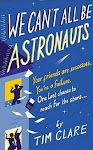
One of the best things that came out of my discovering TAL, was that I began to write non-fiction. I'd written video game reviews, opinion pieces and feature articles, but I'd never attempted journalism where I was a character. I'd never realised that there were situations where that might be okay, where stories about myself might be interesting to someone else. The ultimate product of all my TAL listening has been We Can't All Be Astronauts, my first book. I'm sure some parts are a bit cackhanded and prolix, and it was largely a case of learning on the job (my interview technique could do with a spell in bootcamp), but it's been wonderful to discover a whole new form of writing I'd never considered before.
As a newbie to non-fiction, I was desperate for all the guidance I could get. These four videos, where Ira Glass, TAL's host, explains how to create a story for radio, had more influence on my writing than anything else. I'm not claiming to have implemented the principles he suggests with any particular aplomb, but having them as a kind of North Star was a lifesaver. Even if you have no intention of writing non-fiction, or if you find his prescriptions for story-building somewhat facile, I think they're fascinating and thought-provoking nonetheless.
I might as well finish with a clip from the This American Life TV series, now two seasons old. It features the animation of cartoonist Chris Ware, author of the funny, melancholy Jimmy Corrigan, The Smartest Kid On Earth. The person interviewing him is Ira Glass. The 'turn', at 1:30, is something I think typifies TAL stories. Something about the whole piece makes me really happy. It's small, and human, and captivating - or, as the TAL TV series tagline would have it: 'Funny. Surprising. Dramatic. True.'
Okay. Splurge over. This has been very cathartic. I feel like I can finally put the rampant fanboy to rest, and stop boring people at parties - or, at least, find new things to bore them with.
I first discovered This American Life via the superb community blog Metafilter, a website which has introduced me to almost everything I like on the internet.
This American Life has influenced me more profoundly than anything else in the last year and a half. After listening to my first episode, I was hooked. Essentially, it's an hour long weekly radio show, where each episode has a loose theme. It's mostly non-fiction, with the occasional short story or dramatic monologue.
What first hit me so hard about it was the way in which the producers manage to tackle both very large stories and very small ones, often combining the two types on the same bill. It introduced me to a whole new genre of non-fiction storytelling - small incidents or little ideas that somehow shed light on something greater. Until I listened to This American Life, I never realised that people were allowed to tell those kinds of stories - stories that aren't the news, exactly, but often aren't exactly memoir either. Stories that are interesting, funny, real, surprising, and sometimes beautiful, but without being glib or glurgy.
Although I'm not exactly the perfect archetypal hipsterish agnostic liberal, I realise that I'm fairly close to the centre of their ideal demographic, so it may be that TAL's appeal doesn't go right across the board, but, for me at least, it feels like it scratches an itch that, until I discovered the show, I was dimly aware of but could never quite locate.
All this discursive meta-theorising can't quite convey it though, so I suppose I should apply the age old writing axiom of show, don't tell. Here are some of my favourites. If you click through, you can stream them online, or download each episode for 99 cents. If you listen to a whole bunch, it might be nice to donate a little something via their website, to help pay for bandwidth. I did, and I felt right pleased with myself.
My Big Break - the story of Charlie and Mitzi's gig on The Ed Sullivan Show is a beautifully-constructed piece of radio journalism, and Shalom Auslander's true life story of his strict Orthodox Jewish school's 'blessing bee' is one of the best bits of memoir I've ever heard.
Babysitting - I love the brothers talking about when their big brother was left in charge of them, and pretended he could turn into a werewolf. It reminds me of that weird period during your childhood, when the border between imagination and reality is blurry, and you can quickly work yourself up into a state of terror. Also, the final story in the show is just amazing. It's funny, it's sad, it's got twists... and it's just great to hear the participants talk about it themselves.
Telephone - this is one of my favourite Ira Glass intros. I just think the chap's so cool, and he tells an engaging, intimate autobiographical story without being self-indulgent. The first story, about the delinquent teenager who discovers his dad's been taping his phonecalls, has a really satisfying plot arc, and it's a great example of a story that is ideally suited to radio.
Break-Up - all of Starlee Kine's stuff for TAL is, in my opinion, brilliant, but this story about the embarrassing intensity of a break-up is probably my favourite. The moment where she blurts Phil Collins' lyrics to her (ex)boyfriend in an attempt to make him stay is both cringe-inducing and beautiful in its honesty. The way she develops the story from there is an object lesson in why TAL isn't just good, but great.
Another Frightening Show About The Economy - along with the earlier show, Giant Pool Of Money, these shows feature some of the best popular economics reporting I've ever heard. They're a little more 'of the moment' than most of the TAL shows, given that they're responding to contemporary news events, but I still find it mind-boggling that TAL can shift so seamlessly from charming, folksy anecdotage one week, to understandable, content-rich economics reporting the next, then back again, executing both styles exceptionally. Alex Blumberg and Adam Davidson make for very likeable, very listenable hosts.
The Super - the theme for this show, apartment superintendents (essentially live-in maintenance men for big blocks of flats, I think), doesn't sound very promising, but it's a killer episode. Jack Hitt's stories are as robust as they come - you could drive a tank over them and they wouldn't break - and the one the starts this show doesn't disappoint. It's got hilarious moments, frightening moments, and sheds light on wider things. The second story, about the building superintendent who thinks he may not have long to live, had me laughing till some snot came out.
One of the best things that came out of my discovering TAL, was that I began to write non-fiction. I'd written video game reviews, opinion pieces and feature articles, but I'd never attempted journalism where I was a character. I'd never realised that there were situations where that might be okay, where stories about myself might be interesting to someone else. The ultimate product of all my TAL listening has been We Can't All Be Astronauts, my first book. I'm sure some parts are a bit cackhanded and prolix, and it was largely a case of learning on the job (my interview technique could do with a spell in bootcamp), but it's been wonderful to discover a whole new form of writing I'd never considered before.
As a newbie to non-fiction, I was desperate for all the guidance I could get. These four videos, where Ira Glass, TAL's host, explains how to create a story for radio, had more influence on my writing than anything else. I'm not claiming to have implemented the principles he suggests with any particular aplomb, but having them as a kind of North Star was a lifesaver. Even if you have no intention of writing non-fiction, or if you find his prescriptions for story-building somewhat facile, I think they're fascinating and thought-provoking nonetheless.
I might as well finish with a clip from the This American Life TV series, now two seasons old. It features the animation of cartoonist Chris Ware, author of the funny, melancholy Jimmy Corrigan, The Smartest Kid On Earth. The person interviewing him is Ira Glass. The 'turn', at 1:30, is something I think typifies TAL stories. Something about the whole piece makes me really happy. It's small, and human, and captivating - or, as the TAL TV series tagline would have it: 'Funny. Surprising. Dramatic. True.'
Okay. Splurge over. This has been very cathartic. I feel like I can finally put the rampant fanboy to rest, and stop boring people at parties - or, at least, find new things to bore them with.
Subscribe to:
Posts (Atom)


 Posts
Posts

