
So, I thought I might as well post up the original text of my article on how to get published that The Independent commissioned then wankerishly mangled. I know I'm being a teensy bit precious but it is a bit galling when you get an article printed in a national newspaper but they edit out some of the most important bits. In a way, it was doomed from the start - 'how do I get published?' isn't a particularly helpful question. We don't live in a country that needs more published authors - what we need are better authors. In all the freelance editorial work I've done, and in all the writers I've known socially, I've only ever seen two cases of people who were struggling to find an agent, and yet were exceptional writers - in both instances, their manuscripts started weakly then got rapidly and dramatically better a few pages in. Also, both authors were writing in somewhat obscure subgenres, where the number of lists dealing in that sort of thing are limited.
For almost all the unpublished authors I've read over the years, the answer to 'how do I get published?' is, very simply, 'write better'. The vast majority of rejected writers don't get published because they're not good enough. For some reason this simple truth seems to make a certain subset of aspiring writers apoplectic with rage. 'No!' they bellow. 'It's because dipshits like YOU refuse to give me the secret password that will get me past the gatekeeper! What do you mean, "write better"? What sort of trite bullshit is that? Agents send my work back with a standard rejection letter! That means they can't possibly have read my masterpiece! How dare you insist I "write better", you smug gobshite! I'll fuck you in half!'
These are the people who nod with credulous glee when told that the publishing industry is a clique-ridden clusterfuck that genuine talent will never penetrate. These are the people who end up forking out thousands of pounds to self-publishing companies, companies who perpetuate these myths because they stand to profit. These are the people who will always be a bit rubbish.
The novel I spent years working on and then trying to sell? It didn't fail because of a global conspiracy. Nobody published it because it was a bit mediocre. Dude. Write better. That's it. That's the secret, you irredeemable bellend.
So anyway, here's the full original piece in all its discursive, flabby glory:
How To Get A Book Deal
When I went undercover at the London Book Fair, posing as CEO of Fabulous Books Inc, an aspiring author gave me the lowdown on how to get published:
‘I sent my manuscript to agents and editors but I just got it returned. It’s very difficult to get anything read. The way the modern industry works, it’s all about self-promotion. The thing is, you’re asking people to put their money into your work. So to convince them you’ve got to show that you know how to sell a novel, so they know they’ll get their money back.’
Dressed in a pinstripe suit, with a red silk handkerchief stuffed into his breast pocket and cherry-red braces, he was walking from stall to stall, handing editors copies of his children’s book. While in India, he had paid to have over 2000 copies printed. The cover was drawn in pencil crayon.
‘This is Phase Two of promotion,’ he explained. ‘I’ve been posting copies through the letterboxes of people in the neighbourhood.’
‘What, friends?’
‘No, just, you know... local letterboxes.’
Imagination is supposed to be one of a writer’s strong suits, but ever since I was a child and a teacher first asked me what I wanted to be when I grew up, and I said: ‘Someone who writes stories,’ I never managed to think of a better reply. Back in school, a group of kids could answer ‘nurse’, ‘train driver’, ‘builder’, ‘inventor’, and you’d never hear: ‘Very good – except you Johnny. Inventor? Are you mental? That’s not even a real job. I mean Jesus Christ. Go and stand by the coat rack.’ We were encouraged to dream. Learning what was and wasn’t feasible would come later in a series of informal realisations, by which time we would be so off our faces on burgeoning hormones that our only aspiration for the future was that, one day, we would get to squeeze a breast.
If you want to be a footballer, or a heart surgeon, or an astronaut, there are clear prerequisites and cut-off points – before you proceed you must acquire such-and-such a qualification, if you haven’t achieved such-and-such by the age of 20 your chances of a career are zero. By stark contrast, becoming a professional author calls for a highly subjective skillset, recognises no age limit, and can even co-exist alongside other jobs. Obviously I’m not advocating some Logan’s Run style cull of older writers – my point is that, with most other vocations (including mother), there comes a stage where you can say: ‘well, it was a pretty dream, but it’s impossible now,’ and finally let go, safe in the knowledge that no amount of hairshirty exertions will ever be enough.
Most people who put pen to paper and attempt a book are perfectly aware of the horrendous odds they face, but becoming a novelist has little to no start up costs, and offers theoretically limitless profits. Anybody – including you – could be plucked from the doldrums of their shabby, average job and hoisted into a life of status, meaning, and comfort. Knowingly being on the wrong side of probability doesn’t stop thousands of people buying scratchcards every week. A lottery ticket’s value doesn’t come from an expected return on one’s investment – what you’re buying is a tiny, white hot nugget of hope, that you get to carry around with you, drawing warmth from it until your numbers come in dud.
For all the supposed allure of the distant finish line, in my experience, writing a novel is a long, lonely path, lined with signposts pointing in contradictory directions. It’s like trying to unclog your drains by yourself. You spend countless miserable hours alone, elbow deep in your own excrement, and at the end of it all, you don’t get published.
Magical thinking thrives in unpredictable environments. Even for industry stalwarts, the dense mesh of variables that governs whether a book sells in barrowloads or slumps into ignominious obscurity makes publishing a baffling business – which, of course, is part of its attraction. There are no control groups to test successes or failures against, meaning that editors tend to rely on trend-chasing and hunches, garlanding the process with statistics to lend it a spurious air of scientific rigour. As Mark Le Fanu, General Secretary of the Society of Authors, told me somewhat ruefully: ‘The fact is, for almost everyone involved, it’s a very unpredictable, tricky industry.’
It shouldn’t be surprising then, that to the uninitiated would-be writer, the book industry can seem variously like a glamorous dream factory, an unfeeling monolith honeycombed with toff cabals, and a kind of clapped-out zeppelin piloted by monkeys that randomly distributes food parcels. You find yourself fiending for guidance, and there is no shortage of pundits, hucksters and gurus all willing to sell you a map that shows the one true route through the labyrinth.
The fact is, there is no one-size-fits-all prescription for getting published. What we refer to as ‘the publishing industry’ is a whole stir-fry of different companies with different agendas and different end-products, many competing with each other over a shrinking consumer base. Books end up on publishers’ lists through a variety of processes, and the only general advice possible is to embed yourself as deep as you can in the belly of the beast, then use every means at your disposal to get your work read by the people with their hands on the purse strings. Of course, this policy presumes that you have spent years honing your craft, know your market, and have produced a manuscript that showcases your skills firing on all cylinders. Yes, the occasional purblind idiot may blunder across the minefield unscathed, but most will get blown to smithereens. Think of talent as your insurance policy.
My friends took a variety of routes to publication. One entered a children’s writing competition with a novel he’d written in a week, came runner-up, and was offered an advance five times that of the winner. Another came up with the proposal for his first book on a single side of A4 the night before he was due to have a meeting with a publisher, who promptly accepted. Two got to know their editor socially, bandied around some ideas, wrote a sample and pitch, then wrote the rest on acceptance. One spent four years studying creative writing at university, won a writing award, attracted an agent, finished his first novel, then had his agent sell it off in an auction between publishers.
As for me, I spent years working on an elaborate Fantasy novel that didn’t quite hang together, then lost my job, split up with my girlfriend, moved back in with my parents, and had a nervous breakdown. For the next 18 months, I watched as my best mates started achieving things that, just a couple of years before, were nothing but whimsical fantasies. I played video games, ate breakfast at two in the afternoon, and listened to my recently retired dad shuffling round the house like Marley’s Ghost. Eventually, partly at the behest of my therapist, I began to write about what I was going through – the tight knot of jealousy in my stomach, my heart-to-heart chats with my father. Writing about my feelings spurred me into action – stupid, ill-conceived action, mostly – which in turn gave me more to write about, until soon I’d wrestled some of my darkest demons and decided that I could live without the glory of being ‘someone who writes stories’. At which point I showed what I’d written to an agent, who showed it to a publisher, who said: ‘no this is self-indulgent flatus I will not give you money for it’, and then my agent kept on showing it to publishers until one said: ‘this is very good I will give you money for it’.
Simple.
And apparently useless as a practical model for getting your magnum opus out of your desk drawer and onto the bookshelves of homes all round the country. Except, maybe it isn’t.
Tenacity and flexibility make a formidable team. Take pleasure in creative failure – it’s a sign you’re pushing yourself – but learn from it too. I had to bash my head against a brick wall several times before I thought: ‘Hey. Maybe I should change direction!’ Getting published isn’t a matter of pushing books through strangers’ letterboxes – it’s about practising until you’re really good, then persevering until you’re really lucky.
//BOXOUT
HOW NOT TO GET PUBLISHED
1. Don’t dilute your vision by reading others’ work. Especially avoid new genres and forms.
2. Never lose faith in your original draft. To edit is to scorn your infallible muse.
3. Submit your work with as much supporting material as possible. Self-portraits in green crayon scream ‘I am creative’.
4. Approach editors somewhere they could not reasonably be expecting to field submissions. This will catch them off-guard and you will be more likely to negotiate a favourable deal.
5. Bear in mind that the Writers’ Handbook and Writers’ and Artists’ Yearbook are both produced by publishers, and are therefore biased. Ignore them.
Wednesday, 10 June 2009

Tuesday, 9 June 2009
How To Get A Book Deal
So, I've got a little article in The Independent today. Annoyingly, some doltish sub-editor went in, cut out several important sections and changed the box-out at the end. Originally, they emailed and said 'oh, and I thought it would be rather amusing if Tim wrote a tongue-in-cheek 5 steps on "How Not To Get Published"', which I duly did. I wrote them in a deliberately pretentious, arty-farty voice because, you know, that was kind of the joke. For example, Number 5 was 'The Writers' Handbook and Writers' and Artists' Yearbook are produced by publishers, and are therefore biased. Ignore them.' This got changed to: '5. The Writers' Handbook and Writers' and Artists' Yearbook are both produced by publishers. Ignore them at your peril.'
They're saying that's my suggestion for what not to do? Oh pillockish Indy and your cash-strapped knee-jerk hackery! Did it not occur to you that I might mind your chopping my article to bits then printing it under my name without asking? Grr.
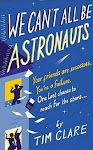
In better news, we did the London launch of We Can't All Be Astronauts last night in Soho, at Salena Godden's Book Club Boutique. Joe Dunthorne, Ross Sutherland and Steve Aylett all did brilliant readings and I met up with people I haven't seen in ages. Copious, grovelling sackfuls of thanks to everybody who took the time to come down. I felt very flattered and special and basically great about myself and all my friends. If you were there, thanks very much and I hope you enjoyed it. Also, you have very good taste and you're cool.
They're saying that's my suggestion for what not to do? Oh pillockish Indy and your cash-strapped knee-jerk hackery! Did it not occur to you that I might mind your chopping my article to bits then printing it under my name without asking? Grr.
In better news, we did the London launch of We Can't All Be Astronauts last night in Soho, at Salena Godden's Book Club Boutique. Joe Dunthorne, Ross Sutherland and Steve Aylett all did brilliant readings and I met up with people I haven't seen in ages. Copious, grovelling sackfuls of thanks to everybody who took the time to come down. I felt very flattered and special and basically great about myself and all my friends. If you were there, thanks very much and I hope you enjoyed it. Also, you have very good taste and you're cool.
Sunday, 7 June 2009
Poetry's First Pop Group
Someone suggested I watch this video from back in 1998, of 'poetry's first pop group', Atomic Lip. In the aftermath, I find myself uncharacteristically lost for words. Wow. Just wow. Actually spectacular. Anyone starting out in performance poetry could learn a huge amount from this video. Just study the choreography, their various delivery techniques, and the content, then do the exact inverse.
Saturday, 6 June 2009
Games With Stupid Names - #4: Hatris
 Since today marks the 25th birthday of Tetris, I thought meh, why not, I'll chuck in a 'bonus' post. There have been many variants of Tetris over the quarter century since it first appeared, but none quite achieve the status of 'Hatris'.
 Yes. It's Tetris but with hats. WACKY.
 Playing Hatris is like waking to discover that, during the night, a tramp who subsists entirely on Buckfast and vindaloo has emptied his rotten bowels all over your chest and face, like some aggressively generous poo Santa. Stack five hats and they disappear! Look! The heads vaguely resemble Elvis! That's it! That's the entire game! Just be thankful you can't hear the sour, brain-rotting six-second loop that constitutes the only in-game music.
 Fill up the word 'SALE' by stacking enough hats and you get to remove one type of hat from the board. And look! The Elvises have turned into vague Regan simulacra! Aha! Aha ha ha! Brilliant! I must play on to see the next row of crudely rendered celebrity faces! Or open my wrists lengthways! One of the two, definitely!
 So yeah, before you get too dewy-eyed about Tetris' glorious legacy, take a moment to remember Hatris, and consider if we wouldn't all be better off if Alexey Pajitnov had been relocated to Siberia for some hard labour.
Games With Stupid Names - #3: Cotton Boomerang
 Cotton Boomerang (full title Cotton Boomerang: Magical Night Realms) is a side-scrolling shooter that takes the hypercolour cutesy aesthetics of games like Pop n' Twinbee and Parodius, dials back on the self-consciously wacky elements, adds a touch of R-Type, then finishes with smatterings of that deliciously cultish shoot-em-up sub-genre, 'bullet hell', to create a game that's big, brazen, and really rather good.
I realise that most readers of my blog will be going WHAT THE CRAP TIM at this point, because I'm talking entirely in video game references and most of you are artsy types whose shoot-em-up knowledge starts and ends with the ironic Space Invaders t-shirt you sometimes wear at festivals, so look, even though you feel horribly alienated and you've probably already stopped reading by this stage, just for you here's a (very) brief bluffer's guide to shoot 'em ups. Who knows, one day (in a somewhat bizarre set of circumstances) it might just save your life.
 So it starts with Space Invaders in 1978, your little ship tucked behind destroyable bunkers, shooting up at gradually descending aliens.
 1979 saw vector-graphics based Asteroids, where your little triangular ship can rotate through 360 degrees and fly around the screen with the thrust button. Your job is shoot at the asteroids, breaking them into ever smaller chunks until they disappear, without colliding with them. Pew pew pew! Later shoot 'em ups in the 'fly in any direction' sub-genre include Sinistar, Time Pilot, Blasteroids and Geometry Wars.
 Vertically-scrolling shooters like Twinbee built on the single-screen format of Space Invaders and saw you taking the battle to your enemies.
 1942 is another classic vertical-scroller, replete with power-ups and ridiculously huge planes which you must nail with a hail of gunfire.
 The granddaddy of the side-scrolling shoot 'em up is Williams' Defender, a peach of a title where you nim about in your little spaceship trying to stop aliens snatching humans off the planet and using them to transform into super-fast mutants. The game is impressively elaborate, with a range of enemies, a 'scanner' display up the top of the screen that shows you where your enemies are, smart bombs, and a 'warp' button that gives you a last-resort escape hatch when under fire. Games like Scramble foreshadowed the more straightfoward left-to-right shooter, the main difference being that Scramble is absolute unremitting shite.
 Sega's Choplifter is one of the more successful attempts to create an earthbound variant, pitting you against a plethora of anti-aircraft turrets and fighter jets as you attempt to bust hostages out of their holding cells and fly them back across enemy lines to safety.
 The R-Type series is one of the most fondly-remembered instances of the side-scrolling shooter, boasting many features that have now become staples of the genre. By holding down the fire button, you can charge your laser, allowing the player to choose between rapid fire or big, surging blue blasts of energy. Multi-directional lasers that can ricochet off walls and air-to-ground missiles add to the havoc, as do the gigantic fearsome bosses that wait at the end of each stage.
 In lots of ways, the shoot 'em up in most of its classic formats is something of a forgotten relic, but one of the most modern iterations is the 'bullet hell' sub-genre. It took a while for hardware to reach the stage where it could cope with calculating and updating the exact position and velocity of pillions of different-sized projectiles, but once it could, a hardcore of shoot 'em up junkies found themselves drawn to games where colossal, multi-part bosses spew volley upon volley of burning death, leaving you tiny wedges of screen to hide in while you fire back with everything you've got. The game above is Raiden Fighters Jet, a late iteration of the popular Raiden series. Bullet hell isn't for everyone. It's kind of like grindcore - it's evolved to scratch a very particular itch, to the extent that the genre and its select audience exist in an almost symbiotic relationship. You have to be committed to take on bullet hell. This is the real shit, yeah?
 So yeah, Cotton Boomerang. Remember that? When you start out, you get to select a team of three characters from a choice of eight possible shot-patterns. Once you're in-game, you can switch a limited number of times (you can replenish your 'switches' with power-ups) and, if you get hit, that character drops out and the next in line takes over.
 Cotton Boomerang synthesises the cutesy monkey business of Twinbee with the robust power-up spread of R-Type and Raiden's merciless spray of deadly ordnance. As either a witch on a broomstick, a fairy, and some kind of sentient witch's hat presumably employed as comic relief, you battle legions of magical fiends and nasty beasts. As with R-Type, you can charge your shots - a full-power blast unleashes some kind of etheric dragon which blasts through foes and traps them in spheres, Bubble Bobble style. You can then catch these spheres, and fling them across the screen into other bad guys, who will in turn be captured, and so on and so forth. Like the 'option' unit in R-Type, these spheres absorb most bullets, cutting a useful swathe through enemy fire and offering you some much-needed breathing space.
 Like most bullet hell shooters, Cotton Boomerang is all about the boss battles, which are everything you'd expect them to be - creative, spectacular, and brutally unforgiving. At first, you'll just get nailed repeatedly as the boss ejects seemingly unavoidable walls of projectiles. If you persist, however, you soon discover ways to take cover or blast through, and resulting in some near-knuckle evasive maneuvers and a lovely jolt of adrenaline.
 Cotton Boomerang's biggest failing is the intermittent doses of cheesy anime fanservice. I don't need to see some bikini-clad sprite wapping out an implausible rack and vast acreage of thigh at the end of every level, thank you very much. I'm no prude, I just think porn should be porn, you know? This sort of embarrassing halfway house stuff just feels awkward and chauvanistic.
 So yeah, in summary, Cotton Boomerang is a game with a silly, effete name that carries a technicoloured sledgehammer. Come and have a go if you think you're hard enough.
Friday, 5 June 2009
Games With Stupid Names - #2: Appoooh
 Appoooh is an early attempt by Sega to capture the excitment and sweaty, balletic majesty of pro-wrestling, without actually forking out for the rights to the WWF franchise. This 1984 button mashathon sees you limp and jerk around the ring, punching, kicking and grappling your opponent into a stupor before going for that all-important pin.
 The 'action', such as it is, can even go outside the ring:
 When you start out, you're offered a selection of wrestlers including the rather cheekily named 'H. Hogen' and the similarly copyright-skirting 'A. Giants'. With moves such as the 'Body Slum' and 'Neck Hanging' at his disposal, this Mr Giants fellow sounded like my kind of beefcake, so he was the lucky brawler I chose to take me into my first bout.
 Now I know here that A. Giants [left] looks, if anything, like Rowlf the Dog from the Muppets, which might lead you to question his chances of success, until you notice that his first opponent is David Crosby.
 Sure, side by side two of America's best-loved musicians look pretty evenly matched. But once you step into the ring...
 A. Giants reveals his secret weapon. GROTESQUELY ELONGATED ARMS. Seriously. He makes an orangutan look like a thalidomide baby. We're talking serious Mr Tickle shit here.
 The combined power of freakish monkey arms and the devastating body slum made short work of Crosby, who sloped off to seek solace with the other members of his increasingly uncool supergroup. Like a lot of beat em up games of this era, you can only attack people to your immediate left or right, meaning skilled fighters stand slightly above their opponent, before moving down at the last moment to attack. You've got two attack buttons at your disposal, punch and kick. Pressing forward and kick together makes your wrestler do a dropkick. By pressing forward and punch, you lock your foe in a grapple. Then it's just a case of bashing the buttons fast enough to win, so you can hurl them into the ropes or pile driver them.
Having won my first bout at a canter, I was getting a bit cocky. I have huge bemuscled arms and the face of a dog, I thought, who on this planet can challenge me?
 WHAT THE FUCK.
 Sigh. A wrestler with not just long arms, but super-long legs. Yes, this spaghetti-limbed gangle-molester made short work of poor stubby-legged A. Giants. I staged a brief, promising comeback, keeping him at bay with well-timed dropkicks, but once he had me in a grapple it was curtains. Headlocks, elbow drops, all sorts of monkey business. I left, humiliated, my head swirling with the image of a tortoise on its back, helplessly pedalling its useless limbs while an ostrich pecks at its exposed belly.
Oh. The game's rubbish, by the way. I have no idea why it's called 'Appoooh', except that, possibly, it is one. Aha. Ahahahahaha!
Thursday, 4 June 2009
Games With Stupid Names - #1: Tinkle Pit
 Tinkle Pit is the kind of hyper-cutesy epic bananas-ness that peaked in video gaming around the late 80s and early 90s. For the most part Taito had this market all sewn up, with the Bubble Bobble franchise, New Zealand Story, Don Doko Don, Rodland and Liquid Kids amongst others. Namco clearly decided they could go one better.
 Tinkle Pit is laden with aggressively pointless, incomprehensible shit swirling round reefs of heavy-handed Namco cameos. Cribbing heavily from Universal's Mr Do series (especially Do! Run Run), the game sees you lugging a giant sentient jingly bell around a maze full of enemies. Holding down a button pays out the rope the bell is attached to. As you walk around, this trail of rope grows longer and longer, until you release the button and - ping! - the bell goes shooting along the trail you've left until it returns to your side. Any enemies it hits along the way get killed.
 The sub-genre of 'games with elaborate and idiotic ways to kill enemies' is replete with this kind of asinine Heath Robinson muppetry. Dig Dug started it all off, making you inflate foes with a bike pump (the Fygars and Pookas from Dig Dug appear in Tinkle Pit too, as if Namco are desperate to batter us over the head with reminders that they make good games too), then there was Snow Bros, where you had to bury enemies in snow until they became a huge snowball, before kicking it into the other baddies. Tumble Pop made you suck multiple bad guys into a vacuum cleaner before firing them back out as a big, tumbling ball of limbs.
 Tinkle Pit is crappy. It starts off ludicrously, insultingly easy, so that on a first go it's possible to get past the first two worlds without losing a life. Somewhere around the middle, the difficulty jumps from 'simple' to 'frustrating'. Levels suddenly become packed with baddies, and robots are introduced that fire deadly lasers that can pass through walls and travel the length of the screen. Even less forgivable, there are only two boss battles in the entire game - the majority of it is taken up schlepping round saccharine giga-nippon labyrinths, waiting for foes to blunder into the path of your massive, jangling bell. Ha.

Subscribe to:
Posts (Atom)


 Posts
Posts


